
Business
$179m debts: Nigeria’s investment in WAPCo in jeopardy

Nigeria’s multi-billion dollar investment in the West African Gas Pipeline Company, WAPCO, is in jeopardy as management of the company, yesterday, raised an alarm that it is in a precarious financial situation that is threatening its existence. It said that the financial situation in the company has put the viability of the entire project in jeopardy.
Through the Nigerian National Petroleum Corporation, NNPC, Nigeria owns a 24.9 per cent stake in WAPCo, making it the second largest shareholder, after Chevron West African Gas Pipeline Limited, which owns a 36.9 per cent stake. WAGP was conceived to make gas available across the West African sub-region, transporting the commodity from gas-producing hubs in the region to localities and industrial hubs in the region, especially for power supply.
Speaking at the opening ceremony of the Committee of Ministers of the WAGP Project, in Abuja, Managing Director of WAPCo, Mr. Walt Perez, stated that the company faces significant risks because of its financial health engendered by low gas volumes, huge indebtedness totaling about $179 million and dwindling cash flows.
According to him, although WAGP has sometimes been technically capable of transporting volumes of natural gas up to contractual levels, actually many receipts have remained below contracted levels and are now putting the commercial viability of the WAGP project in significant doubt.
He added that the problem with low gas volumes was exacerbated by the force majeure declared in 2013 and which still remains in effect today., declaring that as long as the direct and indirect effects of low volumes and force majeure persist, WAPCo’s business planning and immediate prospect for growth in the foreseeable future would not materialize, unless conditions change.
He further lamented the huge debts owed the company and its troubling cash flow situation, stating that since August 2014, WAPCo had not been receiving full and consistent payments for gas delivery from its biggest customer, the Volta River Authority, VRA.
This, Perez said, had led to a huge backlog of unpaid invoices, totaling $104 million that is due to WAPCo’s account, plus an additional $75 million to N-Gas.
He said, “The company initially appears to be resilient in the face of drastically reduced revenue flows because gas transmission and other operational activities continue. The reality, however, is that WAPCo has been floundering. In fact, we have been conserving cash in order to prolong our time and operations, and as a result, WAPCo is now operating under extreme austerity conditions.
“Under current condition, WAPCo is unable to service its debt; no more undertaking critical maintenance schedules. With the much reduced capacity to pursue growth of any kind at this time.”
He called for the support of the Committee of Ministers to reverse the declining financial condition of WAPCo and to help create the right environment for the re-emergence of WAGP as a regional tool for energy integration for which it was envisioned.
Speaking in the same vein, Minister of State for Petroleum Resources, Mr. Ibe Kachikwu, disclosed that inadequate supply of gas is one of the challenges faced by the company, while he added that dwindling volumes and numerous other factors had served to hamper the company’s growth prospect.
However, despite the challenges faced by the company, Kachikwu disclosed that Nigeria is very committed to the ideas of the founding fathers of ECOWAS.
-
 Oil and Gas2 days ago
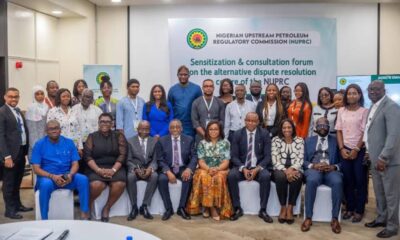
NUPRC vows not to approve divestments that doesn’t meet considerations
-
 Finance2 days ago
Cardoso seeks collaboration to check cross‑border financial risks
-

 Oil and Gas2 days ago
Iran eases Strait of Hormuz transit rules amid oil shock
-

 Oil and Gas2 days ago
Court orders forfeiture of $13m linked to Aisha Achimugu’s firm
-
 Oil and Gas2 days ago
Oil falls as reports of 15-point proposal spurs ceasefire hopes
-

 Economy2 days ago
Nigeria to launch trade platform at ports as part of reform push
-
 Finance2 days ago
Court nullifies CBN’s regulatory intervention in Union Bank in 2024, rules it acted beyond its powers