
Business
44 days elapse from when a container enters port of exporting country until it leaves the destination port—WBG

The World Bank has said that on average across all potential trade routes, 44 days elapse from the time a container enters the port of the exporting country until it leaves the destination port, with a standard deviation of 10.5 days. That it said span represents 60 per cent of the time it takes to trade goods internationally. According to the Bank Logistics Performance Index 2023, end-to-end supply chain digitalisation, especially in emerging economies, is allowing countries to shorten port delays by up to 70 per cent compared to those in developed countries. Moreover, demand for green logistics is rising, with 75 percent of shippers looking for environmentally friendly options when exporting to high income countries.
Christina Wiederer, Senior Economist with the World Bank Group’s Macroeconomics, Trade & Investment Global Practice and the report’s co-author said “While most time is spent in shipping, the biggest delays occur at seaports, airports, and multimodal facilities. Policies targeting these facilities can help improve reliability”. He said that such policies include improving clearance processes and investing in infrastructure, adopting digital technologies, and incentivising environmentally sustainable logistics by shifting to less carbon-intensive freight modes and more energy-efficient warehousing. Resilience and reliability are crucial in the performance of logistics
The seventh edition of Connecting to Compete, the Logistics Performance Index (LPI) report comes after three years of unprecedented supply chain disruptions during the COVID-19 pandemic, when delivery times soared. The LPI, which covers 139 countries, measures the ease of establishing reliable supply chain connections and the structural factors that make it possible, such as the quality of logistics services, trade- and transport-related infrastructure, and border controls. “Logistics are the lifeblood of international trade, and trade in turn is a powerful force for economic growth and poverty reduction,” said Mona Haddad, Global Director for Trade, Investment, and Competitiveness at the World Bank. “The Logistics Performance Index helps developing countries identify where improvements can be made to boost competitiveness.”
-

 Finance19 hours ago
AFC supports successful close of ₦729bn series 2 Bonds to advance Nigeria’s power sector reforms
-
 Economy2 days ago
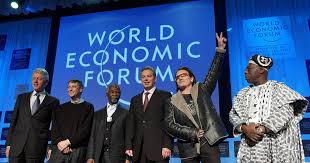
Global economy to stabilize, but fiscal constraints, rising living costs, AI investment uncertainty threatens growth—WEF
-

 Finance2 days ago
ECB, EU central banks suggest dropping stablecoin deposits rule
-

 Economy2 days ago
ITC, Access Bank partner to boost small business growth across 14 African countries
-

 News2 days ago
FG not withdrawing electricity subsidy-Power Minister
-

 News19 hours ago
Finance minister seeks affordable capital to bridge Africa’s infrastructure gap
-

 Finance2 days ago
CBN reduces MPR to 23%, CPPE lower interest rates alone cannot deliver sustainable economic recovery
-

 Finance19 hours ago
94.2m Nigerians use financial products, formal inclusion hits 73% — EFInA