
Business
49 out of 55 Africa countries signs AfCFTA’s deal

At least 49 out of the 55 African Union (AU) member states have signed a Continental Free Trade Area (AfCFTA) agreement. The AfCFTA is designed to create a single continental market for goods and services, with free movement of business persons and investments and acceleration of the establishment of the Customs Union. It is also expected to expand intra-African trade through better harmonisation and coordination of trade liberalisation, facilitate instruments across the regional economic communities and across Africa, enhance industrial competitiveness and utilise opportunities for scale production, continental market access and better resource reallocation.
It was presented for signature, along with the Kigali Declaration and the Protocol to the Treaty Establishing the African Economic Community relating to the free movement of persons in Kigali on March 17-21, last year. During this time, an action plan on boosting intra-Africa trade (BIAT), with seven priority action clusters: trade policy, trade facilitation, productive capacity, trade related infrastructure, trade finance, trade information and factor market integration, was also approved. Yet, only 12 countries have ratified it-Ghana, Kenya, Rwanda, Niger, Chad, Guinea, eSwatini, Uganda, Ivory Coast (Côte d’Ivoire) and most recently, South Africa, Mauritania and Republic of Congo – and an additional six countries have received parliamentary approval for ratification – namely Sierra Leone, Mali, Namibia, Senegal, Togo and Djibouti.
All ratifications (approved and deposited) now stand at 18. We have given this background to show the progress of ratification and according to AfCFTA agreement, 22 of the signatory states are needed for it to come into force. Once into force, it will be the largest in the world in terms of participating countries since the formation of the World Trade Organisation (WTO). It is also estimated to boost intra-African trade by 52.3 per cent by eliminating import duties and doubling trade if non-tariff barriers are also reduced.

If all AU member states ratify AfCFTA, they will certainly broaden their national economic horizons and strengthen their regional groupings. We may say that, a new venture is studied first before it is implemented to avoid untoward eventualities and perhaps that is why only 12 AU member states have so far ratified it. Let’s give those countries that have not ratified AfCFTA more time to study and ratify it only when they are ready to do so. We shouldn’t rush to sign and ratify AfCFTA, but let’s first engage in soul-searching and only ratify it after we are sure of its benefits for both the African continent and national economies.
Allafrica.com
-
 Oil and Gas2 days ago
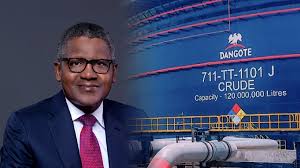
Dangote refinery drops PMS to ₦1,165/Litre, diesel to ₦1,570/litre
-

 News2 days ago
85m Nigerians still lack access to grid electricity—REA
-

 News2 days ago
Recapitalised insurers get NAICOM new licence certificates
-

 News18 hours ago
SpaceX insiders get their first chance to cash out — but the stock’s slide will limit their opportunity
-
 Finance2 days ago
Crown Takaful shares N100m to customers
-

 Finance18 hours ago
NAICOM revokes Nigeria Reinsurance licence, freezes bank accounts
-
 Economy18 hours ago
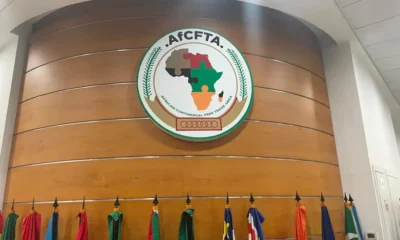
African free trade agency taps Nigerian firm for $3.1bn customs overhaul project
-

 Finance18 hours ago
Nigeria’s plan to tax crypto transactions could undermine adoption–operators