
Economy
FG moves to revitalise Nigeria’s iron, steel sector

g…engages stakeholders on Backward Integration Police
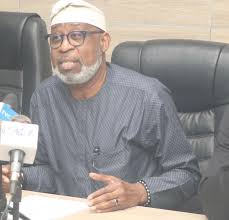
The Federal Government has said that it has concluded plans to develop and implement a comprehensive Backward Integration Policy for the iron and steel sub-sectors of the Nigerian economy. The Minister of Industry, Trade and Investment, Mr. Olusegun Aganga, who said this during a one-day stakeholders’ forum on ‘Transformation of Minerals, Iron and Steel Sub-Sector for Industrial Revolution in Nigeria’, in Lagos, on Thursday, noted that the initiative was in line with the Nigeria Industrial Revolution Plan (NIRP).
The stakeholders’ forum, which was organised by the Ministries of Industry, Trade and Investment and Mines and Steel Development, provided the platform for all players in the iron and steel sub-sector to fashion out workable and sustainable plans of action to leverage the BIP to support the development of critical industries across the country. Aganga said, “What we are have done today is to bring together all the stakeholders in the metal sector, which is critical to industrialisation, to look at how we can develop and attract more investors into the sector through the right policies and strategies. We cannot just sit down in Abuja and develop a policy for the sector without the full engagement, input and involvement of key players in the sector.
“When you look at the current situation in the iron and steel sector, Nigeria spends about $3.3billion annually in the importation of steel and yet we have iron ore in the country. Currently, we have some cold rolling mills in the country. We want to implement the Backward Integration Programme in iron ore so that we can become a net exporter of iron ore just as we have done with cement.”
The minister added, “The success we have achieved with the BIP in the cement industry proves that we can replicate that in at least 15 sectors of the economy. That is what we can do as a country to be able to diversify our economy, create more jobs and then move from a poor to a rich economy.
“Just as we have done in the cement, sugar and automotive sectors, our objective is to co-develop a holistic backward programme that will make Nigeria number one in Africa and top 10 globally over time.” He said that the NIRP had been strategically developed and linked with sectors of the economy where the country currently had competitive and comparative advantage such as mines and steel and agri-business, among others. He said, “There is no doubt that industrialisation is central to national development. As a country, we have undertaken several initiatives in the past to accelerate our industrial development. However, what makes NIRP different from previous initiatives is that it is the first industrialisation road map to be simultaneously strategic, holistic and integrated.
“In the past, we have made the mistake of relying on exporting raw materials and in the process exported jobs. This is what the industrial revolution plan is trying to change. We will work together with all the stakeholders, including state governments, manufacturers and ministries, departments and agencies of the government to drive the implementation.” Also speaking, the Minister of Mines and Steel Development, Arc. Musa Sada, said there was the need for increased collaboration between the ministries of Mines and Steel Development and that of Industry, Trade and Investment in other to utlise the nation’s abundant industrial minerals to boost industrialisation. Sada said, “Steel is expected to remain the world’s most engineering material for some time to come due to its versatility. The annual steel production in Nigeria is estimated at about 3.5million tonnes while the country imports about 17 million tonnes of steel and allied products annually. Local steel production is only via 100 per cent melting of scrap steel.
“We want to see the iron and steel sector play a major role in the industrial development of our country. In order to achieve this, we need to partner the Ministry of Industry, Trade and Investment by keying into the NIRP to create the critical value chains that will drive sustainable industrial development.”

…engages stakeholders on Backward Integration Policy
The Federal Government has said that it has concluded plans to develop and implement a comprehensive Backward Integration Policy for the iron and steel sub-sectors of the Nigerian economy. The Minister of Industry, Trade and Investment, Mr. Olusegun Aganga, who said this during a one-day stakeholders’ forum on ‘Transformation of Minerals, Iron and Steel Sub-Sector for Industrial Revolution in Nigeria’, in Lagos, on Thursday, noted that the initiative was in line with the Nigeria Industrial Revolution Plan (NIRP).
The stakeholders’ forum, which was organised by the Ministries of Industry, Trade and Investment and Mines and Steel Development, provided the platform for all players in the iron and steel sub-sector to fashion out workable and sustainable plans of action to leverage the BIP to support the development of critical industries across the country. Aganga said, “What we are have done today is to bring together all the stakeholders in the metal sector, which is critical to industrialisation, to look at how we can develop and attract more investors into the sector through the right policies and strategies. We cannot just sit down in Abuja and develop a policy for the sector without the full engagement, input and involvement of key players in the sector.
“When you look at the current situation in the iron and steel sector, Nigeria spends about $3.3billion annually in the importation of steel and yet we have iron ore in the country. Currently, we have some cold rolling mills in the country. We want to implement the Backward Integration Programme in iron ore so that we can become a net exporter of iron ore just as we have done with cement.”
The minister added, “The success we have achieved with the BIP in the cement industry proves that we can replicate that in at least 15 sectors of the economy. That is what we can do as a country to be able to diversify our economy, create more jobs and then move from a poor to a rich economy.
“Just as we have done in the cement, sugar and automotive sectors, our objective is to co-develop a holistic backward programme that will make Nigeria number one in Africa and top 10 globally over time.” He said that the NIRP had been strategically developed and linked with sectors of the economy where the country currently had competitive and comparative advantage such as mines and steel and agri-business, among others. He said, “There is no doubt that industrialisation is central to national development. As a country, we have undertaken several initiatives in the past to accelerate our industrial development. However, what makes NIRP different from previous initiatives is that it is the first industrialisation road map to be simultaneously strategic, holistic and integrated.
“In the past, we have made the mistake of relying on exporting raw materials and in the process exported jobs. This is what the industrial revolution plan is trying to change. We will work together with all the stakeholders, including state governments, manufacturers and ministries, departments and agencies of the government to drive the implementation.” Also speaking, the Minister of Mines and Steel Development, Arc. Musa Sada, said there was the need for increased collaboration between the ministries of Mines and Steel Development and that of Industry, Trade and Investment in other to utlise the nation’s abundant industrial minerals to boost industrialisation. Sada said, “Steel is expected to remain the world’s most engineering material for some time to come due to its versatility. The annual steel production in Nigeria is estimated at about 3.5million tonnes while the country imports about 17 million tonnes of steel and allied products annually. Local steel production is only via 100 per cent melting of scrap steel.
“We want to see the iron and steel sector play a major role in the industrial development of our country. In order to achieve this, we need to partner the Ministry of Industry, Trade and Investment by keying into the NIRP to create the critical value chains that will drive sustainable industrial development.”
-

 Oil and Gas2 days ago
Oil prices drop 5% to three-week low after Trump cancels attack on Iran
-
 Oil and Gas2 days ago
NNPC remits N6.286trn into federation account between January and June 2026, issues another tender to sell Cawthorne crude
-
 News2 days ago
NESG appoints Engr. Adeleye Falade, FNSE to its board
-
 Economy2 days ago
EBID, CORIS Holding sign 80m euro financing agreement to strengthen food, energy, agric value chains in West Africa
-

 News2 days ago
Breastfeeding can improve Nigeria’s economy—Commissioner
-
 Stock Market2 days ago
NGX All-Share Index advanced by 0.18%, capitalisation increased by 0.18% to N158.61trn
-

 News13 hours ago
Tinubu approves salary increases for armed forces personnel
-
 Economy13 hours ago
Nigeria woos U.S. solid minerals investors