
Economy
Africa Rising: Building to the Future

By Christine Largade
This conference offers a unique opportunity to reflect—together—on the lessons learned from Africa’s success and the challenges ahead. There is still much to be done. The continent is very diverse, and some countries risk being left behind, especially those faced with recurring conflict. In others, the rapid growth is yet to be widely shared across the population, with many Africans failing to see the fruits of economic success.
In that spirit, I would like to share with you three perspectives: Where we stand— taking stock of Africa’s achievements; What near-term and longer-term challenges are emerging; and What are the key policy priorities to address these challenges and help deliver on the promise of Africa’s future.
Where We Stand—Africa’s Take-off
Let me start with where we stand. Sub-Saharan Africa is clearly taking off—growing strongly and steadily for nearly two decades and showing a remarkable resilience in the face of the global financial crisis.
Economic stability has paid off. More than two-thirds of the countries in the region have enjoyed 10 or more years of uninterrupted growth.
This growth has delivered a more educated population, with significant declines in infant mortality. In Benin and Madagascar, for example, primary school enrolment has increased by more than 50 percentage points. This may be from low levels, but it is still a huge improvement.
And for good reasons, Africa is now a growing investment destination for both advanced and emerging economies—with a record $80 billion inflow expected this year. Indeed, it is no surprise that ‘frontier economies’ such as Kenya, Uganda, and Botswana are challenging old stereotypes and roaring loud as Africa’s lions. And yet, the tide of growth has not lifted all boats. Poverty remains stuck at unacceptably high levels—still afflicting about 45 per cent of the region’s households. Inequality remains high. And some countries, still facing recurring internal conflict, are struggling to exit from fragility.
Africa’s success journey has been truly remarkable. But if the global crisis has taught us anything, it is the importance of making the benefits of growth more broadly shared. When everyone benefits, growth is more durable.
Over the years, the IMF has been a close partner in Africa’s journey—including during the crisis. We have listened, we have learned, and we have responded.
We have reformed our lending instruments to increase access and flexibility to countries in need; extended our zero-interest policy; and streamlined conditionality.
We have tailored our policy advice to better address the very specific challenges facing the region. And we have supported this advice with five regional technical assistance centres—in Gabon, Ghana, Côte d’Ivoire, Mauritius and Tanzania. Today, the largest share of IMF’s capacity development services is devoted to Africa.
We look forward to continuing and strengthening this fruitful partnership.
Challenges ahead—Near-term worries and longer-term challenges
Africa’s future lies with itself and its people. True, the outlook for the region is very positive. Africa is expected to grow by about 5.5 per cent this year and next, and the poorest countries even faster, close to 7 per cent.
But it must keep a firm eye on what’s going on beyond its horizons. Globally, even as the world turns the corner of the Great Recession, the recovery remains weak and uneven. What does this mean for Africa?
Near- term worries
In the near term, the region’s outlook could be clouded by three main worries: slower growth in advanced economies, and in particular emerging market economies which are major trading partners for Africa; lower prices for some commodities; and tightening external financial conditions and potentially increased market volatility as monetary policy is normalized. Policymakers will no doubt have their hands full. But they know what to do. The IMF stands ready to help with its policy advice, its technical assistance, and if needed, financial support.
Longer-term challenges
Beyond these more immediate worries, there are a number of longer-term challenges that can dramatically affect the outlook for Africa; some for the better; others not so much. Demographic challenges: Africa is the youngest continent in the world. By 2040, the continent is projected to boast the largest labour force in the world – one billion workers strong – more than China and India combined. Channeling this increasing reservoir of human capital to productive sectors offers unrivalled economic and social opportunities. To take full advantage of them will require skillful management and vision.
Technological challenges: Technological innovation offers great possibilities. It can help support global integration, improve productivity, and foster inclusion. Harnessing its power effectively and efficiently is the challenge.
Environmental challenges: Climate change and sustained demand growth press on the sustainability of natural resources – further exacerbating inequality and exclusion. The challenge is to implement policies to foster growth that is, in turn, inclusive and environmentally sustainable.
Building to the future—Three policy priorities
So what are the policy priorities to ensure that these challenges become opportunities? I see three: build infrastructure, build institutions, and build people.
Build infrastructure
First, build infrastructure—energy, roads, and technology grids. These are the foundations of any strong and durable edifice. What does this mean in practice? Closing Africa’s infrastructure gap.

Over the past three decades, per capita output of electricity in Sub-Saharan Africa remained virtually flat. Only 16 per cent of all roads are paved, compared with 58 per cent in South Asia. These shortfalls represent huge costs to businesses – and to people. Many countries in the region are taking encouraging steps to close this infrastructure gap. In Ethiopia and Mozambique, for example, investments in the energy sector are being scaled up, including through projects that promote cross-border trade in electricity. Kenya and Côte d’Ivoire are also initiating regional infrastructure projects in electricity, and road and railroad networks.
These investments are critical for growth to be sustained and broadened. High quality infrastructure can be a magnet for foreign investment. It can accelerate diversification and employment creation, and support further regional integration.
Yet the costs of closing this infrastructure gap can be daunting. The investment needs for the region are estimated at about $93 billion annually. In most cases, the investments are large and upfront. They need to be carefully selected, managed and implemented within a medium- to long-term budget perspective.
Here, the Fund can help. We are working with many of our member-countries through our capacity building centres and on-the-ground technical assistance to strengthen public investment and debt management capacity. This helps to put these countries in a much better position to take advantage of increasing financing options.
Build institutions
Let me turn to the second policy priority: build institutions. This means governance, transparency and sound economic frameworks. We talked about the foundations for the building; now think of institutions as the systems that ensure that the building functions properly and lasts a long time – like the heating, cooling and water systems.
We all know that Africa has tremendous potential. It is home to more than 30 per cent of the world’s mineral reserves. Properly managed, these endowments offer unparalleled opportunity for economic growth and development. Moreover, these resources can be instrumental in relieving the large constraints in infrastructure that I just talked about.
Yet, and let me be frank, in too many countries, the rents from extractive industries are captured by just a few. Mining can account for an important share of output and export earnings, but often contributes relatively little to budget revenues and job creation. This corrodes the fabric of the economy and its social cohesion.
What can be done? Strengthening the institutional and governance frameworks that manage these resources is a good place to start. Transparency can help increase accountability and help ensure that these resources are harnessed for the benefit of all.
Many countries have taken steps in this direction. For example, Sierra Leone and Uganda are setting new fiscal rules in anticipation of large resource flows. Côte d’Ivoire has also implemented a new legal framework for the mining sector that would help attract higher foreign direct investment.
These are areas where the IMF has helped bring a wide range of cross-country experience to bear. And we look forward to helping even more.
Build people
So, we have the foundations of our building (infrastructure); we have set up the systems to ensure that it functions effectively and efficiently (institutions); now we need to let the people in.
This brings me to my third priority: build people – children, youth, workers, and in particular, women.
Let me be clear: Africa’s greatest potential is its people. They are the key for the region to fully capture the dividends from population growth. By some estimates, a one percentage point increase in the working age population can boost GDP growth by 0.5 percentage points. This is huge.
For this to happen, however, ‘good’ jobs need to be created in the private sector. Today, only one in five people in Africa finds work in the formal sector. This must change. With wider access to quality education, healthcare and infrastructure services, it can change.
Similarly, technology can be tapped to extend the reach and access of financial services to millions of people. Here, Kenya’s experience offers valuable lessons to the rest of the world on how to empower the poor through financial access.
By combining mobile banking with financial services provision, 75 per cent of Kenya’s population now has access to financial services. Crucially, it is the poor that have benefited the most from this expansion.
Which brings me to a topic that is close to my heart: women. I know that most of the women in Africa cannot afford not to work. But when they do, they are mostly employed in informal activities. We all know what this means: low productivity, low incomes, low prospects. We also know the constraints: access to education, credit, and markets.
The gains to be made by overcoming these constraints are immense—particularly through girls’ education. By some estimates, the economic loss in developing countries from the education gap between girls and boys could be as high as $90 billion a year -almost as much as the infrastructure gap for the whole of Sub-Saharan Africa!
As the old African adage goes: “If you educate a boy, you train a man. If you educate a girl, you train a village.”
My bottom line: invest in women. It has a great rate of return—economically and socially for the future.
Let me conclude:
We are all witnessing a momentous transformation in Africa. Five years ago in Tanzania, Africa’s economies were under challenge as the global economy faced its most severe crisis since the Great Depression. We meet now in Mozambique with an outlook of optimism and high hopes.
The opportunities are vast and the challenges, while significant, can be overcome through sustained strong policies, both economic and social. Now is the time to go further, to work together towards an inclusive, job-rich and sustainable growth strategy. Now is the time to extend the gains that many countries have enjoyed to those that have been left behind by helping them overcome fragility and build strong institutions.
I want to end by quoting from the words of Mozambique’s national anthem: “Pedra a pedra construindo um novo dia. “Stone by stone, building a new tomorrow,” that is what Africa Rising is all about.
Africa Rising will benefit the lives of people on the continent. Beyond that, Africa Rising will benefit the world. An Africa ever more integrated in the world and the world learning from Africa.
Keynote Address by Christine Lagarde, Managing Director, International Monetary Fund
Maputo, May 29, 2014
-
 Stock Market2 days ago
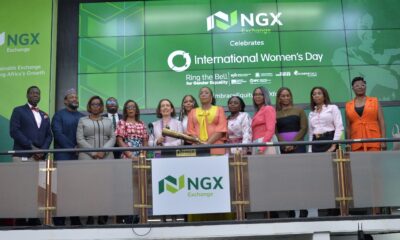
Nigerian equities market closed on a bullish note, marginal fall in average yield
-

 Oil and Gas2 days ago
Oil prices fall 2% on hopes for US-Iran conflict easing
-
 Finance2 days ago
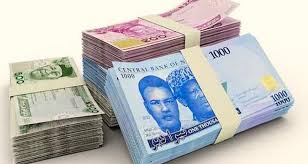
Currency outside Nigerian banking system drops to N4.92trn in June
-

 News2 days ago
Paris Club Refund: ALGON, LGAs urge court to dismiss lawyer’s suit
-

 Economy2 days ago
S&P Global to buy majority stake in Agusto & Co ratings agency
-
 News22 hours ago
PwC, EY jointly command an estimated 35.9% of Nigeria’s corporate audit market in 2025`
-
 Oil and Gas22 hours ago
Internal documents show Shell’s role in oil theft, environmental damage across Niger Delta
-
Oil and Gas22 hours ago
Oil jumps 7% on escalating Middle East airstrikes