
Economy
African banks made highest returns on capital in 2013 – Banker

*Record 24% return on capital
Africa banks have been ranked by Banker as having generated the highest returns to shareholders in 2013. In its 2014 Top 1000 Bank ranking released last week, the Banker said “In terms of profit generation, African banks make the highest returns on capital of 24 per cent – double the average return for the rest of the globe and far exceeding average returns of only 4 per cent in Europe. Standard Bank Group South Africa’s lenders, for so long the shining light in Africa’s representation in The Banker’s Top 1000 rankings, retain the top spots in the regional list but mostly with falls in their Tier Africa. This is despite African banks holding less than 1 per cent of global capital”.
“Global banking profits have reached an all-time high, with China dominating the post financial crisis banking sector, according to The Banker’s Top 1000 World Banks ranking. Chinese banks ICBC and China Construction Bank top the world ranking, with two more Chinese banks in the top ten. Chinese banks now account for a third of total world banking profits, outstripping the USA (20% of profits) and contributing to the largest ever annual profits for the global banking sector of $920 billion – 23 per cent higher than the previous year.
According to the report “Struggling Eurozone banks contributed a meagre 3 per cent overall to global profits, down from 25 per cent before the 2008 crisis, as recovery remains slow or non-existent in many countries. Italian banks lost $35 billion, topping the list of national losses while Portuguese and Irish banks also continued to suffer, losing almost $4 billion each. Spanish banks did at least manage to turn last year’s catastrophic losses of $68 billion into a profit of $12 billion.
The Banker said “Central and South American banks recorded the second highest returns of 23 per cent and the Middle East saw returns of more than 15 per cent, despite each holding less than 4 per cent of global capital. Brazil did not perform as well with its share of global profits falling to 2.84 per cent, from 10 per cent before the financial crisis. Though this still exceeds the UK’s 2.37 per cent share of profits.
Brian Caplen, editor of The Banker, said: “This is the first time since before the financial crisis that we have seen such a large annual increase in global banking profits. Apart from China’s contribution US banks are also doing well and have recovered much faster from the crisis than European banks.”
The report said that Global profits for The Banker’s Top 1000 World Banks ranking for 2014, based on financial results for the end of 2013, have jumped by almost 23 per cent, to $920bn. This means annual profits have for the first time exceeded the pre-crisis peak of $786 billion in the 2007 ranking. Of course, the lesson of the crisis is to question whether these impressive results are sustainable.
First in, first out
According to the Banker’s report for 2014 “In total, Tier 1 capital in the eurozone rose by 5.3 per cent in the 2014 ranking, while deleveraging continued – assets fell by 4.5 per cent. But retained earnings are the easiest way to raise capital. The return on capital for US banks in the Top 1000 is 15.74 per cent, compared with just 2.04 per cent for banks in the eurozone. This profitability allows US banks to increase capital organically and Tier 1 capital levels rose by 6.6 per cent in the 2014 ranking, compared with an increase of 1.3 per cent in the asset base. The capital build-up may also partly reflect preparations for the advent of the high US leverage ratio.
While return on capital is still weaker in Europe than in any other region of the world, it has staged a strong comeback in this year’s ranking. Western Europe’s percentage of global banking profits has risen almost seven-fold in the 2014 ranking, although it still represents just 11.1 per cent of world profits. The peripheral eurozone accounts for two of the top five increases in profit in the world. That includes the number one improvement – Spain’s $85 billion increase, returning to a still rather modest profit of $12.7 billion. Greece also returns to profit, and the improvement in France is mainly due to Crédit Agricole, which has rebounded from a $2 billionn loss to a $10.6 billionn profit after shedding its Greek subsidiary Emporiki.
“The gradual recovery in Europe is also changing the value of foreign subsidiaries. While several banks have already shed their holdings in Greece, other eurozone subsidiaries have improved their performance. Two of BNP Paribas’s group companies – in Belgium and Luxembourg – have joined the list of the top 25 most profitable foreign subsidiaries, while ING Bank’s subsidiary in Belgium has risen two places.
“However, it is far too early to say that the eurozone’s woes are over. Several previously heavy loss-makers in Spain such as Bankia, Banco Popular and Banco Mare Nostrum returned to profit in 2013. But our 2014 ranking shows that there are still several others suffering heavy losses, including two among our table of top 25 largest loss-making banks. Moreover, other eurozone countries are still in the doldrums. Italian banks account for four of the largest five losses in the world. Cyprus banks recorded a loss equivalent to 80 per cent of capital, while Slovenia has suffered a return on capital of -120 per cent.
We noted in a chart last year the different pace of losses in five eurozone countries, with Ireland recognising losses earliest and Greece suffering the sharpest individual hit in one year (2011).
It is now among the top 10 countries for asset growth in this year’s ranking, although this is partly due to the two largest banks, Piraeus and Alpha, consolidating assets acquired from smaller players that were outside the Top 1000. By contrast, Cypriot banks only addressed the fall-out from their exposure to Greece in 2012, with Cyprus Popular Bank put into liquidation in March 2013 and Bank of Cyprus rescued. Similarly, Slovenia was slow to recognise the losses caused by banks’ exposure to troubled state-owned enterprises. Under pressure from EU authorities, that situation changed in 2013 with a country-specific stress test. Of the four Slovenian banks that were in the Top 1000 ranking for 2012, two have dropped out of the ranking altogether due to the decline in their capital. Losses accelerated massively in 2013, and the comparison with other eurozone states provides some indication of the time that may elapse before Slovenia returns to profit.
“The difficulty of persuading banks in crisis-hit countries to recognise losses early is certainly not confined to the eurozone. Kazakhstan is one of the top recovery stories in this year’s ranking, with a loss on capital of 12% last year becoming a 21% return on capital this year. The financial crisis hit hard in 2009, with the country’s largest bank BTA departing the Top 1000 after its Tier 1 capital turned negative – the bank has not yet recovered its place in the ranking. The new market leader, Kazkommertsbank, managed to avoid heavy losses until 2012, when the National Bank of Kazakhstan (NBK) instructed the lender to reclassify part of its portfolio. That led to a $1bn loss from which the bank has now recovered strongly, showing the benefits of acknowledging asset quality problems. However, Kazakhstan remains among the top 10 countries for impairments as a percentage of total operating income. The NBK governor explains in an interview with The Banker how he wants banks to be more active in their management of non-performing loans (NPLs) to end the curse of “zombie banks”.
“The provisioning process in Romania among foreign-owned banks also appears to have been protracted. The country’s largest bank, Banca Comerciala Romana, recorded heavy losses in 2012 and has now returned to profit. The country’s second largest bank, BRD Groupe Société Générale, was more profitable in the early years of the crisis, but is now reporting steepening losses. Advisors working on the ECB’s asset quality review suspect Romanian real estate valuations could be a source of further negative surprises for eurozone banks active in the country when the results are published in October 2014.
The persistence of high impairments is a worry for a number of EU countries as well. Although Ireland recognised NPLs relatively early in the downturn – taking heavy losses in 2010 – a full recovery seems to recede ever further into the future, with losses deepening again this year. Portugal has not suffered the kind of extreme negative returns of other eurozone crisis countries, but results continue to worsen. Its losses this year are the largest during the current cycle, which inevitably raises questions about whether the sector can return to profit as swiftly as Spain or Greece”.
-

 News2 days ago
Breastfeeding can improve Nigeria’s economy—Commissioner
-
 Oil and Gas2 days ago
Oil prices drop 5% to three-week low after Trump cancels attack on Iran
-

 Oil and Gas2 days ago
NNPC remits N6.286trn into federation account between January and June 2026, issues another tender to sell Cawthorne crude
-

 News2 days ago
NESG appoints Engr. Adeleye Falade, FNSE to its board
-
 Economy2 days ago
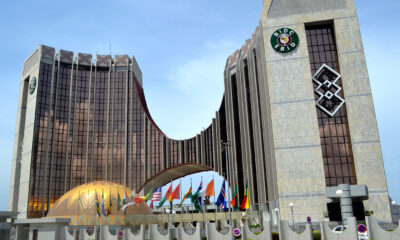
EBID, CORIS Holding sign 80m euro financing agreement to strengthen food, energy, agric value chains in West Africa
-

 Stock Market2 days ago
NGX All-Share Index advanced by 0.18%, capitalisation increased by 0.18% to N158.61trn
-

 Finance14 hours ago
CBN holds fair in Gombe to deepen financial inclusion, promote economic growth
-
 Agriculture14 hours ago
African Development Fund grants $4.3m to strengthen integration of natural capital into decision-making in 13 African countries