Connect with us

Column

Curbing CBN power is an open invitation to economic anarchy

Published

on

By Omoh Gabriel
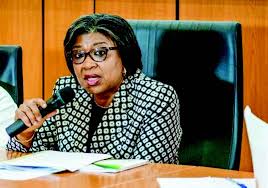
Nigeria is a country of paradox. Every Nigerian, the high and the low wants to have their way as long as it please them. The political class are worse, they sing discordant tune in issues where they have vested interest. It is never about the welfare and general good of Nigeria but about selfish interest of the privileged few. It is no surprise that the Minister of Finance is calling on the National Assembly to reduce the powers of the governor of the Central Bank of Nigeria (CBN). Her reason is that the extensive powers of the governors is the disconnect between Federal Government’s monetary and fiscal policies. She pleaded with the National Assembly that conferred the powers on the CBN boss, through a legal instrument, to slash them to pave the way for checks and balances.
Kemi Adeosun call is no surprise knowing full well that the civil servants working with her have no institutional memory to advise her wisely or they just wanted a repeat of the past. They may have gone into the archive to find that under military regime the power of CBN was curtailed and it was placed under the minister’s supervision.
What this means is that the Central Bank should be brought under the supervision of the Ministry of Finance as it was before the 1999 CBN act which gave it autonomy. The minister is certainly not speaking for herself but her principals and those in government who hardly understand the workings of the economy. This government has in many instances want to borrow much more than it is permissible under the law, but the subtle resistance by the CBN that the public sector is crowding out the private sector from access to loans is to the chagrin of the minister. It is the same minister that asked the CBN to artificially set interest rate at a lower than inflation rate so that the cost of government’s domestic borrowing can be reduced.
Nigerians must be wary of policy issues trust at them by political neophytes seeking either political point or self interest. Nigerians who are old enough to remember the military era will quick to admit that the Central Bank of Nigeria has had a chequered history of autonomy since its inception in 1958, varying between autonomy and control. Economic history show that in the 1958 Act, the CBN was granted a measure of autonomy, which was gradually eroded until 1991 when the autonomy was restored. The erosion of the Bank’s autonomy between the years coincided with military interventions in politics in Nigeria. Again, the autonomy was gradually eroded until 1999 when administrative and instrument autonomy was granted to the Bank to shield it from political pressures in the implementation of policy. From the inception of the Bank, the administrative structure has been that the Governor of the CBN presides over the Board of Directors and Executive Directors or Deputy Governors had always been on the Board. This arrangement had ensured easier, smoother and faster implementation of monetary and financial policies. The Central Bank of Nigeria requires full independence in the true sense of it to enable it act appropriately. The global trends have been towards full independence for central banks.
In the course of discharging its various functions over the years, the CBN has had to grapple with major constraints. These constraints on its effectiveness are traceable to both exogenous and endogenous factors. Of particular importance, is the intermittent erosion of the discretionary power of the CBN in many vital areas of its operations.
As was in the past before the 1999 amendment of the CBN act that gave it some form of autonomy, the Federal Minister of Finance under an amendment to the CBN Act received the power to intervene in the formulation of monetary and credit policies by the CBN. The amendment Act empowered the minister on the event of a disagreement with the CBN, to take his views and those of the CBN to the Federal Executive Council for the final policy decision which the CBN would be bound to implement. As compared with the position in the original Central Bank Act (1958), therefore, the Bank after these amendments no longer enjoyed the complete autonomy in respect of monetary and credit policies. It is this position that the minister of Finance and her co travellers are advocating in the 21st century. What Nigerian and the Minister of Finance must know is that Nigeria had travelled this road before with grave consequences, what she is seeking is a situation that leaves room for conflicts that have detrimental effect on the status and effectiveness of the Central Bank of Nigeria.
Over the years, such conflicts have been evident. For instance, in the “Recurrent and Capital Estimates of the Government of the Federal Republic of Nigeria, 1974—75”, the functions of the Federal Ministry of finance were defined to include, among other things, the (a) formation (sic) of policies on Fiscal and Monetary matters; maintenance of adequate foreign exchange overseas aimed at ensuring a healthy balance of payments position; and maintenance of the internal and external value and stability of the Nigerian Currency”.
From the above listing of functions, it would appear that the Ministry of Finance was arrogating to itself the functions considered to be the prime responsibility of the CBN.
In the course of the day to day contact between officials of the CBN and those of the ministry of Finance the officers and executives of the CBN have at times been treated as if they were of subordinate status.
As regards to banking policies, there were, during the period, especially immediately after the deregulation of the economy in 1986, instances of commercial banks successfully circumventing the Central Bank by obtaining from the Ministry of Finance, approval for actions which had been judged imprudent by the Central Bank which tends to undermined the rational allocation of responsibilities among the various agencies of the public sector. The issue over which differences of views between the CBN and the Ministry of Finance have had the most far-reaching consequences arose out of the “Udoji Report”.
Following that Report, the CBN took the position that the payments of arrears of salary based on the new pay scales as was being considered, would be highly inflationary. The Bank recommended to government instead that the award made should commence with effect from the date of the acceptance of the Report by the Federal Military Government”.
For those of us who follow the trend at the time, the views of the CBN’s Board of Directors were conveyed by the Governor to the Permanent Secretary, Federal ministry of Finance but it was clear that the CBN’s recommendation did not find favour with the Ministry although a compromise was reached. Members of the Board to whom the proposed compromise solution could be communicated within the time available were unconvinced and expressed their desire that the CBN memorandum should still be submitted to the Federal Executive Council, but this was not done.
When the full Board met again on the subject, it passed a resolution in which the Ministry of Finance was told that future cases of that nature would be taken by the CBN to the Head of the Federal Military Government. From internal memos, the reaction of the Ministry conveyed in a letter from the Permanent Secretary was seen by the Board as a continuation of the confrontation with the CBN. This letter insisted that the CBN’s memorandum had been circulated to the Federal Executive Council in a form the ministry could comprehend, but added that the apparent legal position of the CBN was unfounded. It was argued that the CBN, as expected, had been consulted as financial adviser to the government, but added that the Udoji Report could not remotely be interpreted as a monetary and banking policy pursued or intended to be pursued by the Central Bank in respect of which the CBN had conditional access to the Federal Executive Council. Nigerians will recall that the inflationary trend that followed the Udoji award left a scar in the Nigerian economy.
Another and perhaps the most serious erosion of CBN’s modicum of independence ‘within’ the Government with which it was equipped at its inception as a fundamental condition for its efficient operation, arises from the so-called streamlining of the service conditions of the Central Bank with those of the entire Public service. With the CBN Amendment Decree 1970, the Federal Military Government had made the determination of salaries and conditions of service of the CBN employees subject to the stipulation of the Federal Executive Council.
The introduction of the unified salary structure following the recommendations of the Udoji Commission in effect down-graded the CBN and placed it in a competitive disadvantage in the labour market. The predictable adverse effects of the implementation of the Report on the CBN, increased difficulty in recruitment of staff of the right calibre, and accelerated increase in staff turnover among other considerations, compelled the CBN to invite Mckinsey firm of experts to make recommendations on how to restructure the CBN for efficiency and dense’ measures designed to enable the Bank recruit and retain staff of the required calibre.
It is this kind of CBN the minister of Finance is calling for in today’s complex economy.
The Central Bank of Nigeria (CBN), like most others, has the core mandate of maintaining price stability and ensuring a non-inflationary growth. The Central Bank is also a regulator, banking supervisor, and development bank. It has the responsibility to ensure a sound and stable financial system in addition to other developmental functions. These mandates and functions are peculiar to central banks in developing economies, and no other institution performs such functions. These special responsibilities are enormous and have continued to pose increasing challenges to central banks, largely because developments in the domestic and international economies create intricacies and complexities in the financial systems and the art of central banking. Indeed, the current trend of globalisation exemplified by economic and monetary unions has increased the challenges of central banking.
The effective discharge of these responsibilities requires that central banks be independent in the true sense of it, that is, shielded from the whims and caprices of politicians, free from political interferences, especially from political neophytes; have administrative independence and instrument autonomy.
In 2012, the National Assembly had muted the idea of tinkling with the CBN autonomy as a result of Governor Lamido Sanusi revelation that 25 per cent of budget overhead cost were incurred by the National Assembly, but jettisoned the plan when they realised that it will do the economy no good. The recent call by the minister of Finance for the National Assembly to curtail the powers of the CBN is turning the hand of the clock backward by self seeking politicians. Taking over the management of the CBN by politicians is an invitation to economic anarchy. The current Nigerian political class want to go out of their way to make the CBN the Idi Amin’s Uganda kind of central bank, were the language will print the Naira apology to Jimoh Ibrahim. Nigerians must ignore the call.

Continue Reading

Column

Decemberissaveybe: Firstbank sponsors “the caveman concert” thrills audience 

Published

on

By Oladapo Sofowora
 
December is a particularly vibrant and deeply meaningful month in Nigeria, imbued with a palpable sense of excitement and celebration that permeates the air. As daily life slows down, this festive season offers a welcome opportunity for relaxation and togetherness. Families and friends gather to create cherished memories, participating in a rich tapestry of cultural activities that showcase Nigeria’s diverse heritage. The month is characterized by a colourful array of events, including theatrical plays, musical concerts, traditional festivals, operas, fashion shows, poetry readings, and various forms of performance arts, all reflecting the dynamic cultural expressions of Nigerian society.
 As December unfolds, the excitement continues to build, with streets and homes becoming vibrant displays of holiday spirit. Elaborate decorations adorn every corner, featuring colourful Christmas ornaments, twinkling lights, and festive paraphernalia that evoke a sense of wonder and joy. Evening skies light up with breathtaking fireworks, illuminating the night and further enhancing the joyous mood of the season. Year-end Thanksgiving parties have become commonplace, offering spaces for loved ones to gather, share meals, and express gratitude for the blessings and experiences of the past year. This period also allows Nigerians to reconnect with family and friends, many of whom travel from various parts of the globe to partake in these significant celebrations.
 As the year-end festivities for 2024 draw near, FirstBank has thoughtfully curated an exhilarating lineup of events under the DecemberIssaVybe program, aimed at enhancing the enjoyment of this festive season. A highlight of this initiative is the much-anticipated concert featuring The Cavemen, a celebrated musical duo. Which was held on Friday, December 27, 2024, at Muri Okunola Park, located along the bustling Lekki-Epe Expressway, the event brought Lagos to life with a captivating performance that seamlessly blends highlife, soul, and folk music. Attendees enjoyed an engaging experience filled with mesmerizing sounds for over an hour, keeping them on their feet and immersed in the rhythm.
 The atmosphere at the concert was electrifying, drawing a diverse crowd of enthusiastic youth eager to experience The Cavemen’s unique interpretation of highlife music—a genre deeply rooted in Nigerian culture and characterized by its rich, rhythmic beats and soulful melodies. The concert also featured an impressive lineup of other notable artists, such as the popular act Ckay, who collectively contributed to a night filled with remarkable entertainment and unforgettable performances. The stage witnessed a pulsation of energy as The Cavemen’s talented band propelled the evening forward, delivering an infectious performance marked by masterfully executed guitar riffs, powerful drumming, and enchanting vocals. Audiences found themselves wholly absorbed in the moment, as the music unites them in joy and celebration, showcasing the revitalization and redefinition of the highlife genre that The Cavemen have pioneered.
In addition to the music, the concert artfully integrates comedic performances, highlighting the vibrant and diverse creative entertainment scene in Africa. Acclaimed comedians took to the stage, drawing laughter and delight from the crowd, while emerging music also had their moment in the spotlight, receiving enthusiastic applause and encouragement from an appreciative audience. Recognising the profound impact of December in nurturing relationships and spreading joy, FirstBank has actively engaged its First@arts initiative to launch the annual DecemberIssaVybe campaign. This initiative is meticulously crafted to inspire and empower individuals across Nigeria to create and experience exhilarating moments throughout this joyous season. By providing fully sponsored access to premium concerts, theatrical performances, shows, and festivals featuring some of the industry’s top entertainers, FirstBank aims to alleviate the financial burdens that often accompany festive celebrations.
 In a time marked by economic uncertainty, FirstBank stands as a crucial support system for Nigerians wishing to celebrate without the weight of added financial stress. With a proud legacy spanning over 130 years, this esteemed financial institution has woven itself into the fabric of Nigerian life. FirstBank has long championed numerous festive concerts showcasing Africa’s music icons, including Kizz Daniel, Davido, Burna Boy, Asake, and Tiwa Savage, crafting unforgettable experiences for music aficionados across the nation.
The DecemberIssaVybe campaign encapsulates the essence of creating lasting memories during this festive season. It serves as a dynamic platform for both local and international audiences to immerse themselves in unique, culturally rich experiences tailored to the holiday spirit. Since its inception in 2018, the FirstBankIssaVybe campaign has quickly become a highly anticipated annual event, delighting participants with exhilarating moments designed to resonate and linger long after the celebrations are over. Olayinka Ijabiyi, the Acting Group Head of Marketing & Corporate Communications at FirstBank, emphasized the institution’s unwavering commitment to crafting a ‘Wow December to Remember’ experience for individuals of all ages. He stated, “FirstBank is devoted to facilitating memorable homecoming experiences this December through gatherings such as weddings, family reunions, and festive celebrations, ensuring that every moment spent together is cherished.” Through this commitment, FirstBank continues to play a pivotal role in the celebration of culture and community during this significant time of year.

Continue Reading

Column

Deadly rice stampedes: Suppose President Tinubu bans rice?

Published

on

By Ikeddy ISIGUZO
Once President Bola Ahmed Tinubu addresses Nigerians it is clear that his silence is actually golden, as it gives chances to guess what the President feels about ordinary Nigerians, the hungry, the poor, the weak, those excluded from Tinubu’s concerns because they are not rich. The President rushing in with a media chat, after 18 months in office, and days after the “poverty stampede” in Ibadan, where mainly children died, was thought to be an opportunity to explain to Nigerians, elicit their support as they go through a crushing economic crisis that the President gloats about as if the entire purpose of his policies is to inflict pains. The deaths in Ibadan that were over 35, were followed by similar incidents in a church in Abuja, and an individual’s event in Okija. The deaths resulted from free distribution of rice to the needy. Poverty once personal, private, is now public, and deadly.
Just blame rice.
Are opponents using free rice to distract the President from focusing on his economic policies? The President should ban rice for more clarity. No rice, no stampede, no deaths. One of my teachers said the solution to headache was decapitation – no head, no headache, or any ache for that matter.
We remember Tinubu promised Nigerians “agbado (corn) and cassava”. Not rice. More people have fallen into poverty without the President’s permission. Should they? Could this account for the President not knowing about them? What really does the President know about Nigerians?
Does he know that more people would have died if they knew of these events? Food is beyond the reach of ordinary Nigerians. Tinubu does not feel the impact of his harsh economic practices of lavish spending on presidential consumptions, unproductive as they are. Some call the spendings reckless.
Would you blame them? In the midst of a drifting economy, soaring inflation, no jobs, hunger, anger, capped with insecurity, the President bought jets, including one for the Vice President, and maintains a bloated cabinet.
He used the presidential chat as a platform to defend his Ministers. They are performing. He sounded as if he needed more people like the bunch that maintains a distance from the daily challenges people face.
For the President to see “switching off things” as the solution to poor electricity supply – and the frequency with which the national grid collapses – was one indication that governance has become a joke. When the Minister of Power, months ago, held the same position on electricity, the public tore him to shreds. The Minister apologise. Tinubu blamed the organisers for the stampede, “I see this as a very great error on the part of the organisers.” He said he had been giving out foodstuffs, including envelopes, smoothly at his Bourdillon residence in the past 25 years. “If you do not have enough to give, don’t publicise it,” he advised organisers.
The organisers too are poor, and have no Bourdillon pedigrees. These things count.
Do not expect Tinubu to blame the new wave of incremental poverty his hope agenda has renewed. He did not. He will not. If Tinubu halts the slide to absolute poverty for more Nigerians, there would be no deadly rice stampedes, and no organisers to blame. Other Nigerians have organised these events for years without incidents. Large crowds would turn up and go home home safely. Was it not rice they shared? What is the difference now? People are out searching for something to eat, anything. Even if “pure water” is being shared, there will be stampede. Our people are living by the minute.
They have lost hope. Nigerians have no assurance that someone cares about their efforts to survive. Millions of our compatriots are ready to do anything to survive. While at it, insecurity is not allowing them to breathe.
Sadly, more of our people are falling into crimes with the times.
Employment opportunities are shrinking. The few jobs available are for relations of those in power, the rich, the very rich, the same ones who accuse us of greed. Do they have a different meaning for greed?
Last October, the Senate President, His Excellency Obong Godswill Akpabio on the floor of the Senate advised poor Nigerians, “Times are difficult, wherever you see free food, please endeavour to avail yourself”. Could the people have followed Akpabio’s perspective of the solution to poverty and the hard times? Mocking the poor is Akpabio’s favourite idea of enlivening Senate sessions.
“The prayer is that, let the poor breathe, and Senator Mustapha has seconded that the poor should breathe. Those who are in support of the additional prayer that the poor should be allowed to breathe, say ‘ayes’ and those who are against say ‘nay,’” Akpabio had said in July 2023 during a debate on the 15 per cent hike of electricity tariff. “The ayes have it! The poor must be allowed to breathe,” Akpabio concluded.
At a Niger Delta Development Commission event in July 2024, Akpabio mocked those who called for demonstration over the economic hardship. “Those who want to protest can protest, but let us be there eating,” the former Akwa Ibom State Governor had said. In Tinubu’s 18 months, poverty has pole-vaulted to dizzy heights that left Nigerians dazed.
The only thing worse is the President’s spectacular performances when addressing his failure to rein in inflation as he drives the economy with the enthusiasm of kids playing with new toys. People are hungry. Some people around the President call poor, hungry Nigerians “greedy”. Someone looking for what to eat is greedy? Have we fallen so low to justify the President’s unwillingness to accept that the problem is well beyond him?
Is he using his uncaring attitude as a buffer? He is the bigger problem by refusing to engage the people. Rather, he talks down on them when he decides to talk, well aware that he has nothing to say.

Take the tax bills, for instance, they have their merits. Tinubu thinks it is beneath him to discuss issues the radical bills raise. He sneers, the bills will be passed. He takes responsibility for nothing. Tinubu sounds like Rik Rok and Shaggy in their famous 2000 hit song, “It Wasn’t Me”. The President provides answers without addressing our concerns. The answers are always dismissive. The major lesson of 2024 is that Nigerians have to continue looking after themselves. It may even annoy those who are just discovering that they cannot decide when we should stop breathing.
Happy New Year, that is peaceful – prosperity will follow peace.
Finally… INFLATION to crash from 34.6% to 15% in 12 months, is what the President has promised in 2025. Safe trip, Mr. President.
FEDEERAL Capital Territory Minister Ezewoke Nyesom Wike said of those who accuse him of land grabbing, “Peo­ple say land grabbing, do you grab what you are in charge of? I am in charge of land in Abuja how will I go and grab what I am in charge of? Those, who are grabbing land are whom I am dealing with”. Wike, at the Port Harcourt event where he spoke, did not forget to call Governor Sim Fubara, “this boy”.
*ISIGUZO is a major commentator on minor issues

Continue Reading

Column

Building a stronger Nigeria through health, transparency, human rights

Published

on

By Ambassador Richard M. Mills, U.S. Ambassador to Nigeria
Every December, we mark three international observances that are at the heart of the U.S.-Nigeria partnership: World AIDS Day, International Anti-Corruption Day, and Human Rights Day.  While distinct, these commemorations underscore a simple truth – Nigeria’s path forward requires progress on health, good governance, and human rights.  The United States remains your steadfast partner on this journey. For two decades, the United States has stood with Nigeria in the fight against HIV/AIDS under the President’s Emergency Plan for AIDS Relief (PEPFAR).  The U.S. government has invested more than $8.3 billion in Nigeria’s health sector and provided life-saving anti-retroviral treatment to more than 1.5 million people.  These numbers represent improved life expectancy and quality of life for these Nigerians and their families.  In clinics across Nigeria, I’ve met dedicated healthcare workers who deliver HIV prevention, treatment, and care, supported by the resources of the American people.  This work has done more than save lives – using HIV as an entry point, Nigeria’s health system has also benefited.  
As Nigeria’s health system is strengthened, this important work will be led by government and engagement with the private sector to sustain the gains.  This commitment was reinforced during Ambassador Nkengasong’s recent visit, where his discussions with Nigerian health officials focused on how the Government of Nigeria would sustain the HIV health programs with strengthened Nigerian leadership and local ownership. But positive health outcomes depend critically on good governance.  When medical supplies are diverted, when healthcare workers go unpaid, when facilities buy dangerous, counterfeit medications or lack resources due to mismanaged funds, it costs lives. 
This is why the United States supports numerous initiatives, not only in the health sector, to enhance transparency and accountability in Nigeria.  Our programs work directly with government agencies and civil society organizations to strengthen fiscal responsibility with the goal of the state ensuring resources reach their intended beneficiaries.
The success of these efforts rests on respect for human rights and civic engagement.  When members of marginalized communities face discrimination in accessing healthcare, when citizens fear reporting blatant corruption like the need to pay for appointments or ‘free’ healthcare, or when vulnerable populations cannot advocate for their needs, development falters.  Through our partnership with Nigeria, we promote the rights of every person to access essential services and enjoy fundamental freedoms without fear or discrimination. These three areas – health, transparency, and human rights – reinforce each other. 
Consider the results: U.S.-supported initiatives have helped strengthen pharmaceutical supply chains, reducing theft and ensuring safe medicines reach patients.  Our human rights programming has empowered civil society organizations to advocate for marginalized communities, leading to better access to health services.  Our health system investments have created platforms for transparency that benefit all sectors.  And, perhaps most importantly, according to a recent survey by the United Nations Office on Drugs and Crime, Nigerians are both more frequently refusing to pay bribes and reporting bribe seekers to investigative journalists and rule of law authorities.  A shift in norms is beginning to take root and must continue.    
 The U.S. Embassy stands ready to support Nigerian voices pressing the fight against corruption in Nigeria.  To Nigeria’s government officials, civil society leaders, healthcare workers, and citizens:  your dedication to building a stronger nation inspires us.  Together, we can continue to advance the interconnected goals of better health outcomes, good governance, and human rights for all Nigerians.  Challenges remain, but the work we’ve done together shows what could be possible on a larger scale across these crucial domains. As we mark these December observances, let us use this moment not just for reflection, but for renewed commitment and action.  The United States continues to stand with the Nigerian people as they carry out this essential work with their elected government.
*Ambassador Richard M. Mills is U.S. Ambassador to Nigeria

Continue Reading

Trending