
Economy
High rates of inequality persist within and among countries—-World Bank


IMF/World Bank Group Development committee has said said that high rate of inequality persist within and among countries globally. Rising from the 2017 Annual Meeting the Committee in its conclusion said that global growth has improved over the past year with a recovery in investment, trade and commodity prices as well as supportive global financial conditions. It said that despite this “risks to the global outlook remain skewed to the downside, and prospects for growth vary widely across countries. While there has been encouraging progress in poverty reduction globally; high rates of inequality persist within and among countries, and stubborn pockets of poverty remain. Complex, interlinked challenges also risk rolling back the important gains of recent decades in an increasingly interconnected global economy.
According to the Committee “the urgency and scale of today’s risks to development require national and global coordinated action to achieve robust, sustainable, and inclusive development outcomes. The WBG is an effective and accountable leader in the global development arena, and we acknowledge its strong track record of supporting countries’ long-term development ambitions. With its capable staff, it is well-positioned to catalyse and deploy public and private finance to serve all clients using a range of financial, risk, advisory and knowledge products. It also has the capacity to convene partners at the global, regional, and national levels. These factors make it a unique institution within the development community.
“Recent human losses and economic shocks caused by natural disasters, famine, conflict, and displacement demonstrate that hard-earned economic and social gains can easily be lost. The need for fiscal adjustment also poses challenges in many economies, especially in highly indebted countries. We call on the WBG and the International Monetary Fund (IMF) to remain alert to the risk of debt distress amid the cyclical and structural headwinds that confront many developing economies, including through enhanced support for private investment in Africa. Their continued assistance is critical to countries’ efforts to achieve sustainable and inclusive growth, enhance human capital, and strengthen resilience.
It further said “to promote sustainable and inclusive growth, we urge enhanced coordination and partnership across multilateral development banks (MDBs) and other international financial institutions (IFIs) to help leverage the financing required to create jobs and build healthy economies. We are encouraged by WBG efforts to maximize finance for development, including through the Cascade approach, which is intended to ensure that public and private investments are complementary. We ask the WBG to help countries maximize their development resources by drawing appropriately on private sector solutions to achieve the WBG’s twin goals and the Sustainable Development Goals (SDGs).
“To enhance human capital, we encourage systematic approaches to health, nutrition, education, and social protection that create the foundations for long-term development. In particular, we welcome the World Development Report, Learning to Realise Education’s Promise. Improving learning outcomes for all is an important practical strategy for eliminating poverty and achieving shared prosperity. It is also a moral imperative. When children attend school without learning even the most basic life skills, it is not just a wasted opportunity; it is also a grave injustice. We urge the WBG to work with clients to adapt and design policies which over time can help them bolster learning and prepare their citizens for technological changes that will transform labor markets.
“Closing gender gaps for women in access to property, finance and decent work is critical for achieving the SDGs. We are encouraged by the WBG’s creation of the Women Entrepreneurs Finance Initiative, which is expected to leverage more than US$1 billion to help unlock the potential of women entrepreneurs. We also welcome the creation of a Gender Diversity Working Group at the Board of Executive Directors and request an update on its progress by the Spring Meetings in 2018. To strengthen resilience, we urge continued investment in policies and programs that enable economic diversification and minimise the negative impact of acute and long-term challenges to development. Macroeconomic shocks arising from such crises as conflict, pandemics, natural disasters, and extreme weather events can displace communities and create high costs in terms of lost lives, livelihoods, infrastructure and social cohesion. Moreover, cyclical shocks place pressure on vulnerable financial systems. We call on the WBG and IMF to continue to work with countries to strengthen domestic resource mobilisation, reduce illicit financial flows, create instruments for crisis and disaster prevention and preparedness, and ensure economic and social resilience when crises and disasters occur.
The committee also said “We highlight the need for action to address challenges – climate change, migration and forced displacement, global health, as well as fragility, conflict and violence (FCV) – that threaten all countries. We applaud platforms such as the Caribbean Catastrophe Risk Insurance Facility, the Global Concessional Financing Facility and the Pandemic Emergency Financing Facility as examples of WBG leadership in helping countries apply solutions at national, regional, and global levels. We note the ambition set out in the WBG Climate Change Action Plan. We recognise that small states are disproportionately affected by disaster risks and note the continued importance of facilitating their access to finance. We welcome the start of IDA18, its record replenishment of US$75 billion, its new financial model and Triple A rating, and its focus on jobs and economic transformation, gender, climate change, governance and FCV. We look forward to successful implementation, including the contribution that increases in funding and staff will make in countries affected by FCV. We especially commend the renewed focus on facilitating private sector investment to boost growth for the poorest and most vulnerable. In this regard, we recognize the importance of IDA18’s IFC-MIGA Private Sector Window to mobilize private investment and create markets in the most challenging environments.
“We are encouraged by the Forward Look implementation update and recognize the importance of the WBG serving all client segments, noting that resources should be strategically deployed to meet global and client needs and targeted to areas of the world that most need funding and have least access to capital, with a tailored value proposition to the full range of clients. We support the initiatives that seek to optimize operational and administrative simplification without compromising the quality of WBG operational and analytical support. We expect the WBG to continuously strive for improvement through initiatives such as the Environment and Social Framework implementation, the Agile program as well as the Compensation Review. Increasing efficiency and effectiveness are also critical to support the institution’s goals of reducing poverty and boosting shared prosperity in a sustainable manner. We look forward to a further update at the Spring Meetings 2018, including targets for measuring progress.
“We welcome the progress report to Governors on the Shareholding Review. We endorse the continuing work that provides for further consideration of options and call on the Board to bring these discussions to a successful conclusion by Spring Meetings 2018. We recall the high ambition set out in the Forward Look and recognise the expectations placed on the WBG. We ask the Board and Management to review all possible options to enhance the WBG’s financial capacity and develop a package of measures, including internal levers and general and selective capital increases, for Governors’ consideration, with the aim of reaching a decision at the 2018 Spring Meetings”.
-
 Economy1 day ago
CPPE expresses worry over real-sector financing gap of over ₦50trn, proposes new devt-finance architecture
-
 Oil and Gas1 day ago
Energy professionals demand probe of NNPC, NUPRC over transparency concerns
-

 Economy1 day ago
Alake’s media aide debunks claims of handing over Nigeria’s solid minerals to Chinese
-

 Oil and Gas1 day ago
Group urges Ogoni to support resumption of oil production, 33-year shutdown cost Nigeria, Rivers $226bn
-
 Oil and Gas6 hours ago
Oil prices drop 5% to three-week low after Trump cancels attack on Iran
-
Oil and Gas6 hours ago
NNPC remits N6.286trn into federation account between January and June 2026, issues another tender to sell Cawthorne crude
-
 Economy6 hours ago
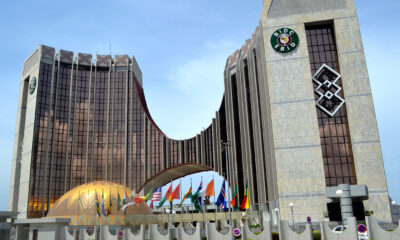
EBID, CORIS Holding sign 80m euro financing agreement to strengthen food, energy, agric value chains in West Africa
-

 News6 hours ago
Breastfeeding can improve Nigeria’s economy—Commissioner