
Agriculture
CBN unveils Guidelines for Long-term lending to agric, manufacturing

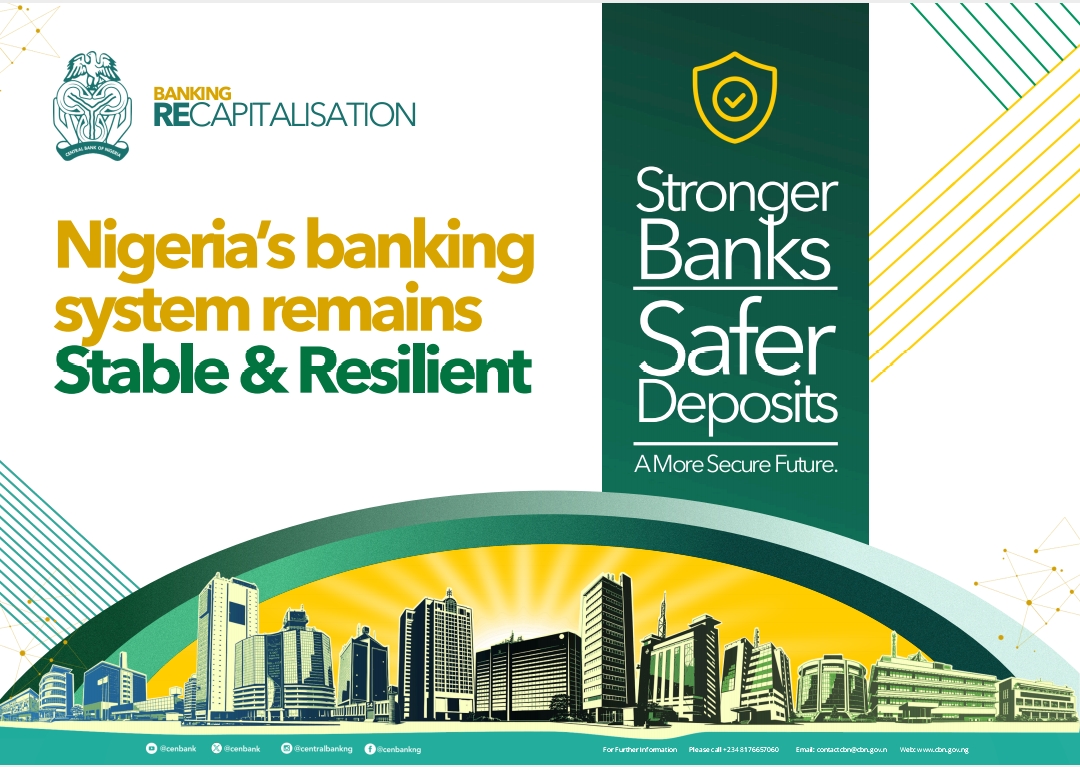
The Central Bank of Nigeria (CBN) has disclosed its desire to increase the flow of credit to the real sector of the economy, in order to consolidate and sustain the nation’s economic recovery. Giving further clarifications on the guidelines, the Bank’s acting Director of Corporate Communications, Mr. Isaac Okorafor, said that the Bank hoped to achieve the flow of credit to the real sector of the economy as deposit money banks (DMBs) would henceforth be incentivised to direct affordable, long-term bank credit to the manufacturing, agriculture, as well as other sectors considered by the Bank as employment and growth stimulating.
It will be recalled that the CBN Monetary Policy Committee (MPC), at its 119thmeeting held on July 23 and 24, 2018, introduced its revised guidelines for Accessing Real Sector Support Facility (RSSDF) through Cash Reserves Requirement (CRR)/Corporate Bonds (CBs). Mr. Okorafor disclosed that Corporate/Triple-A rated companies would be encouraged to issue long-term Corporate Bonds (CBs), adding that Corporate Bonds (CB) Funding Programme had been put in place.
The programme, according to him, involves investment by the CBN and the general public in CBs issued by corporates subject to the intensified transparency requirements for participating corporates. He also noted that such requirements would include publishing through printing of an Information Memorandum spelling out the details of the projects for which the funds are required together with terms and conditions showing that these are long term projects that are employment and growth stimulating.
Furthermore, he disclosed that the Bank had put in place a programme under the Differentiated Cash Reserves Requirement (DCRR) Regime whereby DMBs interested in providing Credit Financing to greenfield (new) and brownfield (expansion) projects in the real sector (Agriculture and Manufacturing) could request for the release of funds from their CRR to finance the projects; subject to DMBs providing verifiable evidence that the funds shall be directed at the approved projects by the CBN.
Making further clarifications, he said that the tenor for the Differentiated CRR would be a minimum of seven years with a two-year moratorium. For the Corporate Bonds (CBs) Programme, he said the tenor and the moratorium would be specified in the prospectus by the issuing corporate. He added that the maximum facility shall be N10 billion per project and facilities are to be administered at an all-in Interest rate/charge of 9 per cent per annum. Mr. Okorafor therefore advocated for a total compliance with the guidelines by stakeholders and also highlighted the eligibility criteria for participation in the facility/CP programme, as well as the responsibilities of the stakeholders; just as he reiterated the CBN’s determination towards the encouragement of projects that will further enhance Nigeria’s import substitution strategies.
-

 News2 days ago
Northeast Development Commission distributes 10,000 e-vehicles to beneficiaries
-

 Economy2 days ago
72% of world trade still operates under WTO— Okonjo-Iweala
-

 Oil and Gas2 days ago
Olugboboro community expresses worry over Oando Plc’s decision to halt reclamation project
-

 News2 days ago
Wike seeks N400bn to complete Abuja millennium tower
-

 News2 days ago
Subsidy savings spent on debt servicing, higher spending—Oyedele
-

 Economy13 hours ago
FG rolls out plan to strengthen power supply
-

 News13 hours ago
US bans imports from 43 more companies over China’s alleged forced labour
-
 News13 hours ago
Ban on sale of sachet alcoholic drinks remains—NAFDAC