
Business
EU to stop issuance of ‘golden passports’ for big investors

The European Commission has urged a crackdown on member states handing out “golden passports” and visas to non-EU nationals in exchange for large investments. The Commission has pledged closer monitoring of such schemes which it claims help organised crime groups infiltrate the bloc and can be used for money-laundering and tax evasion. Twenty EU countries, including the UK, offer either a golden passport or visa system, which gives individuals free movement across the 28-member bloc, access to the single market and other rights. The warning is contained in the EU Commission’s first report on the multi-billion-dollar industry of so-called “investment migration”, which critics have claimed effectively amounts to a money-for-citizenship scam.
“Although legal, these schemes are sometimes run in opaque ways and without sufficient checks on those who acquire passports and visas,” reports Reuters. Of greatest concern are Malta, Cyprus and Bulgaria, which this week announced it was halting its passport-selling programme. They are the only EU countries that sell citizenship to non-EU nationals – for investments of between €1m and €2m. While golden visas are more common, they are no less controversial. Minimum investment thresholds range from €15,000 in Croatia to over €5m in Luxembourg and Slovakia.

A report last year by anti-corruption group Transparency International concluded that “such programmes are big business” and “around €25bn in foreign direct investment has flowed into the EU through these schemes over the past 10 years”. The BBC‘s Adam Fleming reports that another anti-corruption campaign group Global Witness, which conducted a two year investigation into golden visa abuse, has accused the EU of raising the alarm but failing to offer solutions. In December, the UK government announced it would be suspending its £2m top-tier investor visa scheme. Around 1,000 applications for Tier 1 investor visas were granted last year, with the majority historically going to Russian and Chinese investors.
However, the BBC reported that after the 7 December cut-off date set by ministers, the scheme was, in fact, “not currently suspended”. The Home Office has since said that, from this year, independent, regulated auditors will assess applicants’ financial and business interests and check they have had control of the funds for at least two years.
-
 Economy2 days ago
Nigeria Sovereign Investment Authority announces winners of $275,000 prize for innovation
-

 Finance2 days ago
Airtel Money reports 25% growth in first-half revenue in maiden results
-

 Economy2 days ago
FG targets single-digit inflation by end-2027 to unlock cheaper borrowing— Oyedele
-
 News2 days ago
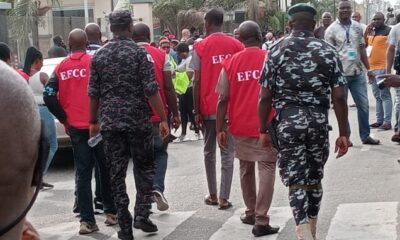
EFCC arrests 14 Chinese nationals in Nigeria for operating illegal lithium processing plants
-

 Maritime2 days ago
NIMASA, ITF signs MOU on Seafarer wellbeing, MoU First in Africa—ITF
-

 Oil and Gas2 days ago
Honeywell Technologies launches new AI platform at Dangote’s Nigeria refinery
-

 Finance23 hours ago
UBA seeks jail term for WEMPCO directors, intensifies N61bn loan recovery drive
-

 Oil and Gas23 hours ago
Bayelsa suspends oil firm’s land acquisition over fatal community dispute