Connect with us

Finance

FG orders 24 hours ports operation

Published

on

—– Okonjo-Iweala’s World Bank contest boosts Nigeria’s profile
Concerned by the increasing cost of doing business in Nigeria, President Goodluck Jonathan has ordered 24 hours operations at the Nigerian ports in a bid to reduce the number of days for clearing goods as well as make the ports more competitive.

The coordinating minister for the economy and minister of finance Dr. Ngozi Okonjo-Iweala dropped the hint yesterday in Washington at the just concluded Spring meeting of the IMF/World Bank
The minster, who addressed the Nigerian press alongside the Central Bank of Nigeria (CBN) Governor, Mallam Sanusi Lamido Sanusi; the Governor of Anambra State, Peter Obi and Dr. Mansur Murthar Executive Director World Bank, also said that her bid for the President of the World Bank was well received by the international community and has boosted the profile of not just Nigeria but Africa as a whole.
Lamenting that Nigeria is the only country whose ports do not operate 24 hours, the Finance Minister, said that the country was losing out in terms of revenue as goods are being shipped to neighboring countries that are very efficient in the management of their ports.

“We are the only port working from 9.am to 5pm in the world. Other ports operate 24 hours and that is why their ports are cheap because importers do not have to pay for demurrage. Apart from reducing the number of agencies in the port, which we have done, we also need to remove the bureaucratic requirements.
“Besides, we need to make more investment in modern technology and machineries. So, this is what we are pushing the concessionaries to do,” she said. Corroborating the Finance minister, Governor Obi insisted that the ports concessionaires have actually not made any meaningful investment.
Noting that 60 per cent of goods shipped into West Africa are meant for Nigeria, he said it was cheaper to ship goods to Ghana than Nigeria.

He said empty containers litter the ports because once the goods in them are off-loaded, they are not reloaded for exports and the shippers would rather abandon them instead of carrying empty containers.
The Minister said that the Nigeria delegation to the Spring meetings was besieged by delegates from Africa and other emerging markets with congratulatory messages saying that her bid for the position of World Bank has altered the way the multilateral institution was dealing with the developing countries.
She said that her participation has boosted Nigeria’s image and has been very beneficial to the country since the Nigeria delegation arrived Washington.

On what Nigeria stands to benefit from the Spring meeting, the minister said that the Nigerian team came to the meeting to rob minds with others to share idea and knowledge of what is happening at the global economy to help in planning and preparing for what others are forecasting about the global economy.

She said: “It is vital for us, Nigeria does not exist in isolation, about 60 per cent of Nigeria export goes to Europe and America, so we need to hear what is happening in other economies to be able to calibrate how we might be imparted.
“What we are taking away from this meeting is that there is fragile recovery of the US economy, though there recovery is fragile, unemployment is still high above eight per cent, the Euro zone is even being more fragile, the sovereign debt crisis is still overhanging. In addition, Spain is now joining the whole configuration of countries that are having problem with sovereign debts. As you know things are very tough in Spain, unemployment is about 23 per cent and youth unemployment is 50 per cent, so one of the big economies in Europe is having problem in addition to Greece,Island and Portugal.

“So when you hear that that the global economy is fragile, US is recovering but still very difficult, that gives you information with which to calibrate what you need to do,” she said.
The minster stressed the need for Nigeria to continue the diversification of the economy; the structural reforms on power; the ports reforms; development of sources of growth in agriculture, housing as well as improving our exports of other products.

“We do not need to depend on oil only, which is sent to these economies. We need to diversify trade to Africa countries; to growing economies like India, China and Brazil and other emerging markets. These are the key message. It just reinforces the part we are already on,” she said.
Sanusi reiterated the need for structural reforms to be put in place.
“We need to protect ourselves and hedge because of the vulnerability of our economy because of oil price. This reinforces the need to save at the time when oil prices are high because if these dark clouds translate to fall in oil prices Nigeria is going to have major problems.

“The whole idea of saying let us look at the excess crude account, let us save now when prices are over $100, is basically not because we have a problem now. But if something happens and something may happened based on what we beginning to see, we are going to have problems in both the fiscal and the exchange rate sides.
“We have seen oil fall to $37 per barrel and we all know what the country went through. We will continue engaging until all the tiers of government agree that we have to safe,” he said.

Continue Reading
Click to comment

You must be logged in to post a comment Login

Leave a Reply

Finance

Afreximbank successfully closed its second Samurai Bond transactions, raising JPY 81.8bn or $527m

Published

on

African Export-Import Bank said it has successfully closed its second Samurai bond transaction, securing a total of JPY 81.8 billion (approx. USD 527 million) through Regular and Retail Samurai Bonds offerings.

The execution surpasses the Bank’s 2024 debut issuance size, attracting orders from more than 100 institutional and retail investors, marking a renewed demonstration of strong Japanese investor confidence in the Bank’s credit and its growing presence in the yen capital markets.

On 18 November, Afreximbank priced a JPY 45.8 billion 3-year tranche in the Regular Samurai market following a comprehensive sequence of investor engagement activities leveraging Tokyo International Conference on African Development (TICAD9), including Non-Deal Roadshows (NDRs) in Tokyo, Kanazawa, Kyoto, Shiga and Osaka, a Global Investor Call, and a two-day soft-sounding process which tested investor appetite across 2.5-, 3-, 5-, 7-, and 10-year maturities.

With market expectations of a Bank of Japan interest rate increase, investor demand concentrated in shorter tenors, resulting in a focused 3-year tranche during official marketing.

The tranche attracted strong participation from asset managers (22.3%), life insurers (15.3%), regional corporates, and high-net-worth investors (39.7%).

Concurrently, Afreximbank priced its second Retail Samurai bond on 18 November, a JPY 36.0 billion 3-year tranche, more than double the inaugural JPY 14.1 billion Retail Samurai issuance completed in November 2024.

The 2025 Retail Samurai bond also marks the first Retail Samurai bond issued in Japan in 2025.

Following the amendment to Afreximbank’s shelf registration on 7 November 2025, SMBC Nikko conducted an extensive seven-business-day demand survey through its nationwide branch network, followed by a six-business-day bond offering period.

The offering benefited from strong visibility supported by Afreximbank’s investor engagement across the country, including the Bank’s participation at TICAD9, where Afreximbank hosted the Africa Finance Seminar to introduce Multinational Development Bank’s mandate in Africa and its credit profile to key Japanese institutional investors.

MBC Nikko Securities Inc. acted as Sole Lead Manager and Bookrunner for both the Regular and Retail Samurai transactions. Chandi Mwenebungu, Afreximbank’s Managing Director, Treasury & Markets and Group Treasurer, commented:

“We are pleased with the successful completion of our second Samurai bond transactions, which marked a significant increase from our inaugural Retail Samurai bond in 2024, and which reflect the growing depth of our relationship with Japanese investors.

The strong demand, both in the Regular and Retail offerings, demonstrates sustained confidence in Afreximbank’s credit and mandate.

We remain committed to deepening our engagement in the Samurai market through regular investor activities and continued collaboration with our Japanese partners.”

Continue Reading

Finance

Ecobank unveils SME bazaar: a festive marketplace for local entrepreneurs

Published

on

Ecobank Nigeria, a member of Africa’s leading pan-African banking group, has announced the launch of the Ecobank SME Bazaar—a two-weekend festive marketplace designed to celebrate local creativity, empower entrepreneurs, and give Lagos residents a premium shopping experience this Detty December. The Bazaar will hold on 29–30 November and 6–7 December at the Ecobank Pan African Centre (EPAC), Ozumba Mbadiwe Road, Victoria Island, Lagos. Speaking ahead of the event, Omoboye Odu, Head of SMEs, Ecobank Nigeria, reaffirmed the bank’s commitment to supporting small and medium-sized businesses, describing them as the heartbeat of Nigeria’s economy. She explained that the Ecobank SME Bazaar was created to enhance visibility for entrepreneurs, expand market access, and support sustainable business growth.
According to her, “This isn’t just a market—it’s a vibrant hub of culture, commerce, and connection. From fresh farm produce to trendy fashion, handcrafted pieces, lifestyle products, and delicious food and drinks, the Ecobank SME Bazaar promises an unforgettable experience for both shoppers and participating SMEs. Whether you’re shopping for festive gifts, hunting for unique finds, or soaking in the Detty December energy, this is the place to be.” Ms. Odu added that participating businesses will enjoy increased brand exposure, deeper customer engagement, and meaningful networking opportunities—making the Bazaar a strong platform for both festive-season sales and long-term business growth. The event is powered by Ecobank in partnership with TKD Farms, Eko Marche, Leyyow, and other SME-focused organisations committed to building sustainable enterprises.

Continue Reading

Finance

16 banks have recapitalised before deadline—CBN

Published

on

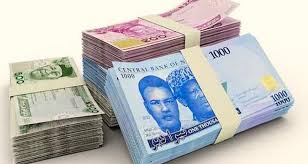
The Central Bank of Nigeria (CBN) has said that16 banks have so far met the new capital requirements for their various licences, some four months before the March 31, 2026 deadline. The apex bank also indicated that 27 other banks have raised capital through various methods in one of the most extensive financial sector reforms since 2004. Addressing journalists at the end of the Monetary Policy Committee (MPC) meeting in Abuja, CBN Governor Mr Olayemi Cardoso said the banking recapitalisation was going on orderly, consistent with the regulator’s expectations. He said, “We are monitoring developments, and indications show the process is moving in the right direction.” Nigeria has 44 deposit-taking banks, including seven commercial banks with international authorisation, 15 with national authorisation, four with regional authorisation, four non-interest banks, six merchant banks, seven financial holding companies and one representative office.
Cardoso explained that eight commercial banks had met the N500 billion capital requirement as of July 22, 2024, rising to 14 by September of the same year. The number has now increased to 16 as the industry continues to race toward full compliance. He said that the reforms would reinforce the resilience of Nigerian banks both within the country and across the continent. “We are building a financial system that will be fit for purpose for the years ahead. Many Nigerian banks now operate across Africa and have been innovative across different markets. These new buffers will better equip them to manage risks in the multiple jurisdictions where they operate,” Cardoso said. According to him, the reforms would strengthen the financial sector’s capability to support households and businesses. He said, “Ultimately, this benefits Nigerians—our traders, our businesses and our citizens—who operate across those regions. “It should give everyone comfort to know that Nigerian banks with deep local understanding are present to support them. Commercial banks are also creating their own buffers through the ongoing recapitalisation.”
He added that the apex bank considered several factors in determining the new capital thresholds, including prevailing macroeconomic conditions, stress test results and the need for stronger risk buffers. He reassured on the regulator’s commitment to strict oversight as the consolidation progresses. “We will rigorously enforce our ‘fit and proper’ criteria for prospective new shareholders, senior management, and board members of banks, and proactively monitor the integrity of financial statements, adequacy of financial resources, and fair valuation of banks’ post-merger balance sheets,” Cardoso said. He said the CBN remained confident that the banking system would emerge stronger at the conclusion of the recapitalization exercise, with institutions better prepared to support Nigeria’s economic transformation Banks have up till March 31, 2026 to beef up their minimum capital base to the new standard set by the apex bank. Under the new minimum capital base, CBN uses a distinctive definition of the new minimum capital base for each category of banks as the addition of share capital and share premium, as against the previous use of shareholders’ funds.
While most banks have shareholders’ funds in excess of the new minimum capital base, their share premium and share capital significantly fall short of the new minimum definition. The CBN had in March 2024 released its circular on review of minimum capital requirement for commercial, merchant and non-interest banks. The apex bank increased the new minimum capital for commercial banks with international affiliations, otherwise known as mega banks, to N500 billion; commercial banks with national authorisation, N200 billion and commercial banks with regional license, N50 billion. Others included merchant banks, N50 billion; non-interest banks with national license, N20 billion and non-interest banks with regional license will now have N10 billion minimum capital. The 24-month timeline for compliance ends on March 31, 2026. Under the guidelines for the recapitalisation exercise, banks are expected to subject their new equity funds to capital verification before the clearance of the allotment proposal and release of the funds to the bank for onwards completion of the offer process and addition of the new capital to its capital base. The CBN is the final signatory in a tripartite capital verification committee that included the Securities and Exchange Commission (SEC) and the Nigeria Deposit Insurance Corporation (NDIC). The committee is saddled with scrutinising new funds being raised by banks under the ongoing banking sector recapitalisation exercise.

Continue Reading

Trending