Analysis
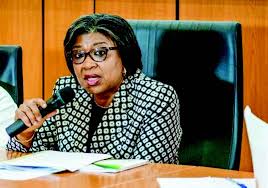
Bill to castrate CBN: In whose interest?
The bill before the National Assembly to amend the CBN Act is particularly interesting. It seems the lawmakers are bent on castrating the apex bank for what they perceived as an overbearing leadership of the bank. Why have the lawmakers suddenly realised that the CBN Act needs amendment? Last year, the members of the National Assembly and the CBN Governor were engaged in debate of the burden of overhead cost the members imposed on the nation. The members seem to now want to take a revenge on the bank. What the honourable members should realise is that central banking in developing countries is saddled with responsibility that makes them very key to the functioning of an economy.
The Central Bank of Nigeria (CBN), like most others, has the core mandate of maintaining price stability and ensuring a non-inflationary growth. The Central Bank is also a regulator, banking supervisor and development bank. It has the responsibility to ensure a sound and stable financial system in addition to other developmental functions. These mandates and functions are peculiar to central banks in developing economies, and no other institution performs such functions. These special responsibilities are enormous and have continued to pose increasing challenges to central banks, largely because developments in the domestic and international economies create intricacies and complexities in the financial systems and the art of central banking. Indeed, the current trend of globalisation exemplified by economic and monetary unions, has increased the challenges of central banking.
The effective discharge of these responsibilities requires that central banks be independent in the true sense of it; that is, shielded from political interferences; have administrative independence and instrument autonomy. The new bill before the National Assembly is seeking to have a chairman of the board of the CBN outside the institution. If the National Assembly before passing the bill ensures that those to be appointed to such an office are individuals with impeccable character and are those with vast knowledge of the economy and are apolitical, all well and good. If the law is to curtail what the house sees as the excesses of the current governor, it will be dangerous for the economy to have a political appointee as head of the apex bank. Such political appointee will not have the know-how needed to manage an economy. Like most other institutions of government in Nigeria, their budgets are passed but how far have they utilised such resources in the over all interest of fellow Nigerians? Why is the National Assembly just realizing the need for the CBN to submit its budget for appropriation? If the current Governor is the problem, he is holding a tenured appointment. He will finish his term and move on. The CBN as an institution will remain.
Making the Governor of the central bank subservient to a politically-appointed Board Chairman as well as excluding deputy governors who are executive directors as board members will make matter worse and may not be in the best interest of Nigeria. Just as it is undesirable to have a politically controlled Central Bank, the board of Governors of the CBN must also learn to comport themselves and control their public utterances and actions in the interest of the economy. No serious nation will accept a flippant CBN Governor. The global best practice for an efficient and effective central banking is a truly independent central bank with both operational and financial independence. Financial independence involves four aspects, namely: the right to determine its own budget; the application of central bank-specific accounting rules, clear provisions on the distribution of profits and clearly defined financial liability for supervisory authorities.
Are members of the National Assembly aware of the possible economic consequences of the CBN budget being tied down for months when the bank needed to intervene in the economy? Given Nigeria’s recent experience with the approval process of the Federal Government budget and the eventual passage of the Appropriation Bill by the National Assembly, it would be disastrous for the CBN in terms of its operations and overall performance, if its annual budget gets bogged down with the usual delays that had attended the Federal Government budget. The unique responsibilities that have been bestowed on the bank require it to act expeditiously should the need arise, without recourse to the political authorities. Politicians all over the world appear to have come to appreciate these issues and decided to remove the temptation to pursue short-term gains and make their central banks independent.
Have these honourable members looked at the evolution of the operations of the Central Bank over the years? Are planning for an Idi Amin kind of central Bank where politicians will order the apex bank to print the naira as once advocated by Barrister Jimoh Ibrahim? The Central Bank of Nigeria has had a chequered history of autonomy since its inception in 1958, varying between autonomy and control. In the 1958 Act, the CBN was granted a measure of autonomy, which was gradually eroded until 1991 when the autonomy was restored. The erosion of the bank’s autonomy between the years coincided with military interventions in politics in Nigeria. Again, the autonomy was gradually eroded until 1999 when administrative and instrument autonomy was granted to the bank to shield it from political pressures in the implementation of policy. From the inception of the bank, the administrative structure has been that the Governor of the CBN presided over the Board of Directors and Executive Directors or Deputy Governors had always been on the Board. This arrangement had ensured easier, smoother and faster implementation of monetary and financial policies.
The Central Bank of Nigeria requires full independence in the true sense of it to enable it act appropriately according to its expert and independent viewpoint. The global trends have been towards full independence for central banks. Indeed, budgetary and instrument autonomy are the reasons why most central banks are now proactive rather than reactive in the discharge of their responsibilities – central banks are able to anticipate and identify problems and unintended outcomes and respond immediately with appropriate policy actions. This is the trend all over the world – in both developed and developing countries. The National Assembly should not because of the present holder of the office of the Governor of the apex bank hamstring the institution. It will not help the nation. The bill must be subjected to public hearing, expert scrutiny and should be in the best and long- term interest of Nigeria. If the current CBN management has over-stepped its bounds, it is because the President is not interested in what the bank does. When the immediate past Governor of the CBN, Professor Chukwuma Soludo, came with the strategic agenda for the naira and the planned redenomination of the currency, the then President Alhaji Umaru Yar Adua on whose table the buck stopped, simply told him no, the policy was suspended till date. The President has not complained, so let the CBN be.
Analysis
As EU plans Russian Gas exit, Ministers to convene in Paris to chart Africa’s export potential
In the wake of seismic shifts in the European energy landscape, the Invest in African Energy (IAE) 2026 Forum in Paris will host a Ministerial Dialogue on “Unlocking Africa’s Gas Supply for Global Energy Security.” This strategic session will examine how Africa can turn its untapped gas reserves into a reliable and sustainable source of supply. With Europe seeking to diversify away from Russian gas, the dialogue highlights both the continent’s growing role in global energy markets and the opportunity for African producers to attract long-term investment. Recent developments underscore the urgency of Africa’s role in global energy security. Last month, EU countries agreed to phase out their remaining Russian gas imports, with existing contracts benefiting from a transition period: short-term contracts can continue until June 2026, while long-term contracts will run until January 2028. In parallel, the European Commission is pushing to end Russian LNG imports by January 2027 under a broader sanctions package aimed at limiting Moscow’s energy revenues.
Africa’s role in this rebalancing is already gaining momentum. Algeria recently renewed its gas supply agreement with ČEZ Group, ensuring continued deliveries to the Czech Republic. In Libya, the National Oil Corporation (NOC) has approved new compressors at the Bahr Essalam field to boost output and reinforce flows via the Greenstream pipeline to Italy. These developments complement the Structures A&E offshore project – led by Eni and the NOC – which is expected to bring two platforms online by 2026 and produce up to 750 million cubic feet per day, supporting both domestic and European demand. West Africa is pursuing ambitious export routes as well.
Nigeria, Algeria and Niger have revived the Trans-Saharan Gas Pipeline (TSGP), with engineering firm Penspen commissioned earlier this year to revalidate its feasibility. The proposed $25 billion Nigeria–Morocco pipeline is also advancing as a long-term corridor linking West African gas to European markets. Meanwhile, the Greater Tortue Ahmeyim (GTA) project off Mauritania and Senegal came online earlier this year, with its first phase targeting 2.3 million tons of LNG annually. In June, the project delivered its third cargo to Belgium’s Zeebrugge terminal, marking the first African LNG shipment from GTA to Europe. Together, these milestones underscore a strategic convergence: African producers are accelerating efforts to scale up exports just as Europe intensifies its search for reliable alternatives to Russian gas.
Yet, as the ministerial session will explore, unlocking Africa’s gas supply demands sustained investment, regulatory alignment, environmental management and community engagement. For Europe, diversification of supply is a strategic necessity; for African producers, it is an opportunity to accelerate development, build infrastructure and secure long-term capital. At IAE 2026, these shifts will be examined by the officials and stakeholders driving them. The Ministerial Dialogue brings African energy leaders together with European policymakers, industry players and investors in a setting that supports practical, solution-focused discussion on supply, export strategies and future cooperation. As Europe adapts its gas strategy and African producers progress major projects, the Forum provides a direct platform for ministers to outline priorities and for investors to engage with key decision-makers.
Analysis
Authorities must respond as digital tools used by organized criminals accelerate financial crime—IMF
International Monetary Fund IMF, has said that criminals are outpacing enforcement by adapting ever faster ways to carry out digital fraud. The INF in a Blog post said the Department of Justice in June announced the largest-ever US crypto seizure: $225 million from crypto scams known as pig butchering, in which organized criminals, often across borders, use advanced technology and social engineering such as romance or investment schemes to manipulate victims. This typically involves using AI-generated profiles, encrypted messaging, and obscured blockchain transactions to hide and move stolen funds. It was a big win. Federal agents collaborated across jurisdictions and used blockchain analysis and machine learning to track thousands of wallets used to scam more than 400 victims. Yet it was also a rare victory that underscored how authorities often must play catch-up in a fast-changing digital world. And the scammers are still out there. They pick the best tools for their schemes, from laundering money through crypto and AI-enabled impersonation to producing deepfake content, encrypted apps, and decentralized exchanges. Authorities confronting anonymous, borderless threats are held back by jurisdiction, process, and legacy systems.
Annual illicit crypto activity growth has averaged about 25 percent in recent years and may have surpassed $51 billion last year, according to Chainalysis, a New York–based blockchain analysis firm specializing in helping criminal investigators trace transactions. Bad actors still depend on cash and traditional finance, and money laundering specifically relies on banks, informal money changers, and cash couriers. But the old ways are being reinforced or supercharged by technologies to thwart detection and disruption.
Encrypted messaging apps help cartels coordinate cross-border transactions. Stablecoins and lightly regulated virtual asset platforms can hide bribes and embezzled funds. Cybercriminals use AI-generated identities and bots to deceive banks and evade outdated controls. Tracking proceeds generated by organized crime is nearly impossible for underresourced agencies. AI lowers barriers to entry. Fraudsters with voice-cloning and fake-document generators bypass the verification protocols many banks and regulators still use. Their innovation is growing as compliance systems lag. Governments recognize the threats, but responses are fragmented and uneven—including in regulation of crypto exchanges. And there are delays implementing the Financial Action Task Force’s (FATF’s) “travel rule” to better identify those sending and receiving money across borders, which most digital proceeds cross.
Meanwhile, international financial flows are increasingly complicated by instant transfers on decentralized platforms and anonymity-enhancing tools. Most payments still go through multiple intermediaries, often layering cross-border transactions through antiquated correspondent banks that obscure and delay transactions while raising costs. This helps criminals exploit oversight gaps, jurisdictional coordination, and technological capacity to operate across borders, often undetected.
Regulators and fintechs should be partners, and sustained multilateral engagement should foster fast, cheap, transparent, and traceable cross-border payments. There’s a parallel narrative. Criminals exploit innovation for secrecy and speed while companies and governments test coordination to reduce vulnerabilities and modernize cross-border infrastructure. At the same time, technological implications remain underexplored with respect to anti–money laundering and countering the financing of terrorism, or AML/CFT. Singapore’s and Thailand’s linked fast payment systems, for example, enable real-time retail transfers using mobile numbers; Indonesia and Malaysia have connected QR codes for cross-border payments. Such innovations offer efficiency and inclusion yet raise new issues regarding identity verification, transaction monitoring, and regulatory coordination.
In India, the Unified payments interface enables seamless transfers across apps and platforms, highlighting the power of interoperable design. More than 18 billion monthly transactions, many across competing platforms, show how openness and standardization drive scale and inclusion. Digital payments in India grew faster when interoperability improved, especially in fragmented markets where switching was costly, IMF research shows These regional innovations and global initiatives reflect a growing understanding that fighting crime and fostering inclusion are interlinked priorities—especially as criminals speed ahead. The FATF echoed this concern, urging countries to design AML/CFT controls that support inclusion and innovation. Moreover, an FATF June recommendation marks a major advance: Requiring originator and beneficiary information for cross-border wire transfers—including those involving virtual assets—will enhance traceability across the fast-evolving digital financial ecosystem.
Efforts like these are important examples of how technology enables criminal advantage, but technology must also be part of the regulatory response.
Modernizing cross-border payment systems and reducing unintended AML/CFT barriers increasingly means focusing on transparency, interoperability, and risk-based regulation. The IMF’s work on “safe payment corridors” supports this by helping countries build trusted, secure channels for legitimate financial flows without undermining new technology. A pilot with Samoa —where de-risking has disrupted remittances—showed how targeted safeguards and collaboration with regulated providers can preserve access while maintaining financial integrity without disrupting the use of new payment platforms.
Several countries, with IMF guidance, are investing in machine learning to detect anomalies in cross-border financial flows, and others are tightening regulation of virtual asset service providers. Governments are investing in their own capacity to trace crypto transfers, and blockchain analytics firms are often employed to do that. IMF analysis of cross-border flows and the updated FATF rules are mutually reinforcing. If implemented cohesively, they can help digital efficiency coexist with financial integrity. For that to happen, legal frameworks must adapt to enable timely access to digital evidence while preserving due process. Supervisory models need to evolve to oversee both banks and nonbank financial institutions offering cross-border services. Regulators and fintechs should be partners, and sustained multilateral engagement should foster fast, cheap, transparent, and traceable cross-border payments—anchored interoperable standards that also respect privacy.
Governments must keep up. That means investing in regulatory technology, such as AI-powered transaction monitoring and blockchain analysis, and giving agencies tools and expertise to detect complex crypto schemes and synthetic identity fraud. Institutions must keep pace with criminals by hiring and retaining expert data scientists and financial crime specialists. Virtual assets must be brought under AML/CFT regulation, public-private partnerships should codevelop tools to spot emerging risks, and global standards from the FATF and the Financial Stability Board must be backed by national investments in effective AML/CFT frameworks.
Consistent and coordinated implementation is important. Fragmented efforts leave openings for criminals. Their growing technological advantage over governments threatens to undermine financial integrity, destabilize economies, weaken already fragile institutions, and erode public trust in systems meant to ensure safety and fairness. As crime rings adopt and adapt emerging technologies to outpace enforcement, the cost is not only fiscal—it is structural and systemic. Governments can’t wait. The criminals won’t.
Analysis
Multilateral development banks reaffirm commitment to climate finance, pledge innovative funding for adaptation
Multilateral development banks have reaffirmed their commitment to climate finance, pledging to scale up innovative funding to boost climate adaptation and resilience. “Financing climate resilience is not a cost, but an investment.” This was the key message from senior MDB officials at the end of a side event organised by the Climate Investment Funds (CIF) on the opening day of the 30th United Nations Climate Conference (COP30) in Belém, Brazil.
The conference runs from 10 to 21 November. During a panel discussion titled “Accelerating large-scale climate change adaptation,” MDB representatives, including the African Development Bank Group, outlined how their institutions are fulfilling Paris Agreement commitments by mobilising substantial and innovative resources for climate adaptation and mitigation. Ilan Goldfajn, President of the Inter-American Development Bank Group, emphasised that “resilience is more than a concern for the future: it is also essential for development today.” He announced that MDBs are tripling their financing for resilience over the next decade, targeting $42 billion by 2030.
“At the Inter-American Development Bank, we are turning preparedness into protection and resilience into opportunity,” Goldfajn added. Tanja Faller, Director of Technical Evaluation and Monitoring at the Council of Europe Development Bank, stressed that climate change “not only creates new threats, but also amplifies existing inequalities. The most socially vulnerable people are the hardest hit and the last to recover. This is how a climate crisis also becomes a social crisis.” Representatives from the Islamic Development Bank, the Asian Infrastructure Investment Bank, the Asian Development Bank, the World Bank Group, the European Bank for Reconstruction and Development, the European Investment Bank, the New Development Bank and IDB Invest (the private sector arm of the Inter-American Development Bank Group) also shared concrete examples of successful adaptation investments and strategies for mobilising new resources.
Kevin Kariuki, Vice President of the African Development Bank Group in charge of Power, Energy, Climate and Green Growth, presented the Bank’s leadership in advancing climate adaptation and mitigation. “At the African Development Bank, we understand the priorities of our countries: adaptation and mitigation are at the heart of our climate interventions.” He highlighted the creation of the Climate Action Window, a new financing mechanism under the African Development Fund, the Bank Group’s concessional window for low-income countries.
“The African Development Bank is the only multilateral development bank with a portfolio of adaptation projects ready for investment through the Climate Action Window,” Kariuki noted, adding that Germany, the United Kingdom and Switzerland are among key co-financing partners. Kariuki also showcased the Bank’s YouthADAPT programme, which has invested $5.4 million in 41 youth-led enterprises across 20 African countries, generating more than 10,000 jobs — 61 percent of which are led by women, and mobilising an additional $7 million in private and donor funding.
Representatives from Zambia, Mozambique and Jamaica also shared local perspectives on the financing needs of communities most exposed to climate risk. The panel followed the official opening of COP30, marked by a passionate appeal from Brazilian President Luiz Inácio Lula da Silva for greater climate investment to prevent a “tragedy for humanity.”
“Without the Paris Agreement, we would see a 4–5°C increase in global temperatures,” Lula warned. “Our call to action is based on three pillars: honouring commitments; accelerating public action with a roadmap enabling humanity to move away from fossil fuels and deforestation; and placing humanity at the heart of the climate action programme: thousands of people are living in poverty and deprivation as a result of climate change. The climate emergency is a crisis of inequality,” he continued.
“We must build a future that is not doomed to tragedy. We must ensure that we live in a world where we can still dream.” Outgoing COP President Mukhtar Babayevn, Azerbaijan’s Minister of Ecology, urged developed nations to fulfil their promises made at the Baku Conference, including commitments to mobilise $300 billion in climate finance. He called for stronger political will and multilateral cooperation, before handing over the COP presidency to Brazilian diplomat André Corrêa do Lago, who now leads the negotiations.
-
News3 days agoNigeria to officially tag Kidnapping as Act of Terrorism as bill passes 2nd reading in Senate
-
News3 days agoNigeria champions African-Arab trade to boost agribusiness, industrial growth
-
News3 days agoFG’s plan to tax digital currencies may push traders to into underground financing—stakeholders
-
Finance1 week agoAfreximbank successfully closed its second Samurai Bond transactions, raising JPY 81.8bn or $527m
-
Economy3 days agoMAN cries out some operators at FTZs abusing system to detriment of local manufacturers
-
News1 week agoFG launches fresh offensive against Trans-border crimes, irregular migration, ECOWAS biometric identity Card
-
News3 days agoEU to support Nigeria’s war against insecurity
-
Uncategorized3 days agoDeveloping Countries’ Debt Outflows Hit 50-Year High During 2022-2024—WBG

You must be logged in to post a comment Login