
News
Ijegun Satellite depot owners accuse NIMASA, NPA of charging in dollars, distributes 150m litres to ease fuel scarcity

Chairman Owners of Petroleum Products Tank Farms in Ijegun-Egba, Satellite Town, Lagos, Mr. Debo Olujimi has frowned at NIMASA and NPA for charging in dollars, this has also increased the cost of shipment of petroleum product importation. He said currently, the price has reduced, we encourage NNPCL to get additional vessel; at the moment the price is between $60, 000 to $65,000 dollars per day. Some of us have taken the bull by the horn to encourage ourselves by selling the product at the official price, even if the margin is small,” he added. He said the ongoing distribution of petrol at official price was part of the contributions of his members to society. On smuggling, Olujimi advised all government agencies saddled with the responsibility at the borders to live up to their expectation and bring the culprits to book.
According to him, in February NNPCL allocated over 150 million litres of petrol to satellite depots. “We are assuring Nigerians that the product will be sold at regulated price and we have commenced massive loading to all states of the federation to ease scarcity. We want Nigerians to trust us, and we assure that the product will be distributed effectively as directed by government to ease scarcity and eradicate panic buying. In going forward the product will be sold at the regulated pump price in all Independent Petroleum Marketers Association of Nigeria (IPMAN) and Major Marketers Association of Nigeria (MOMAN) filling stations across the country. We have also directed that all depots within the satellite Ijegun depot that sell above the regulated ex-depot price would be sanctioned,” he said. Olujimi said that most of the depots within satellite areas had wider spread across the country, adding that this made it easier to ease scarcity.
Olujimi, who is also the Chief Executive Officer of Emadeb Energy Services, said the tank farms located in Satellite Town played a pivotal part in petroleum distribution in Nigeria, accounting for 35 per cent of national petroleum product distribution. According to him, the tank farms are an integral part of the petroleum product supply chain ensuring product supply, energy stability and energy security. “We have played, and will continue to play significant roles in the supply and distribution of petroleum products across the nation. We want to give Nigerians assurance that petrol is available and we have started loading it out to various states and stations across the nooks and crannies of Nigeria,” he added. Olujimi said that the transfer of product from mother vessel, which usually cost $21,000 by day had increased to $85,000 per day, which is N850, 000.
He said the process which often required 10 days posed a serious challenge to depot owners in bringing petrol from offshore line to the depots. He said in total, depot owners spent about $1.2 million to bring products from offshore to the depots.

He, however, called for total deregulation of the downstream sector of the oil and gas sector to create room for free market realities. He added that the huge amount of money being spent on subsidy could be used to improve the country’s economy. In his remarks, Mr Mike Osatuyi, IPMAN’s National Operations Controller, commended the depot owners for the courage to sell petrol at regulated price to marketers. Osatuyi said, “With this new price, have told my members that nobody should buy petrol above regulated price of N172 ex-depot; any depot that sells above the regulated price should be reported to the government.
He expressed worry over the sustainability of the supply to depot by government, adding it would be appreciated if it continued so as to ease scarcity. “Today we are flagging off the direct loading for IPMAN members, we appeal to government to ensure sustainability of the product to our members. Our members were over 85 per cent of depot owners’ customers and we appeal to the authority to give IPMAN members little time to sell remaining stocks in our stations. IPMAN members are at every nooks and crannies of Nigeria because all the 21 depots of government are not working,” he said. He urged the Federal Government to beef up products to Ijegun Egba satellite depot, adding that the depots were responsible for about 35 per cent of product distribution in Lagos. “Government, through NNPCL, needs to supply the system with petrol continuously to bridge the supply gap.
“Back to back supply and supply to tank farm owners in Ijegun Satellite town it needed to ease scarcity. IPMAN accounts for about 80 per cent customers across the country, this will ease supply and also create seamless operations,” he said. He added that since government had agreed to supply petrol directly to its members at N172 per litre, the association had also inaugurated a task force that would keep watch over members that might want to sell above the regulated pump price. “We have been complaining to government over the years to allocate petrol to IPMAN at regulated price because we have been buying at unofficial price. We are going to comply with government regulations on official pricing. We also urge government and depot owners to comply with official ex-depot price to marketers. We appeal to depot owners to put their house in other because we are going to report any depot who sell above regulated price of N172 per litre to IPMAN members,” Osatuyi added. Mr Ayo Cardoso, the Regional Coordinator, Southwest of the Nigerian Midstream and Downstream Petroleum Regulatory Authority (NMDPRA), said the authority had been monitoring the system from the vessel to the pump.
Cardoso said, “We have sufficient petrol in the system; l can assure you that in few days the scarcity will ease off. “As At today the inland depots have about 580 million litres, the offshore have about 690 million litres of petrol, which means that we have about 1.3 million litres of petrol. This shows that we have sufficient fuel in the country which translates to 52-day stock sufficiency. We have issues with distribution and it’s been addressed to ease supply. We are also visiting stations to monitor distribution in order to checkmate marketers,” he said. Mr Mohammed Koki, the General Manager, A.A Rano Terminals, said the company was expecting about 26 million litres of petrol today and it would be distributed within four days. Similarly, Mr Umar Aliyu, Terminal Manager, Menj Oil, also acknowledged receiving 26 million litres of petrol and had commenced 24 hours loading.
-
 Economy6 hours ago
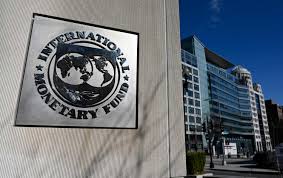
IMF MD says AI to affect 40% of global jobs as World Bank shifts focus to job creation, productivity through AI,
-

 Economy6 hours ago
Nigeria became world’s capital of multidimensional poverty under Tinubu’s administration—Report
-

 Oil and Gas6 hours ago
Oil prices rise 2% as attacks on Saudi Arabia overshadow Trump’s diesel deal
-

 Oil and Gas6 hours ago
Dangote refinery initial IPO extended by two weeks, received subscriptions more than three or four times figure planned
-

 News6 hours ago
Sanwo-Olu, ICSAN members urge firms to balance profit with purpose
-

 Agriculture6 hours ago
NSDC signs $1bn agreement with Chinese Sinomach for engineering, procurement, construction, financing for sugar production in Nigeria