Connect with us

Business

Dangote Still Africa’s Richest for, listed among world’s top 200 richest persons

Published

on

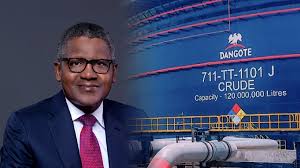
For the 12th year consecutively, Aliko Dangote, President of the pan-African Conglomerate, the Dangote Group has emerged the richest man in Africa, despite economic headwinds that affected the fortunes of half of the world’s reported billionaires. Dangote, whose business flagship, Dangote Cement Plc is the largest producer of cement in Africa, is the only Nigerian in the list of first 200 richest men in the world with an estimated net worth of $14.2 billion, up from last year’s $12.1 billion. Forbes, in its latest ranking of world billionaires for 2023 reported that falling stocks, wounded unicorns and rising interest rates translated into a down year for the world’s wealthiest people. Dangote, presently ranked 124th among the world’s richest billionaires, is the only Nigerian in the top 200 world billionaires and one of the two Africans within that bracket; with South Africa’s Johann Rupert, who deals in luxury goods ranked 157th with a net worth of $11.1 billion.

The Africa’s richest man founded and chairs Dangote Cement, the continent’s largest cement producer. Dangote Cement has production capacity of 51.6 million tonnes per year across ten countries in Sub-Saharan Africa, with integrated factories in seven countries, a clinker grinding plant in Cameroon, and import and distribution facilities in Ghana and Sierra Leone. Dangote also owns stakes in publicly traded Dangote Salt (NASCON) and Dangote Sugar manufacturing companies. His Dangote Petroleum Refinery, touted to be the world’s largest single-train refinery, was recently commissioned and is expected to process 650,000 bpd of petroleum for domestic consumption and export; in what experts have described as a game changer in the oil and gas sector. The foremost philanthropist had earlier been rated 11th of the 50 World’ Greatest men and women of all time by the Fortune Magazine, an American multinational business magazine which premised the ranking of the world’s greatest mainly on the businesses run by the men and how they have used it to impact their society positively. The time-tested magazine, which first edition was published in February 1930, said the world’s greatest men and women are transforming the world and inspiring others to do so in business, government, philanthropy and the arts. “These thinkers, speakers, and doers make bold choices and take big risks- and move others to do the same”, the magazine declared.
Specifically, Dangote earned nomination after being adjudged as having used his business to acquire wealth and is now converting his wealth into impactful philanthropy through his Aliko Dangote Foundation. The top 10 greatest men and women, according to Fortune Magazine are: Bill and Melinda Gates, Jacinda Ardem, Robert Mueller, Pony Ma, Satya Nadella, Greta Thunberg, Margrethe Vestager, Anna Nimiriano, Jose Andres, and Dough Mcmillon and Lisa Woods. The ranking of Dangote as one of the greatest business leaders had attracted comments by eminent persons around the world who described him as worthy of the nomination going by his business acumen and philanthropic gestures. On the billionaires ranking for 2023, Forbes, the global media company said nearly half the world richest list are poorer than a year ago, including Elon Musk with net worth of $180b, falling from No. 1 to No. 2 after his pricey acquisition of Twitter helped sink Tesla, his multinational automotive and clean energy company. Benard Arnault, the 74-year old French, who is the head of luxury goods giant LVMH, was ranked number one richest man in the world with a net worth of $211b, the very first time a France national will top the list. 

Forbes reported that the party is over for many of the world’s richest people. For the second straight year, both the number of billionaires around the globe has declined from 2,668 in 2022 to 2,640 in 2023 and total billionaire wealth has dropped, too – down by $500 billion, to $12.2 trillion – as turbulent times have hit both public and private markets. Nearly half the planet’s billionaires are poorer than they were a year ago. A total of 254 people have lost their billionaire status altogether yet others recorded gains. Overall, the United States still boasts the most billionaires, with 735 list members worth a collective $4.5 trillion. China (including Hong Kong and Macau) remains second, with 562 billionaires worth $2 trillion, followed by India, with 169 billionaires worth $675 billion. To calculate net worths, Forbes used stock prices and exchange rates from March 10, 2023.

Continue Reading

Business

15% petrol import tax requires strategic roll out – LCCI

Published

on

Lagos Chamber of Commerce and Industry (LCCI) has stressed the need for a measured and strategic rollout of the 15 per cent petroleum import tax to ensure sustainable economic impact. The Director-General, LCCI, Dr Chinyere Almona, gave the advice in a statement on Monday in Lagos. Almona noted the recent decision by the Federal Government to impose a 15 per cent import tax on petrol and diesel, a move aimed at curbing import dependence and promoting local refining capacity.

She said while the policy direction aligned with the nation’s long-term objective of achieving energy self-sufficiency and naira strengthening, a strategic rollout was imperative. Almona said that Nigeria was already experiencing cost-of-living pressures, supply-chain, and inflation challenges and that the business community would be sensitive to further cost shocks. “The chamber recognises that discouraging fuel importation is a necessary step towards achieving domestic energy security, stimulating investment in local refineries, and deepening the downstream petroleum value chain.

“However, LCCI expresses concern about the current adequacy of local refining capacity to meet national demand. A premature restriction on imports, without sufficient domestic production, could lead to supply shortages, higher pump prices, and inflationary pressures across critical sectors,” she said. Almona called on the Federal Government to prioritise the full operationalisation and optimisation of local refineries, both public and private, including modular refineries and the recently revitalised major refining facilities. She said that a comprehensive framework for crude oil supply to these refineries in Naira rather than foreign exchange would significantly enhance cost efficiency, stabilise production, and strengthen the local value chain.

She said the chamber’s interest lied in a diversified downstream sector where multiple refineries, modular plants, and logistics firms thrive. She urged government to resolve outstanding labour union issues and create an enabling environment that fostered industrial harmony and private sector confidence.

According to her, ensuring clarity, consistency, and transparency in the implementation of the new tax regime will be crucial in preventing market distortions and sustaining investor trust. “While the reform is justified from an industrial policy standpoint, its success depends on practical implementation, robust safeguards, and parallel reforms to alleviate cost burdens on businesses and consumers. With local capacity not yet established, this tax will increase the cost of fuels as long as imports continue. Government needs to address the inhibiting factors against local production and refining before imposing this levy to discourage imports and support local production,” she said.

Almona recommended that the implementation of the tax policy be postponed. She advised that during the transition period government demonstrate its commitment through action by empowering local refiners through an efficient crude-for-Naira supply chain that ensured sufficient crude. “With this, refiners can boost their refining capacity with a stable supply of crude and adequately meet domestic demand at competitive rates. At this point, the imposition of an import tax will directly discourage importation and boost demand for the locally refined products,” she said.

Continue Reading

Business

Update: Sanwo-Olu, others harp on stronger private sector role to drive AfCFTA success

Published

on

Governor Babajide Sanwo-Olu of Lagos State has urged the private sector to take a stronger, more coordinated role in driving the successful implementation of the African Continental Free Trade Area (AfCFTA).

Sanwo-Olu, who made the call at the NEPAD Business Group Nigeria High-Level Business Forum, held on Thursday in Lagos, said that the agreement holds the key to transforming Africa into a globally competitive economic powerhouse. The theme of the forum is “Mobilising Africa’s Private Sector for AfCFTA Towards Africa’s Economic Development Amid Global Uncertainty”.

It brought together policymakers, business leaders, and development experts from across the continent. Sanwo-Olu was represented by the Lagos State Commissioner for Commerce, Cooperatives, Trade and Investment, Mrs Folashade Ambrose-Medebem. The governor said AfCFTA had the potential to lift millions of Africans out of poverty, but only if the continent’s business community seized the opportunity to scale production and integrate value chains across borders. “Governments can negotiate tariffs and treaties, but businesses must produce, export, invest, and believe in cross-border possibilities.

The private sector is the true engine of trade and industrialisation; without it, AfCFTA will remain a document and not a driver of development,” Sanwo-Olu said. He said that Lagos State had continued to create an enabling business environment through deliberate investments in infrastructure, logistics and technology, all designed to enhance productivity and trade efficiency. “From our vibrant tech ecosystem in Yaba to the Lekki Deep Sea Port and the expanding industrial corridors of the state, we are building a Lagos that supports trade, innovation, and investment,” he added. The governor stressed the need to empower Small and Medium Enterprises (SMEs), which he described as “the lifeblood of Africa’s economy”.

He said access to finance, mentorship, and digital tools remained essential for their growth. “Through the Lagos State Employment Trust Fund (LSETF), we have supported thousands of entrepreneurs with training and access to funding. When SMEs thrive, our communities grow, jobs are created, and the promise of AfCFTA becomes real,” Sanwo-Olu noted. In his goodwill message, Dr Abdulrashid Yerima, President of the Nigerian Association of Small and Medium Enterprises (NASME), called on African governments to align policy frameworks with the realities of the private sector to ensure the success of AfCFTA.

Yerima said Africa’s shared prosperity depended on how effectively the continent could mobilise its entrepreneurs and innovators to take advantage of the 1.4 billion-strong continental market. “As private sector leaders, the employers of labour and creators of opportunity, we must move from aspiration to achievement, from potential to performance. AfCFTA is not just an agreement; it is Africa’s blueprint for collective economic independence,” he said. He emphasised the importance of strengthening cooperation among business coalitions, cooperatives, and industrial clusters to ensure that micro and small enterprises benefit from cross-border trade opportunities. “No SME can scale alone in a continental market.

We must build strong business networks that allow small enterprises to grow into regional champions,” he stressed. Yerima further encouraged African nations to adopt global best practices and digital frameworks, such as the OECD Digital for SMEs (D4SME) initiative, to improve access to knowledge, technology, and markets. Also speaking at the event, Mr Samuel Dossou-Aworet, President of the African Business Roundtable (ABR), urged African leaders to fully harness AfCFTA’s opportunities to build inclusive and sustainable economies. Dossou-Aworet noted that while Africa was currently the world’s second-fastest-growing region after Asia, sustained growth would require greater industrialisation and investment in human capital.

“The entry into force of the AfCFTA has expanded Africa’s investment frontiers. Where once our markets were fragmented, we now have a unified platform for trade and production. But growth must be inclusive, not just in numbers, but in impact on people’s lives,” he noted. Citing data from the African Development Bank (AfDB), Dossou-Aworet observed that 12 of the world’s 20 fastest-growing economies in 2025 are African, including Rwanda, Côte d’Ivoire, and Senegal. However, he cautioned that Africa’s GDP growth of around four per cent remained below the seven per cent threshold needed to significantly reduce poverty. “We must ensure that growth translates into better jobs, infrastructure, and access to opportunities for women and youth,” he stressed. He also called for innovative financing models to bridge Africa’s infrastructure gap and improve competitiveness in the global market.

“Africa needs market access and trade facilitation mechanisms to enable its products to reach global markets. Access to affordable capital is key, and our financial systems must evolve to support trade,” he added. Dossou-Aworet reaffirmed the African Business Roundtable’s commitment to supporting enterprise development and promoting Africa as a prime destination for investment. “This is Africa’s moment. If we work together, government, business, and citizens, we will build an Africa that competes confidently in the global economy and delivers prosperity for its people.”

The forum, convened by the NEPAD Business Group Nigeria, brought together regional and international partners to strengthen collaboration between public and private sectors in advancing AfCFTA’s goals. Chairman of the group, Chief J.K. Randle, commended the participation of leading business executives and policymakers, saying it reflected Africa’s readiness to take ownership of its economic destiny. Randle said, “We can no longer rely on external forces to drive our growth. The private sector must rise as the torchbearer of Africa’s transformation under AfCFTA.” He added that the forum would continue to serve as a platform for dialogue, knowledge exchange, and action planning to position African enterprises at the centre of global trade.

Continue Reading

Business

First ever China–Europe Cargo transit completed via the Arctic route

Published

on

The first-ever container transit from China to Europe via the Northern Sea Route (NSR) arrived at the British port of Felixstowe on October 13, 2025. The voyage marked a breakthrough in developing the NSR as a sustainable and high-tech transport corridor connecting Asia and Europe. The development of this Arctic route reflects the steady expansion of global trade flows — an evolution that reaches every continent, including Africa, where maritime industries and energy corridors continue to expand.
The ship carrying nearly 25,000 tonnes of cargo departed from Ningbo on September 23 and entered the NSR on October 1. Navigation and information support was provided by Glavsevmorput, a subsidiary of Rosatom State Atomic Energy Corporation. The Arctic leg of the voyage took 20 days, cutting transit time almost by half compared with traditional southern routes. This new pathway complements existing ones, creating broader opportunities for efficient and sustainable logistics worldwide.
The Northern Sea Route is developing rapidly, becoming a viable and efficient global logistics route. This is facilitated by various factors, including the development of advanced technologies, the construction of new-generation nuclear icebreakers, and growing interest from international shippers. Working in the Arctic is challenging but we are transforming these challenges into results. Along with the main priority of ensuring the safety of navigation on the Northern Sea Route, managing the speed and time of passage along the route is becoming an important task for us today,” noted Rosatom State Corporation Special Representative for Arctic Development Vladimir Panov.
The Northern Sea Route, spanning about 5,600 km, links the western part of Eurasia with the Asia-Pacific region. In 2024, cargo turnover reached 37.9 million tonnes, surpassing the previous year’s record by more than 1.6 million. Container traffic between Russia and China doubled compared to 2023, and by mid-2025, 17 container voyages had already been completed, moving 280,000 tonnes — a 59% increase year-on-year.
The expansion of this Arctic transport route is becoming part of a broader global effort to strengthen connectivity and diversify supply chains. For Africa and the wider Global South these developments demonstrate how innovation in logistics can stimulate new opportunities for trade, technology exchange, and sustainable growth. As new corridors emerge, the world’s regions are becoming more closely linked — not in competition, but in collaboration — shaping a more resilient and interconnected global economy.

Continue Reading

Trending