
Economy
African Caucus, IMF pledge to strengthen continent’s economic resilience

The African Caucus and the International Monetary Fund have reaffirmed their commitment to strengthening the continent’s economic resilience. This was noted in a joint statement issued by Mr Wale Edun, Nigeria’s Minister of Finance and Chair of the African Caucus and Kristalina Georgieva, managing director of the IMF, after a meeting in Washington DC. The discussions focused on reinforcing Africa’s economic resilience amid a challenging global economic environment. “We held a constructive discussion focused on making progress towards the shared goal we hold for raising living standards across Africa. The region is navigating a complex economic landscape. Geopolitical fragmentation, elevated borrowing costs, and the ongoing high cost of living are creating a challenging backdrop for policy making. Some countries have also faced social instability and insecurity, which impose heavy human costs on populations while undermining growth prospects and exacerbating economic vulnerabilities.
“This creates acute trade-offs in policy-making, further complicating the objectives of promoting inclusive development,” it stated. They noted that progress had been made in bringing down inflation, stabilising public debt, and pressing ahead with reforms. They said that growth was expected to soften next year, with significant variation across the region. “Together, we are committed to strengthening Africa’s resilience to address the many challenges facing the continent. Policy priorities in the region are focused on securing the economic recovery, continuing to address imbalances, and creating space for much-needed development-focused investment.

In countries where inflationary pressures are receding and inflation is near target, there is space to gradually ease towards a more neutral stance in close cooperation with other policies,” added the caucus. They said further tightening may be required in countries where inflation was still elevated.
Mr Edun and Ms Georgieva said the exchange rate, where appropriate, should be allowed to play its shock absorber role while mitigating the second-round effects of depreciation. They added that Fiscal policy needs to find the right balance to address debt vulnerabilities and spending pressures. “Renewed focus on enhancing domestic resource mobilisation is critical, and it should be supported by governance reforms to improve public financial management, fiscal transparency, and enhance accountability. Once the reform becomes effective on Nov. 1, 2024, eight countries will not be subject to surcharges because their credit outstanding will be below the new threshold, four of which are in Africa,” they added. They said the Resilience and Sustainability Trust was providing longer-term affordable financing to address longer-term challenges, including climate change and pandemic preparedness. (NAN)
-
 News1 day ago
Tinubu’s fuel subsidy removal enriched governors, made life unbearable for Nigerians: Donald Duke
-

 Finance1 day ago
Shareholders seek deadline extension for insurers recapitalisation
-

 Oil and Gas1 day ago
KAGOTE isn’t against oil resumption in Ogoni, but conducts of few in ODC
-
 Stock Market5 minutes ago
NGX All-Share Index (ASI) declined by 0.11%
-

 Finance3 minutes ago
Afreximbank delivers strong half-year 2026 performance, driven by robust growth and profitability
-
 News27 seconds ago
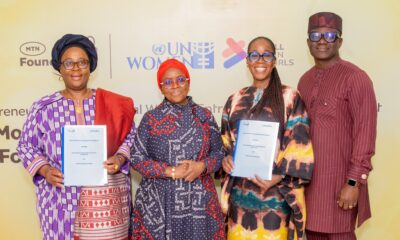
MTN foundation, UN women partner to empower 200 rural women entrepreneurs
-

 Oil and Gas9 minutes ago
Oil falls ahead of US announcement of new sanctions on Iran
-

 News6 minutes ago
MTN South Africa approves $375m share buyback after profit rise