Analysis
Trump’s aid review is a win for Africa, nations must reject aid, handouts that undermine African oil & gas
By NJ Ayuk
After President Trump announced a 90-day overseas spending freeze, Secretary of State Marco Rubio said “every dollar” must be “justified” by evidence that it makes the US safer, stronger and more prosperous. I acknowledge that stance may sound ungrateful. At first blush, many might counter that starving people have no agenda. Destitute parents still need to feed their children. Turning a blind eye to their plight is inhumane. Let me explain why the African Energy Chamber (AEC) continues to push for free-market solutions rather than good-will handouts from USAID. There was an era when Africa and Western pop music were closely linked. Western entertainers spearheaded a number of internationally renowned events to raise awareness about the plight of starving Africans and generate funds for famine relief. In December 1984, the supergroup Band Aid sang about feeding the world, asking “Do They Know it’s Christmas?” Within a year, the group had raised over $9 million. Three months later, USA for Africa released “We Are the World” and banked $44.5 million after one year for its African humanitarian fund. Then on a hot July day in 1985, the worldwide concert event Live Aid raised more than $150 million for famine relief in Africa. These are just a handful of grand and noble gestures intended to lift Africa out of poverty. These famous events arguably raised both awareness and funds. Unfortunately, the efforts — and others like them — fall far short of making any real socioeconomic change. In fact, some argue that injecting monetary aid into Africa, time and time again, has actually done more harm than good.
History of ‘Help’
Even aid genuinely given to help Africa tends to do more harm than good.
Since 1960, more than $2.6 trillion has been pumped into Africa in the form of aid. From 1970 and 1998, when aid was at its peak, poverty actually rose alarmingly — from 11% to 66% — due in large part to this massive influx of foreign aid that counteracted its intended good. Aid decreased long-term economic growth by fuelling systemic corruption, in which powerful aid recipients funnelled foreign funds into a personal stash instead of public investment. Many leaders realized that they no longer needed to invest in social programs for their constituents because of the revenues from foreign donors. Large inflows of aid also caused higher inflation, hindering African nations’ international competitiveness in exporting. That resulted in diminishing the manufacturing sector – which is critical in helping developing economies grow — across the continent. And well-intentioned Westerners who saw the economic shrink just kept pouring more and more money at “the problem” — leading to a vicious cycle that furthered corruption and economic decline. But here’s the kicker: The World Bank has admitted that 75% of the agricultural projects it implemented to help Africa failed. So why do they and other aid providers continue to fund these failing efforts?
Examples of Failure
Across the continent, we see example after example of failed aid projects, with agricultural projects routinely providing little or no benefit to African farmers. In Mali, the U.S. Agency for International Development (USAID) injected $10 million into “Operation Mils Mopti” to increase grain production. The government imposed “official” prices on the grain, which forced farmers to sell their crops at these below-market rates and resulted in grain production falling by 80%. USAID also spent $4 million to help livestock producers grow the number of cattle in the Bakel region from 11,200 to 25,000 — but ultimately only succeeded in increasing it by 882 head. Another $7 million was injected into the Sodespt region, but that investment managed to sell only 263 cattle and failed to sell any goats or sheep.
Then we see example after example of Westerners wastefully “helping” without any understanding of the local situation. Norwegian aid agencies built a fish-freezing plant to improve employment in northern Kenya — a region where the local people traditionally do not fish because of their semi-nomadic pastoralist lifestyle. Couple the lack of fishing experience with the unfortunate reality that the plant required more power than was available in the entire region, and the result was that the brand-new processing plant sat idle. The World Bank financed a $10+ million expansion of Tanzania’s cashew-processing capabilities, which resulted in 11 factories with the capacity to process three times as many cashews as the country was growing on a yearly basis. The plants were too efficient for the available workforce and cost so much to run that it was cheaper to process the raw nuts in India. Half the plants were inoperable, and the other half only ran at about 20% capacity. I’m not saying that we Africans are ungrateful for the outpouring of heartfelt care. The compassion of the West is certainly real. However, the outcome of said compassion is the concern: The more foreign aid African governments receive, the worse they perform. As long as the aid keeps flowing, government leaders and their employees who administer development programs may prosper while the rest of the citizenry continues to suffer the effects of a mismanaged economy.
Questionable Benefits
We also must acknowledge that, in far too many cases, aid has also been given to African nations and communities in attempts to manipulate and control. “While hungry faces are used on posters and in media reports to sell the virtues of foreign aid, it is the hungry who rarely see any of the funds,” James Peron, executive director of the Institute for Liberal Values in Johannesburg, South Africa, lamented in a piece for the Foundation for Economic Education. “Poverty may be used to justify the programs, but the aid is almost always given in the form of government-to-government transfers. And once the aid is in the hands of the state it is used for purposes conducive to the ruling regime’s own purposes.” And now we witness the international community talking about aid for African countries as a substitute for our oil and gas activities. Western environmentalists argue that Africa should keep all of its petroleum resources in the ground to prevent further climate change. In exchange for that sacrifice, African nations would be compensated and inject that money into other opportunities like developing their sustainable energy technologies.
I’ve said it before, and I’ll say it again: What a horrible idea! I‘m offended by foreign stakeholders feeling that providing humanitarian assistance gives them the right to influence our domestic decisions. With Africa poised to participate in the worldwide energy transition, my fear is that international donors will feel justified to dictate Africa’s policy regarding the lengths to which, and speed with which, our energy transition occurs. This would be a huge step backward in our energy, economic, and even individual independence. Aid packages to incentivize giving up our oil and gas operations will be detrimental to Africans. Because let’s be honest: History has shown that this assistance could never replace the oil and gas industry’s ability to create jobs and business opportunities, grow local capacity, open the door to technology sharing, facilitate economic growth, and alleviate energy poverty. Instead of continuing a pattern that clearly does more harm than good, why aren’t African nations encouraged to leverage the wealth of resources at our feet? The AEC is determined to make a case for African nations harnessing their oil and gas solutions to help themselves. We will not be bullied, or manipulated with aid, into a path that is not in our best interests.
Use What We Have!
One reason why the AEC is an outspoken advocate for Africa’s oil and gas industry is because it represents more than big revenue for African governments. It is a free-market solution that creates pathways for Africans to help themselves. And, ultimately, empowering Africans is our number one goal. We endorse an energy mix approach that allows Africa to use and sell our own hydrocarbon reserves to alleviate energy poverty, while at the same time moving toward a future in which renewable energy sources power the continent. The energy mix method can help more people more quickly because it takes a practical, people-first approach to helping those who have traditionally been left behind by the energy sector, while moving us toward greener energy sources. Natural gas, in particular, can transform African lives and communities. Its potential benefits range from eradicating energy poverty to allowing Africans to develop skills for good jobs to creating hope for our youth. Ramping up gas production to help alleviate the lack of access to electricity will create thousands of new employment opportunities in Africa. In addition, the new sources of energy can be exported to Western countries and also used to industrialized Africa. Then, as Europe transitions to alternative energy, a larger portion of Africa’s natural gas can power domestic needs. By the time other countries complete their transitions to carbon-neutral sources, Africa will have a much more expansive and reliable grid system, which will allow for an easier transition.
And before we argue about the evils of hydrocarbons, let me point out that, although it might seem counterintuitive, it is possible for Africa to make use of its abundant fossil fuels while moving toward a future sustained by renewable energy sources. In fact, I believe that African nations must do everything they can to ensure that these two things work in tandem. Considering that 600 million people on the continent have no access to electricity and 900 million people lack access to clean cooking technologies, it’s impossible — if not altogether inhumane — to discuss climate change without looking at energy poverty. As I recently wrote in an article published by Medium, we cannot transition from the dark to the dark. We must deliver energy to the people of Africa and then worry about transitioning to environmentally friendly alternatives, just like we have everywhere else in the world. This has been our platform, and we will continue to stand by it in 2025 and beyond. Looking at Africa and only pushing for aid is not in the interest of the everyday Africans. It caters to the egos of the elites and latte intellectuals who believe they have the solutions to why the continent is still poor.
*NJ Ayuk is the Executive Chairman, African Energy Chamber
Analysis
As EU plans Russian Gas exit, Ministers to convene in Paris to chart Africa’s export potential
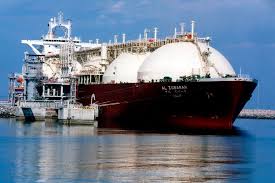
In the wake of seismic shifts in the European energy landscape, the Invest in African Energy (IAE) 2026 Forum in Paris will host a Ministerial Dialogue on “Unlocking Africa’s Gas Supply for Global Energy Security.” This strategic session will examine how Africa can turn its untapped gas reserves into a reliable and sustainable source of supply. With Europe seeking to diversify away from Russian gas, the dialogue highlights both the continent’s growing role in global energy markets and the opportunity for African producers to attract long-term investment. Recent developments underscore the urgency of Africa’s role in global energy security. Last month, EU countries agreed to phase out their remaining Russian gas imports, with existing contracts benefiting from a transition period: short-term contracts can continue until June 2026, while long-term contracts will run until January 2028. In parallel, the European Commission is pushing to end Russian LNG imports by January 2027 under a broader sanctions package aimed at limiting Moscow’s energy revenues.
Africa’s role in this rebalancing is already gaining momentum. Algeria recently renewed its gas supply agreement with ČEZ Group, ensuring continued deliveries to the Czech Republic. In Libya, the National Oil Corporation (NOC) has approved new compressors at the Bahr Essalam field to boost output and reinforce flows via the Greenstream pipeline to Italy. These developments complement the Structures A&E offshore project – led by Eni and the NOC – which is expected to bring two platforms online by 2026 and produce up to 750 million cubic feet per day, supporting both domestic and European demand. West Africa is pursuing ambitious export routes as well.
Nigeria, Algeria and Niger have revived the Trans-Saharan Gas Pipeline (TSGP), with engineering firm Penspen commissioned earlier this year to revalidate its feasibility. The proposed $25 billion Nigeria–Morocco pipeline is also advancing as a long-term corridor linking West African gas to European markets. Meanwhile, the Greater Tortue Ahmeyim (GTA) project off Mauritania and Senegal came online earlier this year, with its first phase targeting 2.3 million tons of LNG annually. In June, the project delivered its third cargo to Belgium’s Zeebrugge terminal, marking the first African LNG shipment from GTA to Europe. Together, these milestones underscore a strategic convergence: African producers are accelerating efforts to scale up exports just as Europe intensifies its search for reliable alternatives to Russian gas.
Yet, as the ministerial session will explore, unlocking Africa’s gas supply demands sustained investment, regulatory alignment, environmental management and community engagement. For Europe, diversification of supply is a strategic necessity; for African producers, it is an opportunity to accelerate development, build infrastructure and secure long-term capital. At IAE 2026, these shifts will be examined by the officials and stakeholders driving them. The Ministerial Dialogue brings African energy leaders together with European policymakers, industry players and investors in a setting that supports practical, solution-focused discussion on supply, export strategies and future cooperation. As Europe adapts its gas strategy and African producers progress major projects, the Forum provides a direct platform for ministers to outline priorities and for investors to engage with key decision-makers.
Analysis
Authorities must respond as digital tools used by organized criminals accelerate financial crime—IMF
International Monetary Fund IMF, has said that criminals are outpacing enforcement by adapting ever faster ways to carry out digital fraud. The INF in a Blog post said the Department of Justice in June announced the largest-ever US crypto seizure: $225 million from crypto scams known as pig butchering, in which organized criminals, often across borders, use advanced technology and social engineering such as romance or investment schemes to manipulate victims. This typically involves using AI-generated profiles, encrypted messaging, and obscured blockchain transactions to hide and move stolen funds. It was a big win. Federal agents collaborated across jurisdictions and used blockchain analysis and machine learning to track thousands of wallets used to scam more than 400 victims. Yet it was also a rare victory that underscored how authorities often must play catch-up in a fast-changing digital world. And the scammers are still out there. They pick the best tools for their schemes, from laundering money through crypto and AI-enabled impersonation to producing deepfake content, encrypted apps, and decentralized exchanges. Authorities confronting anonymous, borderless threats are held back by jurisdiction, process, and legacy systems.
Annual illicit crypto activity growth has averaged about 25 percent in recent years and may have surpassed $51 billion last year, according to Chainalysis, a New York–based blockchain analysis firm specializing in helping criminal investigators trace transactions. Bad actors still depend on cash and traditional finance, and money laundering specifically relies on banks, informal money changers, and cash couriers. But the old ways are being reinforced or supercharged by technologies to thwart detection and disruption.
Encrypted messaging apps help cartels coordinate cross-border transactions. Stablecoins and lightly regulated virtual asset platforms can hide bribes and embezzled funds. Cybercriminals use AI-generated identities and bots to deceive banks and evade outdated controls. Tracking proceeds generated by organized crime is nearly impossible for underresourced agencies. AI lowers barriers to entry. Fraudsters with voice-cloning and fake-document generators bypass the verification protocols many banks and regulators still use. Their innovation is growing as compliance systems lag. Governments recognize the threats, but responses are fragmented and uneven—including in regulation of crypto exchanges. And there are delays implementing the Financial Action Task Force’s (FATF’s) “travel rule” to better identify those sending and receiving money across borders, which most digital proceeds cross.
Meanwhile, international financial flows are increasingly complicated by instant transfers on decentralized platforms and anonymity-enhancing tools. Most payments still go through multiple intermediaries, often layering cross-border transactions through antiquated correspondent banks that obscure and delay transactions while raising costs. This helps criminals exploit oversight gaps, jurisdictional coordination, and technological capacity to operate across borders, often undetected.
Regulators and fintechs should be partners, and sustained multilateral engagement should foster fast, cheap, transparent, and traceable cross-border payments. There’s a parallel narrative. Criminals exploit innovation for secrecy and speed while companies and governments test coordination to reduce vulnerabilities and modernize cross-border infrastructure. At the same time, technological implications remain underexplored with respect to anti–money laundering and countering the financing of terrorism, or AML/CFT. Singapore’s and Thailand’s linked fast payment systems, for example, enable real-time retail transfers using mobile numbers; Indonesia and Malaysia have connected QR codes for cross-border payments. Such innovations offer efficiency and inclusion yet raise new issues regarding identity verification, transaction monitoring, and regulatory coordination.
In India, the Unified payments interface enables seamless transfers across apps and platforms, highlighting the power of interoperable design. More than 18 billion monthly transactions, many across competing platforms, show how openness and standardization drive scale and inclusion. Digital payments in India grew faster when interoperability improved, especially in fragmented markets where switching was costly, IMF research shows These regional innovations and global initiatives reflect a growing understanding that fighting crime and fostering inclusion are interlinked priorities—especially as criminals speed ahead. The FATF echoed this concern, urging countries to design AML/CFT controls that support inclusion and innovation. Moreover, an FATF June recommendation marks a major advance: Requiring originator and beneficiary information for cross-border wire transfers—including those involving virtual assets—will enhance traceability across the fast-evolving digital financial ecosystem.
Efforts like these are important examples of how technology enables criminal advantage, but technology must also be part of the regulatory response.
Modernizing cross-border payment systems and reducing unintended AML/CFT barriers increasingly means focusing on transparency, interoperability, and risk-based regulation. The IMF’s work on “safe payment corridors” supports this by helping countries build trusted, secure channels for legitimate financial flows without undermining new technology. A pilot with Samoa —where de-risking has disrupted remittances—showed how targeted safeguards and collaboration with regulated providers can preserve access while maintaining financial integrity without disrupting the use of new payment platforms.
Several countries, with IMF guidance, are investing in machine learning to detect anomalies in cross-border financial flows, and others are tightening regulation of virtual asset service providers. Governments are investing in their own capacity to trace crypto transfers, and blockchain analytics firms are often employed to do that. IMF analysis of cross-border flows and the updated FATF rules are mutually reinforcing. If implemented cohesively, they can help digital efficiency coexist with financial integrity. For that to happen, legal frameworks must adapt to enable timely access to digital evidence while preserving due process. Supervisory models need to evolve to oversee both banks and nonbank financial institutions offering cross-border services. Regulators and fintechs should be partners, and sustained multilateral engagement should foster fast, cheap, transparent, and traceable cross-border payments—anchored interoperable standards that also respect privacy.
Governments must keep up. That means investing in regulatory technology, such as AI-powered transaction monitoring and blockchain analysis, and giving agencies tools and expertise to detect complex crypto schemes and synthetic identity fraud. Institutions must keep pace with criminals by hiring and retaining expert data scientists and financial crime specialists. Virtual assets must be brought under AML/CFT regulation, public-private partnerships should codevelop tools to spot emerging risks, and global standards from the FATF and the Financial Stability Board must be backed by national investments in effective AML/CFT frameworks.
Consistent and coordinated implementation is important. Fragmented efforts leave openings for criminals. Their growing technological advantage over governments threatens to undermine financial integrity, destabilize economies, weaken already fragile institutions, and erode public trust in systems meant to ensure safety and fairness. As crime rings adopt and adapt emerging technologies to outpace enforcement, the cost is not only fiscal—it is structural and systemic. Governments can’t wait. The criminals won’t.
Analysis
Multilateral development banks reaffirm commitment to climate finance, pledge innovative funding for adaptation
Multilateral development banks have reaffirmed their commitment to climate finance, pledging to scale up innovative funding to boost climate adaptation and resilience. “Financing climate resilience is not a cost, but an investment.” This was the key message from senior MDB officials at the end of a side event organised by the Climate Investment Funds (CIF) on the opening day of the 30th United Nations Climate Conference (COP30) in Belém, Brazil.
The conference runs from 10 to 21 November. During a panel discussion titled “Accelerating large-scale climate change adaptation,” MDB representatives, including the African Development Bank Group, outlined how their institutions are fulfilling Paris Agreement commitments by mobilising substantial and innovative resources for climate adaptation and mitigation. Ilan Goldfajn, President of the Inter-American Development Bank Group, emphasised that “resilience is more than a concern for the future: it is also essential for development today.” He announced that MDBs are tripling their financing for resilience over the next decade, targeting $42 billion by 2030.
“At the Inter-American Development Bank, we are turning preparedness into protection and resilience into opportunity,” Goldfajn added. Tanja Faller, Director of Technical Evaluation and Monitoring at the Council of Europe Development Bank, stressed that climate change “not only creates new threats, but also amplifies existing inequalities. The most socially vulnerable people are the hardest hit and the last to recover. This is how a climate crisis also becomes a social crisis.” Representatives from the Islamic Development Bank, the Asian Infrastructure Investment Bank, the Asian Development Bank, the World Bank Group, the European Bank for Reconstruction and Development, the European Investment Bank, the New Development Bank and IDB Invest (the private sector arm of the Inter-American Development Bank Group) also shared concrete examples of successful adaptation investments and strategies for mobilising new resources.
Kevin Kariuki, Vice President of the African Development Bank Group in charge of Power, Energy, Climate and Green Growth, presented the Bank’s leadership in advancing climate adaptation and mitigation. “At the African Development Bank, we understand the priorities of our countries: adaptation and mitigation are at the heart of our climate interventions.” He highlighted the creation of the Climate Action Window, a new financing mechanism under the African Development Fund, the Bank Group’s concessional window for low-income countries.
“The African Development Bank is the only multilateral development bank with a portfolio of adaptation projects ready for investment through the Climate Action Window,” Kariuki noted, adding that Germany, the United Kingdom and Switzerland are among key co-financing partners. Kariuki also showcased the Bank’s YouthADAPT programme, which has invested $5.4 million in 41 youth-led enterprises across 20 African countries, generating more than 10,000 jobs — 61 percent of which are led by women, and mobilising an additional $7 million in private and donor funding.
Representatives from Zambia, Mozambique and Jamaica also shared local perspectives on the financing needs of communities most exposed to climate risk. The panel followed the official opening of COP30, marked by a passionate appeal from Brazilian President Luiz Inácio Lula da Silva for greater climate investment to prevent a “tragedy for humanity.”
“Without the Paris Agreement, we would see a 4–5°C increase in global temperatures,” Lula warned. “Our call to action is based on three pillars: honouring commitments; accelerating public action with a roadmap enabling humanity to move away from fossil fuels and deforestation; and placing humanity at the heart of the climate action programme: thousands of people are living in poverty and deprivation as a result of climate change. The climate emergency is a crisis of inequality,” he continued.
“We must build a future that is not doomed to tragedy. We must ensure that we live in a world where we can still dream.” Outgoing COP President Mukhtar Babayevn, Azerbaijan’s Minister of Ecology, urged developed nations to fulfil their promises made at the Baku Conference, including commitments to mobilise $300 billion in climate finance. He called for stronger political will and multilateral cooperation, before handing over the COP presidency to Brazilian diplomat André Corrêa do Lago, who now leads the negotiations.
-
News3 days agoNigeria to officially tag Kidnapping as Act of Terrorism as bill passes 2nd reading in Senate
-
News3 days agoNigeria champions African-Arab trade to boost agribusiness, industrial growth
-
News3 days agoFG’s plan to tax digital currencies may push traders to into underground financing—stakeholders
-
Finance1 week agoAfreximbank successfully closed its second Samurai Bond transactions, raising JPY 81.8bn or $527m
-
Economy3 days agoMAN cries out some operators at FTZs abusing system to detriment of local manufacturers
-
News1 week agoFG launches fresh offensive against Trans-border crimes, irregular migration, ECOWAS biometric identity Card
-
News3 days agoEU to support Nigeria’s war against insecurity
-
Uncategorized3 days agoDeveloping Countries’ Debt Outflows Hit 50-Year High During 2022-2024—WBG