
News
BRICS nations discuss shared response to Trump trade policies

Foreign ministers from the BRICS group of developing nations met on Monday to discuss a shared defense of the global trade system, coordinating their response to the barrage of new tariffs from U.S. President Donald Trump. The meeting in Rio de Janeiro is expected to produce a joint statement criticizing “unilateral measures” on trade from the group formed by Brazil, Russia, India, China and South Africa and recently expanded to include six more nations. “The ministers are negotiating a declaration to reaffirm the centrality of… multilateral trade negotiations as the main axis of action in trade,” Brazilian Ambassador Mauricio Lyrio said. “They will reaffirm their criticism of unilateral measures of any origin, which has been a longstanding position of BRICS countries.”
The expanded BRICS group, which added Egypt, Saudi Arabia, the United Arab Emirates, Ethiopia, Indonesia and Iran last year, faces daunting challenges from U.S. trade actions. China, which was hit with 145% tariffs on its exports to the United States, has pushed for a harsher tone in the communique but, according to a source familiar with negotiations, the final text will be critical but not confrontational. The BRICS group as a whole has come under fire from Trump, who threatened another 100% in tariffs if the bloc moves ahead with a single currency to replace the dollar in trade relations. Brazil has already dropped the pursuit of a common currency in its BRICS presidency, Reuters reported in February, although its agenda may pave the way for less reliance on the U.S. dollar in global trade.
With an eye on the United Nations climate summit Brazil is hosting in November, the BRICS ministers also will discuss a shared position on climate finance, a key priority for Brazil’s presidency. Major developing nations including China face growing pressure from wealthier nations to contribute to financing adaptation and mitigation initiatives in the poorest countries. “What is not on the agenda is the revision of which countries have to pay for the energy transition and the countries that can eventually, voluntarily, also finance it. This distinction is absolutely fundamental,” said Lyrio. The financial obligation to finance the fight against climate change and the energy transition in developing countries lies with rich countries,” he added. Reuters
-
 Oil and Gas1 day ago
Oil again gains with eyes on potential US-Iran deal; stocks climb
-
 Oil and Gas1 day ago
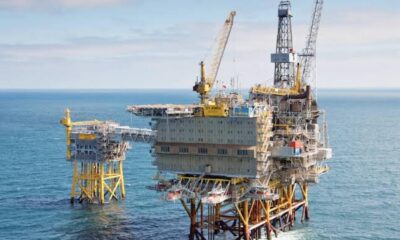
Tinubu approves landmark deep offshore investment framework to unlock up to $50bn in new investment
-

 Economy1 day ago
Nigerian PPP model becomes template for $3.1bn AfCFTA customs project- ICRC
-
 Economy1 day ago
Customs targets N11trn through technology-led reforms
-

 News1 day ago
Nigerian songs dominate Spotify’s global impact list
-

 News1 day ago
Insecurity threatening Nigeria’s creative economy, entrepreneurship—AANI
-
 Oil and Gas7 hours ago
NMDPRA tasks investors, regulators on infrastructure for W/Africa petroleum trading hub
-
 Agriculture7 hours ago
FG targets Benue, Plateau, Nasarawa, Kaduna, Adamawa, FCT for pilot ranching programme