Connect with us

Economy

LCCI seeks policy interventions to tackle structural weaknesses, balance capital inflows

Published

on

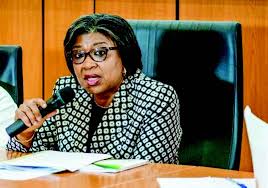
Lagos Chamber of Commerce and Industry has urged policy interventions to address the structural weaknesses that are undermining the economy and to balance capital importation. LCCI director-general Chinyere Almona said this in a statement on Thursday. Ms Almona said that while headline inflation eased for the fourth consecutive month to 21.88 per cent in July from 22.22 per cent in June, month-on-month inflation rose to 1.99 per cent from 1.68 per cent, showing persistent price pressures. She said that, despite increased capital inflows in Q1 2025, structural imbalances continued to weigh on the economy. “Though inflation is moderating annually, food inflation remains elevated at 22.74 per cent year on year, with rural communities experiencing sharper monthly increases than urban centres. This persistent rise in food costs underscores the urgent need for targeted interventions in agriculture, rural infrastructure, and logistics efficiency to ease supply-side bottlenecks.
“We need policy interventions that support more productive economic activities, create sufficient supply, make goods available at the right places, create jobs, and let businesses thrive in an enabling business environment,” she said.
Ms Almona called for interventions that addressed energy costs, power supply, logistics, infrastructure deficits, bottlenecks in licensing and registration, access to credit, and foreign exchange liquidity through non-oil exports. Regarding capital importation, she noted that Nigeria attracted $5.64 billion in the first quarter of 2025, representing a 67 per cent year-on-year increase and an 11 per cent growth quarter-on-quarter.
Ms Almona said the surge signalled renewed investor interest but noted concerns over the structure of inflows. She said that particularly worrisome was the continued decline in investment into manufacturing, which attracted only $129.92 million in Q1 2025, a 32 per cent drop from the same period in 2024.
According to her, weak inflows into this critical sector reflect persistent challenges around foreign exchange liquidity, energy costs, job losses, and operating uncertainties. “Over 90 per cent of total inflows were in portfolio investments, short-term funds chasing high yields in government securities. By contrast, Foreign Direct Investment (FDI) plunged to $126.29 million, down 70 per cent from the previous quarter, accounting for just 2.24 per cent of total inflows. This imbalance reveals that investors remain cautious about making long-term commitments to Nigeria’s real sector,” she said. Ms Almona called for urgent measures to translate macro-level gains into broad-based, sustainable growth. She advocated deepened structural reforms to create “a more efficient oil and gas sector that supports cheaper energy and logistics costs and increased power supply”.
The LCCI director general called for strengthened incentives for FDI, including stable tax and regulatory frameworks that reduced perceived risks. She said Nigeria must rebuild domestic investor confidence, as local capital commitments often preceded foreign inflows. “The easing of headline inflation and the rise in capital inflows are encouraging signals. However, we must not lose sight of Nigerian households grappling with rising costs, and investors are hesitant to commit long-term capital. Our economy urgently needs a deliberate strategy to attract and retain productive investment that drives jobs, industrial growth, and long-term competitiveness,” she said.

Continue Reading

Economy

Nigeria champions African-Arab trade to boost agribusiness, industrial growth

Published

on

The Arab Africa Trade Bridges (AATB) Program and the Federal Republic of Nigeria formalized a partnership with the signing of the AATB Membership Agreement, officially welcoming Nigeria as the Program’s newest member country. The signing ceremony took place in Abuja on the sidelines of the 5th AATB Board of Governors Meeting, hosted by the Federal Government of Nigeria.

The Membership Agreement was signed by Eng. Adeeb Y. Al Aama, the CEO of the International Islamic Trade Finance Corporation (ITFC) and AATB Program Secretary General, and H.E. Mr. Wale Edun, Minister of Finance and Coordinating Minister of the Economy, Federal Republic of Nigeria. The Agreement will provide a strategic and operational framework to support Nigeria’s efforts in trade competitiveness, promote export diversification, strengthen priority value chains, and advance capacity-building efforts in line with national development priorities. Areas of collaboration will include trade promotion, agribusiness modernization, SME development, businessmen missions, trade facilitation, logistics efficiency, and digital trade readiness.

The Honourable Minister of Finance and Coordinating Minister of the Economy, Mr. Wale Edun, called for deeper trade collaboration between African and Arab nations, stressing the importance of value-added Agribusiness and industrial partnerships for regional growth. Speaking in Abuja at the Agribusiness Matchmaking Forum ahead of the AATB Board of Governors Meeting, the Minister said the shifting global economy makes it essential for African and Arab nations to rely more on regional cooperation, investment and shared markets.

He highlighted projections showing Arab-Africa trade could grow by more than US$37 billion in the next three years and urged partners to prioritize value addition rather than raw commodity exports. He noted that Nigeria’s growing industrial base and upcoming National Single Window reforms will support efficiency, investment and private-sector expansion.

“This is a moment to turn opportunity into action”, he said. “By working together, we can build stronger value chains, create jobs and support prosperity across our regions”, Edun emphasized. “As African and Arab nations embark on this journey of deeper trade collaboration, the potential for growth and development is vast. With a shared vision and commitment to value-added partnerships, we can unlock new opportunities, drive economic growth, and create a brighter future for our people.”

Speaking during the event, Eng. Adeeb Y. Al Aama, Chief Executive Officer of ITFC and Secretary General of the AATB Program, stated: “We are pleased to welcome Nigeria to be part of the AATB Program. Nigeria stands as one of Africa’s most dynamic and resilient economies in Africa, with a rapidly expanding private sector and strong potential across agribusiness, energy, manufacturing, and digital industries. Through this Membership Agreement, we look forward to collaborating closely with Nigerian institutions to strengthen value chains, expand regional market access, enhance trade finance and investment opportunities, and support the country’s development priorities.”

The signing of this Agreement underscores AATB’s continued engagement with African countries and its evolving portfolio of programs supporting trade and investment. In recent years, AATB has worked on initiatives across agribusiness, textiles, logistics, digital trade, export readiness under the AfCFTA framework, and other regional initiatives such as the Common African Agro-Parks (CAAPs) Programme.

With Nigeria’s accession, the AATB Program extends it’s presence in the region and adds a key partner working toward advancing trade-led development and fostering inclusive economic growth.

Continue Reading

Economy

FEC approves 2026–2028 MTEF, projects N34.33trn revenue 

Published

on

Federal Executive Council (FEC) has approved the 2026–2028 Medium-Term Expenditure Framework (MTEF), a key fiscal document that outlines Nigeria’s revenue expectations, macroeconomic assumptions, and spending priorities for the next three years. The approval followed Wednesday’s FEC meeting presided over by President Bola Tinubu at the State House, Abuja. The Minister of Budget and Economic Planning, Senator Atiku Bagudu made this known after the meeting.

The Minister said the Federal Government is projecting a total revenue inflow of N34.33 trillion in 2026, including N4.98 trillion expected from government-owned enterprises. Bagudu said that the projected revenue is N6.55 trillion lower than earlier estimates, adding that federal allocations are expected to drop by about N9.4 trillion, representing a 16% decline compared to the 2025 budget.

He said that statutory transfers are expected to amount to about N3 trillion within the same fiscal year. On macroeconomic assumptions, FEC adopted an oil production benchmark of 2.6 million barrels per day (mbpd) for 2026, although a more conservative 1.8 mbpd will be used for budgeting purposes. An oil price benchmark of $64 per barrel and an exchange rate of N1,512 per dollar were also approved.

Bagudu said the exchange rate assumption reflects projections tied to economic and political developments ahead of the 2027 general elections. He said the exchange rate assumption took into account the fiscal outlook ahead of the 2027 general elections.

The minister said that all the parameters were based on macroeconomic analysis by the Budget Office and other relevant agencies. Bagudu said FEC also reviewed comments from cabinet members before approving the Medium-Term Fiscal Expenditure Ceiling (MFTEC), which sets expenditure limits. Earlier, the Senate approved the external borrowing plan of $21.5 billion presented by President Tinubu for consideration The loans, according to the Senate, were part of the MTEF and Fiscal Strategy Paper (FSP) for the 2025 budget.

Continue Reading

Economy

CBN hikes interest on treasury Bills above inflation rate

Published

on

The spot rate on Nigerian Treasury bills has been increased by 146 basis points by the Central Bank of Nigeria (CBN) following tight subscription levels at the main auction on Wednesday. The spot rate on Treasury bills with one-year maturity has now surpassed Nigeria’s 16.05% inflation by 145 basis points following a recent decision to keep the policy rate at 27%. 

The Apex Bank came to the primary market with N700 billion Treasury bills offer size across standard tenors, including 91-day, 182-day and 364 day maturities. Details from the auction results showed that demand settled slightly above the total offers as investors began to seek higher returns on naira assets despite disinflation.

Total subscription came in at about N775 billion versus N700 billion offers floated at the main auction. The results showed rising appetite for duration as investors parked about 90% of their bids on Nigerian Treasury bills with 364 days maturity. The CBN opened N100 billion worth of 91 days bills for subscription, but the offer received underwhelming bids totalling N44.17 billion.

The CBN allotted N42.80 billion for the short-term instrument at the spot rate of 15.30%, the same as the previous auction. Total demand for 182 days Nigerian Treasury bills settled at N33.38 billion as against N150 billion that the authority pushed out for subscription. The CBN raised N30.36 billion from 182 days bills allotted to investors at the spot rate of 15.50%, the same as the previous auction.

Investors staked N697.29 billion on N450 billion in 364-day Treasury bills that was offered for subscription. The CBN raised N636.46 billion from the longest tenor at the spot rate of 17.50%, up from 16.04% at the previous auction.

Continue Reading

Trending