Oil and Gas
Nigeria’s oil, gas revenue decline by 43% to N1.08trn
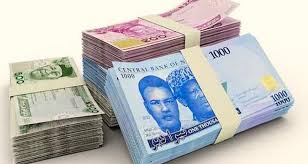
Nigeria’s earnings from crude and gas sales fell by 43 per cent, accounting for only about 8 per cent of total oil and gas revenue, despite a rebound in oil production, according to figures from the latest Budget Implementation Report for the fourth quarter of 2024 released by the Budget Office of the Federation. Oil revenue fell by ₦824.66 billion to ₦1.08 trillion during the year, from ₦ 1.90 trillion in 2023, representing a 43.32 per cent decline in the year under review. The decrease in revenue highlights a drift toward taxes and royalties as the dominant contributors.
Petroleum Profit Tax and Company Income Tax brought in ₦6 trillion, while royalties generated ₦6.99 trillion — nearly triple the previous year, aided by improved compliance and changes under the Petroleum Industry Act. Total oil and gas revenue before deductions stood at ₦15.07tn in 2024, against a budget of ₦19.99tn. This means that actual inflows fell short of the budget by ₦4.93tn or 24.65 per cent. Gas-flaring penalties rose to ₦391.26 billion, up 178% from 2023. Incidental revenue from royalty recovery and marginal-field settlements also more than doubled, while pipeline-fee income increased to ₦35.2 billion.
One of the largest boosts came from exchange-rate gains, which surged to ₦4.24 trillion from ₦791.88 billion in 2023 following currency liberalisation. After deductions, net oil revenue stood at ₦12.95 trillion — below the ₦16.98 trillion target but significantly higher than the ₦4.82 trillion recorded in 2023. The Nigerian Upstream Petroleum Regulatory Commission reported that crude oil production rose to 442.21 million barrels in 2024, up 12.6 per cent from 2023. Daily average production increased to 1.43 million barrels per day from 1.27 million barrels.

Production recovered in the second half of the year, reaching 1.49 million barrels per day in December, the highest of 2024. Total liquids — crude and condensates — amounted to 492.34 million barrels, up from 451.09 million barrels in 2023. Despite the gains, output reached only about 80 per cent of the government’s projection. Analysts attribute the shortfall to ongoing infrastructure constraints, crude theft, and underinvestment.
Compared with the previous year’s total of ₦8.36trn, however, oil and gas inflows almost doubled, showing an 80.33 per cent improvement. The year-on-year increase was largely driven by stronger receipts from royalties, penalties, and exchange rate gains following the unification of the naira, rather than from higher crude export volumes. The quarterly pattern showed that oil receipts rose from ₦3.35trn in the first quarter to ₦3.91trn in the fourth quarter, but remained consistently below the projected quarterly average of ₦4.99trn. Incidental oil revenue from royalty recovery and marginal field settlements climbed to ₦347.75b from ₦155.99b a year earlier, a growth of 122.93 per cent, while miscellaneous income, mainly from pipeline fees, increased to ₦35.2b from ₦16.38b.
One of the most significant contributors to the apparent growth in oil revenue was the exchange-rate gain, which soared to ₦4.24trn in 2024 from ₦791.88b in 2023—an increase of over 435 per cent. The surge followed the naira’s steep depreciation after exchange rate liberalisation, which inflated dollar-denominated oil earnings when converted into local currency. After accounting for all deductions, the net oil revenue for 2024 stood at ₦12.95trn, against a budget target of ₦16.98trn, a difference of ₦4.03trn or 23.74 per cent. When compared with the ₦4.82trn realised in 2023, the 2024 outcome represents a 168.83 per cent increase.
Oil and Gas
Oil steady after Ukraine strike on Russian oil pipeline does not disrupt supply
Oil prices were steady on Thursday, with the market focused on Ukraine’s attacks on Russian oil assets, while stalled peace talks tempered expectations of a deal restoring Russian oil flows. Brent crude rose 35 cents, or 0.6%, to $63.02 a barrel, while U.S. West Texas Intermediate rose 41 cents, or 0.7%, to $59.36. Ukraine hit the Druzhba oil pipeline in Russia’s central Tambov region, a Ukrainian military intelligence source said on Wednesday, the fifth attack on the pipeline that sends Russian oil to Hungary and Slovakia.
The pipeline operator and Hungary’s oil and gas company later said supplies were moving through the pipeline as normal. “Ukraine’s drone campaign against Russian refining infrastructure has shifted into a more sustained and strategically coordinated phase,” consultancy Kpler said in a research report.
This has pushed Russian refining throughput down to around 5 million barrels per day between September and November, a 335,000 bpd year-on-year decline, with gasoline hit hardest and gasoil output also materially weaker,” the report added. The perception that progress on a peace plan for Ukraine was stalling also supported prices, after U.S. President Donald Trump’s representatives emerged from peace talks with the Kremlin with no specific breakthroughs on ending the war.
“War and politics, balanced against comfortable stocks, expected supply surplus, and OPEC’s market-share strategy, keep Brent in the $60–$70 range for now,” said PVM analysts. Previously, expectations of an end to the war had pressured prices lower, as traders anticipated a deal would allow Russian oil back into an already oversupplied global market.
Meanwhile, U.S. crude and fuel inventories rose last week as refining activity picked up, the Energy Information Administration said on Wednesday. Crude inventories rose by 574,000 barrels to 427.5 million barrels in the week ended November 28, the EIA said, compared with analysts’ expectations in a Reuters poll for an 821,000-barrel draw.
Fitch Ratings on Thursday cut its 2025-2027 oil price assumptions to reflect market oversupply and production growth that is expected to outstrip demand.
Oil and Gas
Army destroys seven illegal oil refining sites, arrest 4, recover 109,000 ltrs of stolen products
Soldiers from the 6 Division, Nigerian Army, Port Harcourt, Rivers State, have destroyed seven illegal crude oil refining sites in its sustained efforts in the Niger Delta Region. The soldiers during the operation arrested four suspects and recovered 109,000 liters of stolen petroleum products. Lieutenant Colonel Jonah Danjuma, Acting Deputy Director, 6 Division Army Public Relations, in a statement in Port Harcourt, said success was in a sustained operation against oil theft. Danjuma said: “In the latest operations conducted with other security agencies between 10 and 23 November 2025, several illegal refining sites were taken out, four suspected oil thieves were arrested with over 109,000 litres of stolen products recovered across the NDR. “These include over 88,000 litres of stolen crude oil and 21,355 litres of illegally refined Automotive Gasoline Oil (AGO). The total cost of the products recovered amounted to over One Hundred and Fifty Million Naira only.”
Danjuma disclosed that the operations were conducted in Rivers, Akwa Ibom and Delta State. He said: “Operations conducted in Rivers State around Okolomade in Ahoada West Local Government Area (LGA) led to the deactivation of three illegal refining sites, three big pots, four big receivers and three big coolants, with over 40,000 litres of stolen crude and 20,000 litres of illegally refined AGO recovered. At the fringes of the Imo River, troops discovered three illegal refining sites, eight drum pots, seven drum receivers, one fibre boat and over 14,700 litres of stolen crude around Asa, Obeakpo, Lekuma and Abiama in Oyigbo LGA”.
He said “Relatedly, following credible intelligence, troops stormed a compound at Abuloma in Okrika LGA, where they discovered about 1,050 sacks filled with over 32,000 litres of stolen crude. At Abonnema Creek in Akuku-Toru LGA, troops intercepted a Cotonou boat loaded with 25 sacks filled with over 1,000 litres of illegally refined AGO. Also, in Akwa Ibom State, troops conducted a raid on a suspected storage facility at Ikot Akpan, Ekparakwa along the Abak–Ikot Abasi road in Abak LGA. During the operations, over 520 litres of illegally refined AGO stored in a drum and ten jerricans, as well as several empty jerricans, were recovered.
In Delta State, troops conducted an operation at DAEWOO yard within Ekpan area in Uvwie LGA. On sighting troops, the suspected oil thieves fled into nearby creeks with wooden boats loaded with jerricans. Troops also discovered three 25-litre jerricans filled with 75 litres of crude oil. Meanwhile, in Bayelsa State, troops have continued to deny criminal elements freedom of action.” The General Officer Commanding (GOC), 6 Division, Nigerian Army, Major General Emmanuel Emekah, who commended the troops for their resilience charged them to sustain the tempo in ensuring that economic saboteurs are effectively denied freedom of action in the NDR.
Oil and Gas
NNPCL declares N5.4 trn profit for 2024, targets 3m bpd output by 2030
Nigerian National Petroleum Company Limited (NNPC Ltd) has announced that it recorded a Profit After Tax of N5.4 trillion from total revenue of N45.1 trillion for the full year ended 2024. This is contained in a statement signed by the company’s Chief Corporate Communications Officer, Andy Odeh, on Monday. According to the statement, “The results, shared during its earnings call with analysts, underscore a year of strong operational delivery.” Odeh also said the Company unveiled its strategic roadmap to drive sustained growth and support Nigeria’s energy transition through 2030.
“The plan prioritises increased oil and gas production and outlines a $60 billion investment pipeline across the energy value chain,” NNPC Ltd stated. NNPC Ltd’s results, the statement said, highlight a surge in revenues and profits, signalling improved cost discipline, enhanced asset performance, and growing operational stability. NNPC according to the financials made a revenue of N45.1 trillion representing 88 per cent year-on-year growth. It said that Profit After Tax was N5.4 trillion, 64 per cent year-on-year growth; earnings per share stood at N27.07, 64 per cent year-on-year growth
Bashir Bayo Ojulari, Group Chief Executive Officer of NNPC said “the earnings highlight the positive momentum of our ongoing transformation and the unwavering commitment of our workforce,” said. “They offer a solid foundation for the ambitious growth ahead, in line with President Bola Ahmed Tinubu’s mandate, and reaffirm our commitment to delivering value to Nigerians.”
NNPC Limited, the statement said, is accelerating investments across upstream operations, gas infrastructure, and clean energy to extend growth into the next decade. Key strategic targets include: increasing crude oil production to 2 million barrels per day (bpd) by 2027 and 3 million bpd by 2030; growing natural gas production to 10 bcf/d by 2027 and 12 bcf/d by 2030 and completing major gas infrastructure projects such as Ajaokuta-Kaduna-Kano (AKK), Escravos-Lagos Pipeline System (ELPS) and Obiafu-Obrikom-Oben (OB3) pipelines to strengthen domestic supply and regional integration and Mobilising $60 billion in investments across the upstream, midstream, and downstream sectors by 2030.
“Our transformation is anchored on transparency, innovation, and disciplined growth,” Ojulari added. “We are positioning NNPC Limited as a globally competitive energy company capable of delivering sustainable returns while powering the future of Nigeria and Africa.”
-
News3 days agoNigeria to officially tag Kidnapping as Act of Terrorism as bill passes 2nd reading in Senate
-
News3 days agoNigeria champions African-Arab trade to boost agribusiness, industrial growth
-
News3 days agoFG’s plan to tax digital currencies may push traders to into underground financing—stakeholders
-
Finance1 week agoAfreximbank successfully closed its second Samurai Bond transactions, raising JPY 81.8bn or $527m
-
Economy3 days agoMAN cries out some operators at FTZs abusing system to detriment of local manufacturers
-
News1 week agoFG launches fresh offensive against Trans-border crimes, irregular migration, ECOWAS biometric identity Card
-
News3 days agoEU to support Nigeria’s war against insecurity
-
Uncategorized3 days agoDeveloping Countries’ Debt Outflows Hit 50-Year High During 2022-2024—WBG