
Agriculture
Cassava remains key to Africa’s food security, industrial growth, says PAOSMI

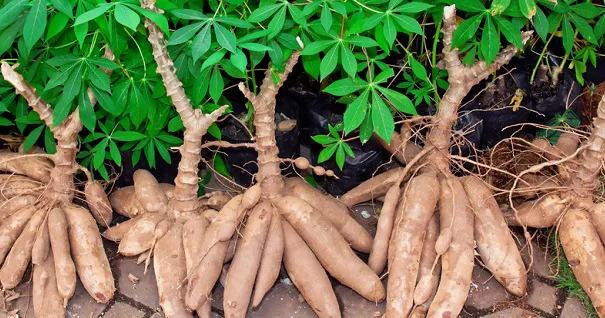
The director-general of the Pan-African Organisation for Small and Medium Industries, Henry Emejuo, says cassava remains central to Africa’s food security and industrial development. Mr Emejuo, who spoke on the sidelines of the just-concluded three-day Africa Cassava Conference in Abuja, described the crop as both an economic commodity and a daily staple across the continent. He said cassava’s versatility made it indispensable in households, as there was hardly a day when a Nigerian or African home did not consume a cassava-based product such as garri or tapioca. Emejuo said the crop also held significant industrial value, producing materials such as ethanol, high-quality cassava flour, sorbitol and healthy sweeteners used across manufacturing sectors.
He said the conference provided a critical platform for policymakers, scientists and industrialists to harmonise strategies that would deepen cassava utilisation and unlock its economic potential. The PAOSMI boss said:” Delegates from more than seven African countries spent three days examining policy, technical and scientific issues affecting the cassava value chain.” He described the conference as a success, saying the outcomes would guide countries in expanding the industrial use of cassava and in strengthening its role in driving economic development. Mustafa Bakano, national president of the Nigeria Cassava Growers Association, said deliberations from the meeting would address key challenges faced by smallholder farmers, including access to finance, farming practices, and industrial standards.
According to him, the presence of financial institutions such as the Bank of Industry offered stakeholders the opportunity to develop practical solutions to present to governments. Michael Kento, an assistant professor of Agricultural Sciences and Food Security at the University of Juba, South Sudan, described the conference as an eye-opener for his country. He expressed South Sudan’s zeal to learn from Nigeria’s leadership in cassava production, especially in extension services, processing, marketing, policy development and research. Mr Kento said Nigeria’s cassava success would translate to the continent’s success, and deeper collaboration between both countries would strengthen the subsector and improve food security, nutrition and industrial growth in South Sudan.

Emmanuel Bobobee of the Kwame Nkrumah University of Science and Technology, Ghana, said mechanised cassava production was key to transforming cassava into an engine for Africa’s next phase of industrial development. Mr Bobobee said his mechanical cassava harvester, already in use in several countries, could support large-scale production if adopted more widely. He added, ”The participation of seven countries demonstrates rising continental interest in cassava, and the crop should be placed at the centre of Africa’s fourth industrial revolution. Ghana and Nigeria share similar agricultural challenges, and both countries stand to benefit from sharing innovations and strengthening cross-border collaboration.*
The three-day conference brought together policymakers, researchers, industrialists and farmers to explore opportunities in processing, technology adoption, export and the development of cassava-based products across Africa. It ended with a dinner and the presentation of awards to distinguished players and partners in the sector.
-

 News19 hours ago
Cardoso formally receives Central Bank of the Year Award
-

 Economy19 hours ago
Nigeria’s Digital Boom needs nuclear power partnerships for long-term success
-
 Oil and Gas19 hours ago
NNPC is house of thieves, fraud; Kyari must be arrested dead or alive to account for N210 trillion—Oshiomhole
-

 Oil and Gas19 hours ago
Dangote Refinery seeks $1bn private placement ahead of planned listing
-
Uncategorized19 hours ago
June 12 Democracy Day declaration not enough, as citizens wallow in pain – ActionAid, FG declares Friday public holiday
-

 News19 hours ago
Middle East Conflict sends global growth to lowest rate since COVID-19, WBG to Provide up to $100bn for Affected countries over 15 Months—WBG
-

 News19 hours ago
High cost of cooking gas‘ll negatively impact environment, health, CPPE warns