
Economy
FG projects 2026 deficit at 4.28% of GDP as Tinubu proposes N58.18trn spending plan

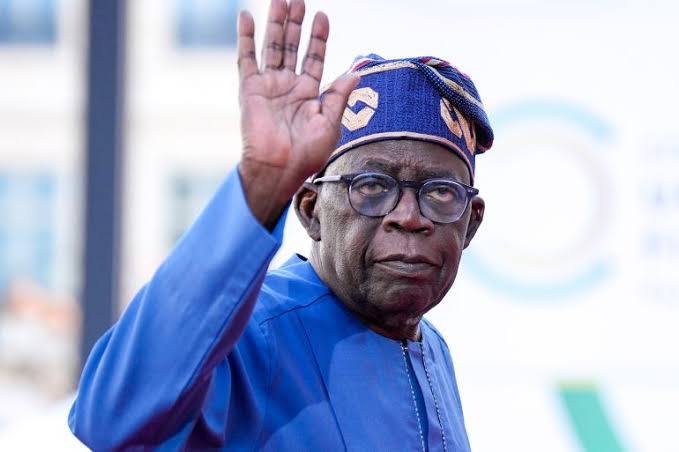
Nigeria’s deficit for the 2026 budget is projected at 4.28% of gross domestic product, as President Bola Tinubu unveiled a N58.18 trillion spending plan aimed at consolidating economic reforms and boosting growth.
The Federal Executive Council (FEC), on Friday, approved a N58.47 trillion budget proposal for the 2026 fiscal year. Tanimu Yakubu, the director-general of the Budget Office of the Federation, made this known while briefing journalists after the FEC meeting at the Presidential Villa, Abuja.
In the 2026–2028 Medium-Term Expenditure Framework (MTEF) and Fiscal Strategy Paper (FSP) reviewed, the total budget size is N54.46 trillion, of which N34.33 trillion is retained revenue.
Mr Yakubu explained that the aggregate expenditure for the 2026 budget proposal is six per cent higher than the 2025 budget estimate. ”This includes projected spending of government-owned enterprises, amounting to N4.98 trillion, and N1.37 trillion for grants and donor-funded projects.
”The projected aggregate spending includes statutory transfers of N4.1 trillion for debt service and N15.52 trillion, including N3.388.54 billion for the sinking fund to retire maturing issues of local contractors and creditors.
“Personnel costs, including pension: N10.75 trillion, which includes N1.02 trillion for government-owned enterprises and is seven per cent higher than the 2025 provision, and overhead costs N2.22 trillion,” he said.
The DG stated that the 2026 budget reflects a deliberate balance between macroeconomic stabilisation, development imperatives, and the medium-term fiscal framework.
He said the budget assumptions are conservative and realistic, particularly regarding oil prices, exchange rates, and government-owned enterprises’ dividends. The revenues decline year on year, but non-oil revenues now account for roughly two-thirds of total receipts, confirming a structural shift away from oil dependence.
The deficit is approximately 23.85 trillion naira, he said during a budget speech to lawmakers on Friday. “The 2026 budget is anchored on realism, prudence, and growth orientation,” Tinubu told lawmakers in Abuja. “We will spend with purpose, manage debt with discipline, and pursue growth that is broad-based, not narrow, and sustainable, not temporary.”

The proposed budget allocates 15.52 trillion naira to debt servicing and 26.08 trillion naira for capital projects, focusing on sectors such as security, infrastructure, education, and health.
“Corporate tax, VAT, customs, and independent revenues remain the main fiscal anchors. Expenditure growth is driven primarily by debt service, wages, and pensions rather than discretionary expansion. Capital spending is marginally reduced to prioritise completion of ongoing projects and value for money.
The larger deficit reflects policy loosening. Financing relies on domestic borrowing, complemented by concessional multilateral loans,” he said.
Earlier, the Minister of Budget and Economic Planning, Abubakar Bagudu, confirmed that the FEC considered the 2026 budget proposal that will be presented before the joint session of the National Assembly.
“As well as an amendment to the medium-term expenditure framework, which we propose, a revision downwards of the exchange rate from N1,512 to N1,400, and the consequential changes in budget size.
“So the federal executive council approved both the amendment to the medium term as well as the 2026 budget proposal for presentation to the National Assembly,” Mr Bagudu said.
Also, the Minister of Information and National Orientation, Mohammed Idris, described the FEC as one item on the FEC meeting to consider and pass the 2026 budget for onward transmission to the National Assembly by President Bola Tinubu.
“The budget has been looked at and discussed by members of the FEC after its due presentation by the Minister of Budget and Economic Planning and the director-general of the budget office,” he said.
-

 Economy1 day ago
CPPE expresses worry over real-sector financing gap of over ₦50trn, proposes new devt-finance architecture
-
 Economy1 day ago
Alake’s media aide debunks claims of handing over Nigeria’s solid minerals to Chinese
-

 Oil and Gas1 day ago
Energy professionals demand probe of NNPC, NUPRC over transparency concerns
-

 Oil and Gas1 day ago
Group urges Ogoni to support resumption of oil production, 33-year shutdown cost Nigeria, Rivers $226bn
-

 Oil and Gas1 hour ago
Oil prices drop 5% to three-week low after Trump cancels attack on Iran
-
Oil and Gas1 hour ago
NNPC remits N6.286trn into federation account between January and June 2026, issues another tender to sell Cawthorne crude
-
 News1 hour ago
NESG appoints Engr. Adeleye Falade, FNSE to its board
-
 Economy1 hour ago
EBID, CORIS Holding sign 80m euro financing agreement to strengthen food, energy, agric value chains in West Africa