
Economy
Where is Nigeria President?— Media Right

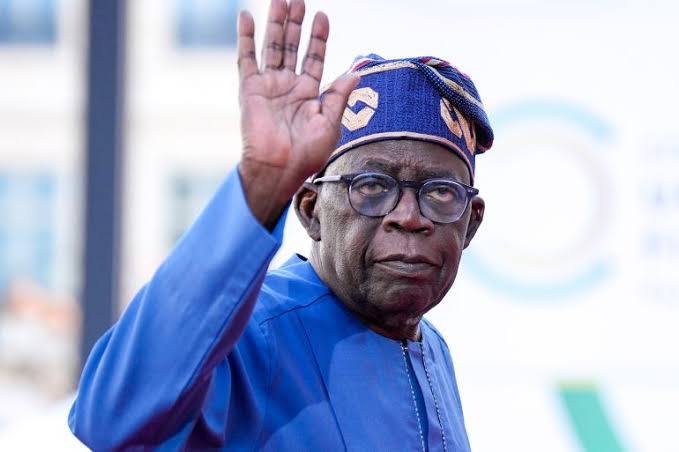
We, the undersigned civil society organizations and leaders, express grave concern and deep alarm over the recent U.S. air strike carried out on Christmas day on Nigerian territory, and the troubling silence, absence, and abdication of responsibility by Nigeria’s political and military leadership in its aftermath.
This event raises fundamental questions about sovereignty, constitutional governance, civilian protection, and the integrity of Nigeria’s social contract.
It is apparent that Nigeria is in a dual crisis of leadership and security, and at the heart of this crisis is the apparent abdication by the President of the Federal Republic of Nigeria, Bola Ahmed Tinubu, of his constitutional role as Commander-in-Chief of the Armed Forces.
By inviting a foreign government to manage what is fundamentally an internal security challenge, the President ceded sovereign authority in a manner that undermines Nigeria’s constitutional order. Even more disturbing is that during and after the operation, the President, the Service Chiefs, and the leadership of the National Assembly were either on vacation or completely silent, leaving the Minister of Foreign Affairs, Ambassador Yusuf Tuggar, to publicly rationalize decisions that strike at the core of national sovereignty and democratic accountability.
This silence reflects a profound breakdown of institutional accountability mechanisms. Section 14(2)(b) of the 1999 Constitution (as amended) is unequivocal: “the security and welfare of the people shall be the primary purpose of government.”
This provision represents a central pillar of Nigeria’s social contract. Any security action, especially one involving foreign military forces, must be grounded in transparency, civilian protection, and democratic oversight. None of these standards were met.
While we acknowledge the importance of international counterterrorism cooperation, there is an urgent need to critically assess Nigeria’s National Counter Terrorism Strategy (NACTEST), as well as its Policy Framework and National Action Plan for Preventing and Countering Violent Extremism, in light of the recent U.S. operation on Nigerian soil, to determine whether it aligns with these frameworks or exposes significant gaps within them.
We are particularly troubled by the severe deficit of information regarding the nature, scope, legal basis, and rules of engagement governing the collaboration between the Nigerian and U.S. governments.

Since the incident, Nigerians have not been informed of the basis for authorizing the strikes, under what legal framework they were conducted, what safeguards were in place to protect civilians, or what accountability mechanisms exist for harm caused.
This opacity fuels mistrust and undermines public confidence in government at a time when trust is already dangerously low.
In addition, at the time of issuing this statement, there has been no confirmation that any actual belligerent targets were hit. Instead, reports that debris from expended munitions fell on farmlands in Jabo, Tambuwal Local Government Area of Sokoto State, and in Offa, Kwara State, near the premises of a hotel, underscore the very real risks to civilian life and property.
While the Nigerian Air Force inaugurated a “Civilian Harm Mitigation and Response (CHMR) Board” in July 2025, no publicly articulated civilian harm mitigation protocols have been presented for this offensive. In contemporary military operations, particularly those involving air strikes, responsible governance demands clear standards for target verification, proportionality assessments, post-strike damage evaluations, and accessible avenues for civilian complaints, investigation, compensation, and redress. The absence of such frameworks in this operation constitutes a serious governance failure.
We caution that the government’s inept management of this crisis is capable of aggravating narratives that escalate religious and communal tensions in an already fragile national context. Nigeria’s security challenges cannot and must not be framed in ways that deepen polarization or stigmatize communities. What is required is a united, inclusive, and rights-respecting approach that prioritizes peace, social cohesion, and long-term stability.
We emphasize the urgent need to address the harms suffered by civilians as a result of the strike action. This includes transparent investigations, public disclosure of findings, prompt assistance to affected communities, and adequate compensation where harm has occurred. Without these steps, the already wide public trust deficit between citizens and the state will continue to deepen.
Finally, the office of the President carries the fundamental expectation that President Bola Tinubu possesses the capacity, judgment, and resolve to serve as Commander-in-Chief of Nigeria’s armed forces. The authorization of a foreign military to conduct strikes within Nigerian territory without any public explanation of the necessity or legal basis for such action, coupled with the continued silence of the President, the Service Chiefs, and the National Assembly in the face of these grave developments, is wholly unacceptable.
If the President and his security leadership have concluded that they lack the capacity to manage Nigeria’s internal security challenges and would rather cede such authority to a foreign power, then constitutional responsibility and democratic integrity demand that they resign.
Nigerians deserve accountable leadership and security rooted in sovereignty, the rule of law, and respect for human life.
Signed:
21st Century Community Empowerment for Youth and Women Initiative
Abubakar Mohammed
Accountability Lab
ACE-Nigeria
Advocacy Centre for Development
African Centre for Media and Information Literacy (AFRICMIL)
African Law Foundation (AFRILAW)
Alliances for Africa (AFA)
Alliance on Surviving Covid-19 and Beyond (ASCAB)
Amnesty International Nigeria
Baobab for Women’s Human Rights
Bauchi Human Rights Network
BENDEF
BOCODEP
BudgIT
Bwatiye Community Development Association
Cedar Seed Foundation
CEE- HOPE
Centre for Community Excellence (CENCEX )
Centre for Social Justice
Centre LSD
CISLAC
Centre for Information Technology and Development (CITAD)
Center for Transparency Advocacy
Chidi Anselm Odinkalu
Citizens Advocacy for Social & Economic Rights (CASER)
Clean Technology Hub
CLEEN Foundation
Community Life Project (CLP)
Community Outreach for Development and Welfare Advocacy (CODWA)
Companions for the Development of Jibia Local Government Area
Connected Advocacy
Conscience for Human Rights and Conflict Resolution (CHRCR)
Corporate Accountability and Public Participation Africa (CAPPA)
Disabled People in Leadership Initiative and Network of Women with Disabilities
Dorothy Njemanze Foundation (DNF)
Enough Is Enough
F. S. A. F. C. I
FEMBUD
FENRAD
Gatefield
Gender Relevance Initiative Promotion
Global Rights
Grassroots Development Centre
HEDA
HOMEF
Human Rights Network Jigawa
Initiative for Social Development
Keen and Care Initiative (KCI)
Kebetkache Women Development & Resource Centre
Koyenum Immalah Foundation
Life and Peace Development Organisation
Media Rights Agenda
Mowalek Centre for Sustainable Community Development
Neighbourhood Environment Watch Foundation
Nextier SPD (Security, Peace and Development)
Network of University Legal Aid Institutions (NULAI)
Online Hub NG
OrderPaper Advocacy Initiative
Organization for Community Civic Engagement (OCCEN)
Partners West Africa Nigeria (PWAN)
Partnership for Justice and Network of Nigerian Human Rights Defenders
Policy Alert
PRAWA International
Praxis Center
Publish What You Pay (PWYP) Nigeria
Rule of Law and Accountability Advocacy Centre (RULAAC)
SBM Intelligence
Sesor Empowerment Initiative to Sesor Empowerment Foundation
SIPJAD
Social Action
Socio-Economic Research and Development Centre
Sokoto Youth Council
South Saharan Social Development Organisation
Stephanie Peacebuilding and Development Foundation (SPADEV)
Support Initiative for Sustainable Development
Tap Initiative
TechHerNG
The Kukah Centre
The Resource Centre for Human Rights & Civic Education (CHRICED)
Urban Alert
We The People
West African Drug Policy Network (WADPN)
Woman in Media Communication Initiative (WIM)
Women in Mining Nigeria (WIMNG)
Women’s Rights Advancement and Protection Alternative (WRAPA)
Yiaga Africa
Yobe Youth Council
-

 News1 day ago
Cardoso formally receives Central Bank of the Year Award
-

 Economy1 day ago
Nigeria’s Digital Boom needs nuclear power partnerships for long-term success
-
Uncategorized1 day ago
June 12 Democracy Day declaration not enough, as citizens wallow in pain – ActionAid, FG declares Friday public holiday
-

 Finance4 hours ago
Elon Musk becomes world’s first trillionaire as SpaceX shares soar on stock market debut
-
 Stock Market4 hours ago
FG to raise N4trn bond to settle electricity debt
-
 Oil and Gas1 day ago
NNPC is house of thieves, fraud; Kyari must be arrested dead or alive to account for N210 trillion—Oshiomhole
-
 Oil and Gas1 day ago
Dangote Refinery seeks $1bn private placement ahead of planned listing
-
 News1 day ago
Middle East Conflict sends global growth to lowest rate since COVID-19, WBG to Provide up to $100bn for Affected countries over 15 Months—WBG