
News
Economic hardship forces private car owners into ‘kabu kabu’ business major cities in Nigeria

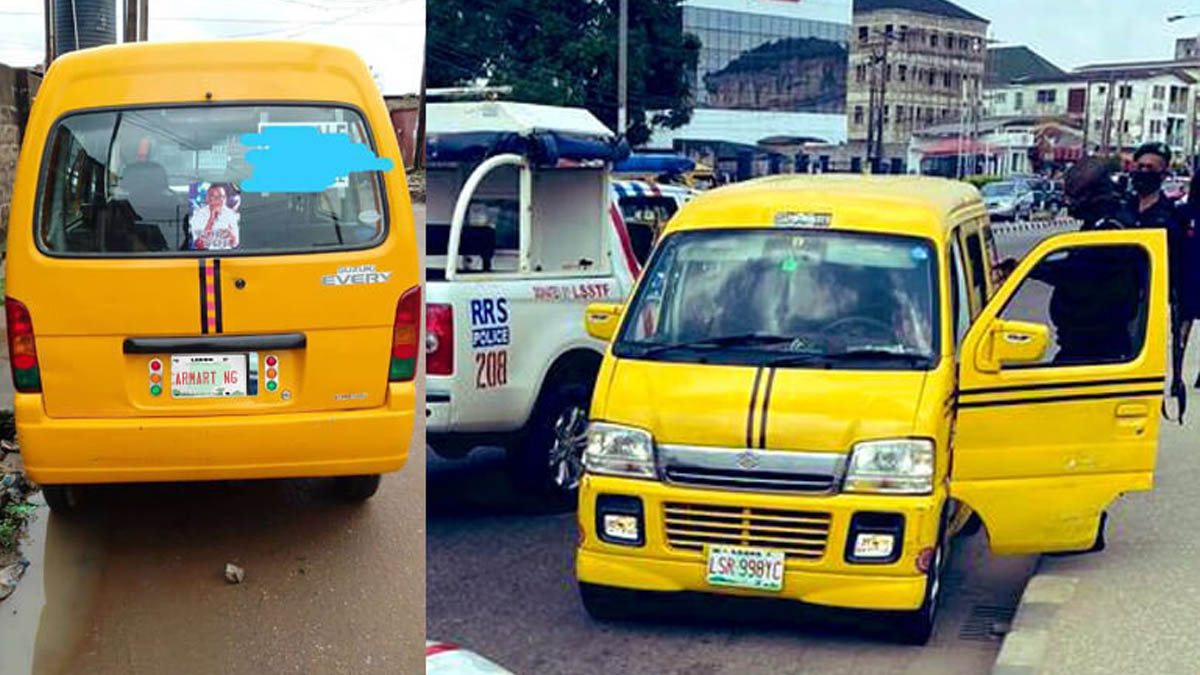
Economic hardship and rising living costs have pushed many private car owners, including civil servants in the Federal Capital Territory (FCT), Lagos, Ibadan, Enugu Port Hacourt to use their vehicles for transportation.
Some residents, in an interview with journalists on Sunday, said the practice, popularly known as “kabu kabu,” had become more visible on major cities in the country.
According to Nigerians, the practice is a coping strategy to augment income and to help them raise money to buy fuel and meet daily expenses.
Ibrahim Musa, a civil servant in Abuja, told said that he started conveying passengers along the Kubwa–Wuse axis after work hours to cushion the impact of inflation.
He said “my salary can no longer cover basic needs for my family these days. So after work, I pick passengers from Wuse to Kubwa, and what I make helps me buy fuel, and I also use part of it to support my family”.
Another civil servant, Sadiq Lawal, said he just realised recently that many of his colleagues had adopted the practice quietly. “It is not that we want to be commercial drivers, but things are hard. Transport fares are high and fuel is expensive. This is survival,” Mr Lawal said.
Similarly, Erica Ekah said that since she adopted the practice of convening passengers to and from work, the issue of money to buy fuel was history.
”I have always been scared of carrying passengers, even when I see a lot of them stuck on the way, especially since the heightened security challenges and the fear of destroying my car.
“Recently, I discovered the trick of areas where I can pick up passengers without issues. And since I started, it has been helping to augment the cost of fuel,” Ms Ekah said.

Similarly, Blessing Okorie, a private sector worker and car owner, said she began picking up passengers during peak hours to cope with the rising cost of living.
Ms Okorie said, ”I am a single mother of two and I am only able to provide for my children through income made from my small business.
“So during the peak periods, I leave my shop in the care of my assistant and use my car to carry passengers.”
Passengers on their part, said the development had provided some relief amid high transport fares.
Hadiza Ahmed, a trader who commutes daily from Nyanya to Area 1, said she preferred boarding private cars because they were sometimes cheaper and more comfortable.
“Some private car owners charge less than taxis, especially in the evenings. It helps people like us who are struggling,” she said.
However, some residents raised safety and regulatory concerns.
Emmanuel Aper, a resident of Gwarimpa, said that while the practice was understandable, it required proper regulation.
“You do not know who is a registered driver or not. Government needs to look at this issue so that safety is not compromised,” Mr Aper said.
A transport analyst, Kabir Abdullahi, said the trend reflected broader economic pressures and gaps in public transport.
“When private car owners turn to informal passenger services, it shows that incomes are under pressure and transport supply is inadequate.
“Therefore, improving mass transit will reduce this burden,” he said.
As the cost of living continues to rise, many residents say the growing use of private vehicles for income generation underscores the need for targeted economic relief measures. They reiterated the need for the government to ensure improved urban transport systems to ease the burden on residents.
-

 Economy2 days ago
72% of world trade still operates under WTO— Okonjo-Iweala
-

 News2 days ago
Northeast Development Commission distributes 10,000 e-vehicles to beneficiaries
-

 News2 days ago
Wike seeks N400bn to complete Abuja millennium tower
-

 Economy18 hours ago
FG rolls out plan to strengthen power supply
-

 News2 days ago
Subsidy savings spent on debt servicing, higher spending—Oyedele
-

 Oil and Gas2 days ago
Olugboboro community expresses worry over Oando Plc’s decision to halt reclamation project
-

 News18 hours ago
US bans imports from 43 more companies over China’s alleged forced labour
-
 News18 hours ago
Ban on sale of sachet alcoholic drinks remains—NAFDAC