
Agriculture
Ghana’s cocoa farmers are unpaid and investment in next harvest at risk

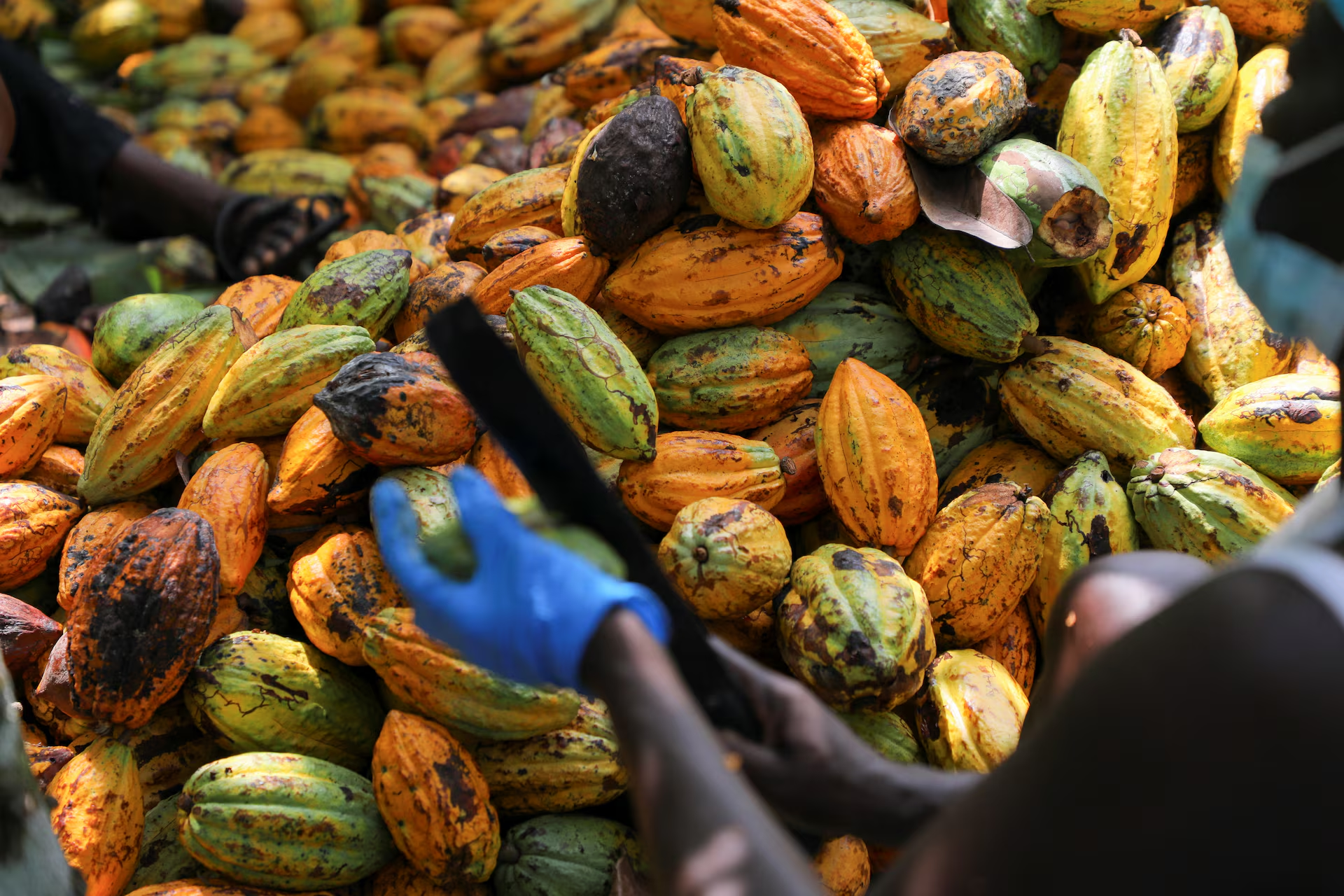
Some of Ghana’s farmers have not been paid and investment in the next harvest is at risk as international traders refuse to pay the upfront sums the state regulator has sought under a new model for purchasing cocoa beans, sources said.
The revamped system, introduced for the 2024/25 season, shifted the burden of pre-financing purchases from the Ghana Cocoa Board, or COCOBOD, to international traders.
Following better than expected production this season, the traders’ unwillingness to pay deposits of at least 60% of the value of forward contracts at the start of the season has left the world’s second-largest producer with a big stockpile, three sources familiar with the situation said, though they were unable to quantify the stockpile.
COCOBOD did not respond to requests for comment.
A global surplus has driven down cocoa prices by around 20% so far this year after a 50% drop last year. In 2024, internationally-traded cocoa prices surged by 160% .
Under Ghana’s cocoa financing system, farmers sell beans to the licensed buying companies that in turn sell them to COCOBOD, which sells to international traders through its marketing company.
A source at a licensed buying company, or local state-approved cocoa buyer, said the fall in international prices meant COCOBOD was struggling to persuade international traders to make advance payments to secure supplies.
A second source at a licensed buying company told Reuters Ghana’s farmgate price set annually by the regulator was untenably high.
Ghana in October said it was setting its farmgate price at 58,000 Ghana cedis ($4,640.00) per metric ton, an increase of 12%. International prices are trading at around $4,700 a ton.
Under the previous system that had been in place for three decades, COCOBOD raised funds annually via syndicated loans and disbursed them to the licensed buying companies, which in turn bought beans from farmers and delivered them to the regulator for onward sale to the international markets.
The system was revised as COCOBOD had ceased to be able to raise finances, but the sources said the new system was also under strain.
All the sources asked not to be named because they were not authorised to speak to the press.
The third source, also from an LBC, said Ghanaian cocoa was overpriced relative to the international market and that it was untenable to buy from the farms at a price so high it meant selling on at a loss.
Speaking on Saturday, Stevenson Anane Boateng, president of the Ghana National Association of Cocoa Farmers, told a local radio station that farmers had not been paid since November.
It was unclear how many farmers had not been paid.
Theophilus Tamakloe, vice president of the Ghana Cooperative Cocoa Farmers Association, told Reuters that payment delays threaten farmers’ ability to service bank loans and conduct maintenance that should be done in January, such as pruning and applying fertiliser.
-
 Economy2 days ago
Nigeria Sovereign Investment Authority announces winners of $275,000 prize for innovation
-

 Finance2 days ago
Airtel Money reports 25% growth in first-half revenue in maiden results
-
 News2 days ago
EFCC arrests 14 Chinese nationals in Nigeria for operating illegal lithium processing plants
-

 Maritime2 days ago
NIMASA, ITF signs MOU on Seafarer wellbeing, MoU First in Africa—ITF
-

 Oil and Gas2 days ago
Honeywell Technologies launches new AI platform at Dangote’s Nigeria refinery
-

 Economy2 days ago
FG targets single-digit inflation by end-2027 to unlock cheaper borrowing— Oyedele
-
 News13 hours ago
Top 20 Ecobank’s InnovateX finalists emerge for ₦20m prize money
-
 Industry13 hours ago
MAN summit to tackle high energy costs for manufacturers