
Finance
Cash, digital payments must coexist within Nigeria’s economy—NIBSS


The Nigeria Inter-Bank Settlement System is exploring offline payment solutions to reach Nigerians with limited data access and prevent exclusion from the payments ecosystem.
Speaking at the 2026 CHBO Conference in Lagos on Friday, NIBSS Executive Director, Business and Products, Ngover Nwankwo, said inclusion must match innovation as digital payments expand.
Ms Nwankwo said, “Our focus is balancing innovation with inclusion, ensuring no Nigerian is left behind as digital payment adoption grows.”
She stressed that cash remains vital and cannot be eliminated, insisting both cash and digital payments must coexist within Nigeria’s economy.
She said, “Cash and digital platforms must work together, protecting those who rely on cash while offering secure, efficient services to digital users.”
Ms Nwankwo commended banks for operational improvements, noting cash availability in December 2025 was largely seamless with minimal public complaints. She also highlighted biometric authentication, allowing customers to request and verify cards using fingerprints without extensive documentation.
Presenting a paper, Bankers Warehouse Plc Managing Director, Lloyd Onaghinon, said cash remains critical in spite of rapid electronic payment growth.
“Globally, cash usage continues to grow, driven by culture, demographics, trust and financial inclusion,” Mr Onaghinon said. He warned that excessive cash outside banks weakens financial intermediation and undermines effective monetary policy.
Mr Onaghinon urged collaboration among regulators, banks and stakeholders to balance cash, electronic payments and digital currencies, while rebuilding public trust.
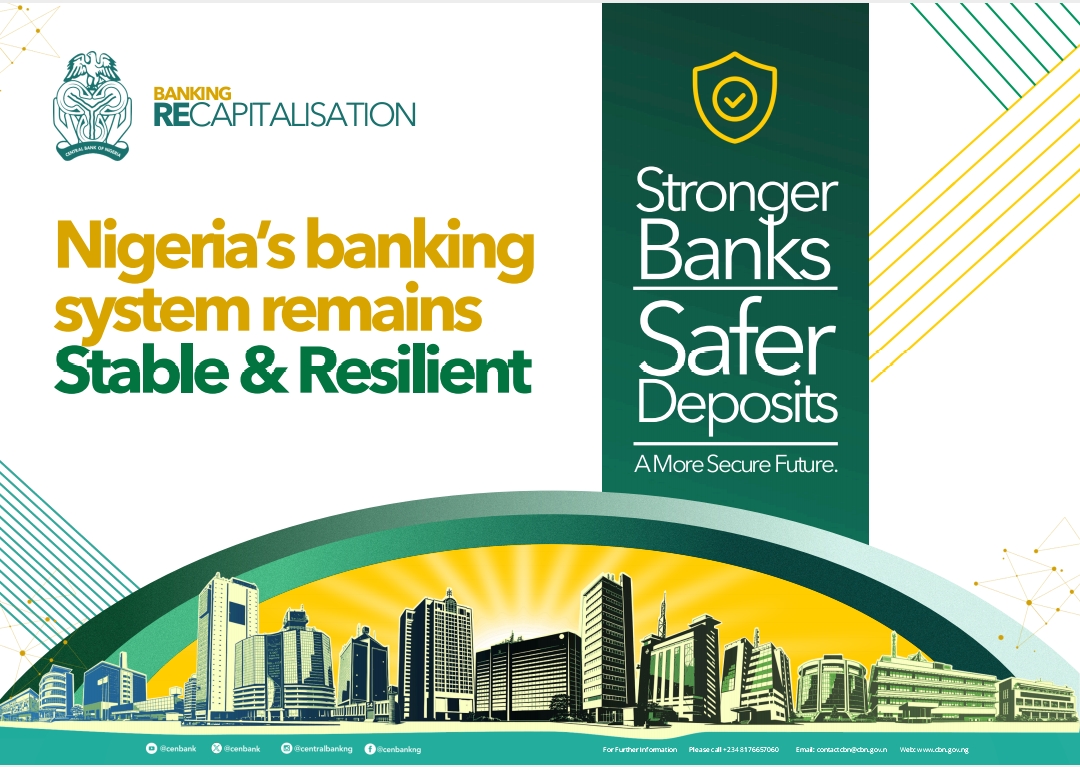
Delivering a goodwill message, the Central Bank of Nigeria urged banks to work with fintechs and microfinance institutions to formalise idle cash. CBN Director and Other Financial Institutions Supervision, Solaja Olayemi, said about 90 per cent of Nigeria’s cash remains outside the banking system.
“Fintechs and technology-driven microfinance institutions have wider agent networks, especially in underserved areas,” Mr Olayemi said. He added that Moniepoint, OPay and Kuda now hold national licences, while several other fintechs were undergoing licensing.
Other speakers called for stronger collaboration to tackle rising digital fraud across banks, fintechs, telecom operators and regulators.
They stressed stricter KYC enforcement, shared threat intelligence, stronger vendor risk management and customer education. “Layered security and collective action are essential to building a safe and resilient payments ecosystem,” participants said. NAN
-

 News19 hours ago
Cardoso formally receives Central Bank of the Year Award
-

 Economy20 hours ago
Nigeria’s Digital Boom needs nuclear power partnerships for long-term success
-

 Oil and Gas20 hours ago
NNPC is house of thieves, fraud; Kyari must be arrested dead or alive to account for N210 trillion—Oshiomhole
-

 Oil and Gas20 hours ago
Dangote Refinery seeks $1bn private placement ahead of planned listing
-
Uncategorized19 hours ago
June 12 Democracy Day declaration not enough, as citizens wallow in pain – ActionAid, FG declares Friday public holiday
-
 News20 hours ago
Middle East Conflict sends global growth to lowest rate since COVID-19, WBG to Provide up to $100bn for Affected countries over 15 Months—WBG
-

 News19 hours ago
High cost of cooking gas‘ll negatively impact environment, health, CPPE warns