
News
EU, India make history with free trade agreement

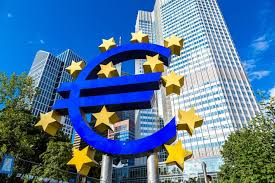
Under the deal, India is to gradually reduce tariffs on imported cars from 110 per cent to as low as 10 per cent, at least for 250,000 vehicles per year.
The European Union and India have concluded negotiations on a free trade deal, European Commission president Ursula von der Leyen and India’s Prime Minister Narendra Modi have said.
“The EU and India make history today, deepening the partnership between the world’s biggest democracies. We have created a free trade zone of two billion people, with both sides set to gain economically.
“We have sent a signal to the world that rules-based cooperation still delivers great outcomes,” Ms Von der Leyen said.
She said this during an EU-India summit in New Delhi. Under the deal, India is to gradually reduce tariffs on imported cars from 110 per cent to as low as 10 per cent, at least for 250,000 vehicles per year.
Also, the tariffs on car parts are to be abolished after five to 10 years, the commission said. Tariffs on machinery, chemicals, and pharmaceuticals are also to be mostly eliminated, it said.
Duties on some EU agricultural products are also to be lowered significantly. Tariffs on wine would be cut from 150 per cent to 75 per cent, and the 40 per cent levy on olive oil is to be removed.

Similar protests against the Mercosur agreement are not expected, as it will not cover sensitive areas for local farmers. “Sensitive European agricultural sectors will be fully protected,” the commission said.
Products such as beef, chicken meat, rice, and sugar were excluded from the deal, and EU standards continue to apply to all Indian imports, it said.
The deal will have to be formally adopted by EU countries and the European Parliament before it can enter into force. With a population of more than 1.45 billion, India is the world’s most populous country, ahead of China.
The EU is home to around 450 million people. India and the EU account for nearly a quarter of the world’s population and global gross domestic product.
The negotiations on the free trade deal began in 2007 but were suspended in 2013 due to a lack of progress.
Russia’s full-scale invasion of Ukraine led to the relaunch of the talks in 2022, and U.S. President Donald Trump’s tariff policy spurred rapid progress.
(dpa/NAN)
-

 Economy1 day ago
CPPE expresses worry over real-sector financing gap of over ₦50trn, proposes new devt-finance architecture
-
 Oil and Gas1 day ago
Energy professionals demand probe of NNPC, NUPRC over transparency concerns
-
 Economy1 day ago
Alake’s media aide debunks claims of handing over Nigeria’s solid minerals to Chinese
-

 Oil and Gas1 day ago
Group urges Ogoni to support resumption of oil production, 33-year shutdown cost Nigeria, Rivers $226bn
-

 News5 hours ago
Breastfeeding can improve Nigeria’s economy—Commissioner
-

 Oil and Gas5 hours ago
Oil prices drop 5% to three-week low after Trump cancels attack on Iran
-
Oil and Gas5 hours ago
NNPC remits N6.286trn into federation account between January and June 2026, issues another tender to sell Cawthorne crude
-
 Economy5 hours ago
EBID, CORIS Holding sign 80m euro financing agreement to strengthen food, energy, agric value chains in West Africa