
News
NDIC promotes public awareness on deposit insurance, financial stability

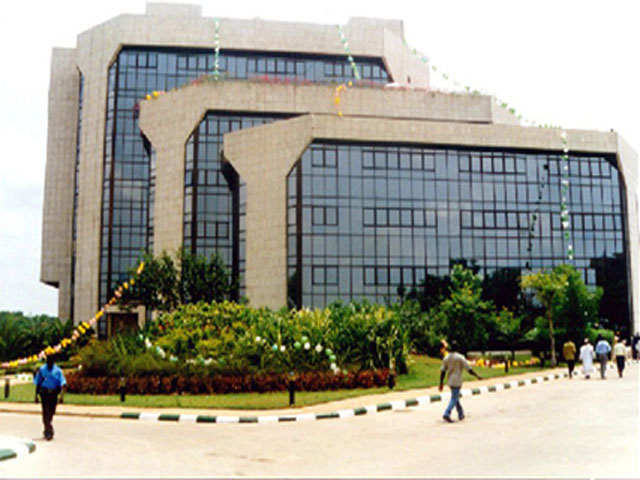
The Nigeria Deposit Insurance Corporation (NDIC) has intensified efforts to deepen public understanding of deposit insurance and strengthen confidence in the banking system.
It also assured Nigerians that depositor funds remained protected under its regulatory framework. NDIC managing director Thompson Sunday made this known at a stakeholders’ town hall meeting on Saturday in Lagos.
The theme of the meeting is “Strengthening Depositor Confidence: NDIC’s Role in Financial System Stability and Consumer Protection.”
Mr Sunday, represented by Adedayo Olukoya, the director of the bank examination department, said improved public knowledge of deposit insurance would reinforce trust and resilience within the financial sector.
Also speaking, the director of the Claims Resolution Department, Olawale Sule, explained that NDIC’s operations were anchored in four core mandates: deposit guarantee, banking supervision, failure resolution, and bank liquidation.
“The corporation insures deposits in licensed banks to ensure customers do not lose their savings if a financial institution fails,“ Mr Sule added. He noted that depositors do not pay premiums under the scheme; instead, insured institutions contribute at prescribed rates and based on risk assessments.
Mr Sule said the NDIC guarantees payment of insured deposits up to the statutory limit when a bank becomes distressed and is eventually closed.
“Depositors of deposit money banks, non-interest banks, and mobile money operators are covered up to N5 million, while those in microfinance banks, primary mortgage institutions, and payment service banks are insured up to N2 million,” he said.
According to him, NDIC works closely with the Central Bank of Nigeria to monitor the health of financial institutions through routine supervision.
He explained that this includes off-site surveillance through periodic returns submitted by banks, as well as on-site examinations to verify financial condition and regulatory compliance.
“This allows early detection of problems and timely intervention to prevent failure,” he said. Mr Sule added that when banks show signs of distress, NDIC may provide financial assistance, management changes, mergers, or acquisition arrangements to stabilise the institutions and protect depositors.
Where recovery efforts fail, he said the corporation moves to resolve the institution through liquidation following licence revocation. “In such cases, NDIC steps in as liquidator to identify assets and liabilities, settle depositors’ claims, and recover funds owed to the bank,” he said.
Mr Sule explained that depositors are given priority in the payment process. “They are first paid the insured portion of their savings, while balances above the insured limit are reimbursed later as liquidation dividends when assets are realised,” he said.
He also highlighted the importance of the Bank Verification Number (BVN), noting that it enables the corporation to trace depositors’ alternate accounts and credit insured funds promptly after a bank closure.
Providing an overview of the town hall engagement, the head of communications and public affairs at NDIC, Hawwua Gambo, said recent developments in the banking sector had made sustained stakeholder engagement necessary to reinforce public confidence in deposit insurance.
She noted that the revocation of licences of some banks and subsequent reimbursement of depositors had generated heightened public interest and discussions about deposit safety and recapitalisation efforts.
While such regulatory actions were essential for financial stability, she said they had also created misconceptions and knowledge gaps among the public.
According to her, proactive engagement remains critical to providing clarity, building trust, and strengthening depositor confidence. Mr Gambo added that findings from NDIC’s recent public awareness survey underscored the need to enhance interpersonal communication channels to improve public understanding of deposit insurance and banking operations.
-

 Economy1 day ago
CPPE expresses worry over real-sector financing gap of over ₦50trn, proposes new devt-finance architecture
-

 Economy1 day ago
Alake’s media aide debunks claims of handing over Nigeria’s solid minerals to Chinese
-

 Oil and Gas1 day ago
Energy professionals demand probe of NNPC, NUPRC over transparency concerns
-

 Oil and Gas1 day ago
Group urges Ogoni to support resumption of oil production, 33-year shutdown cost Nigeria, Rivers $226bn
-

 Oil and Gas1 hour ago
Oil prices drop 5% to three-week low after Trump cancels attack on Iran
-
Oil and Gas1 hour ago
NNPC remits N6.286trn into federation account between January and June 2026, issues another tender to sell Cawthorne crude
-

 News1 hour ago
NESG appoints Engr. Adeleye Falade, FNSE to its board
-

 Economy1 hour ago
EBID, CORIS Holding sign 80m euro financing agreement to strengthen food, energy, agric value chains in West Africa