
Agriculture
Farmers blame rising food prices on high production costs, post-harvest losses

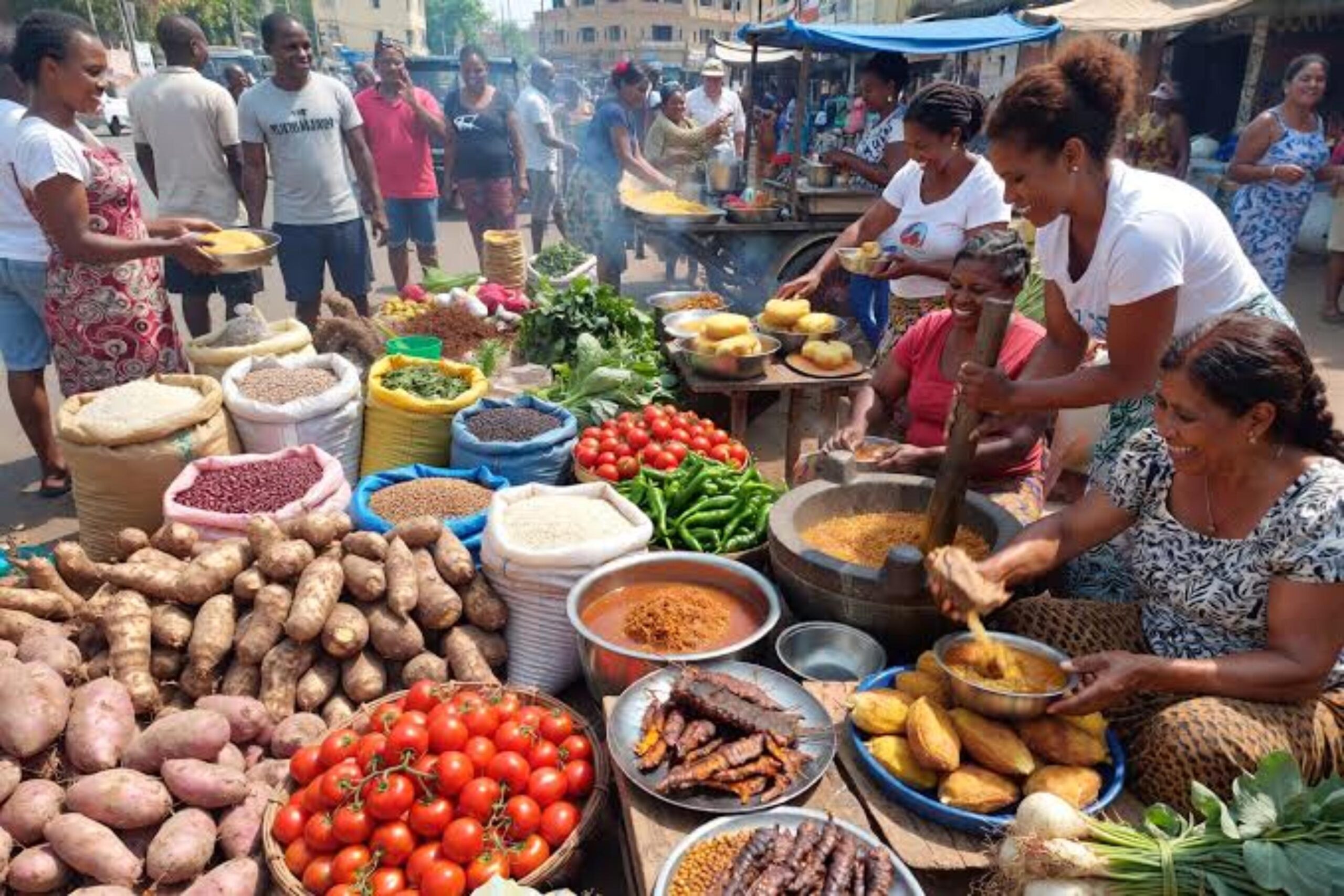
Farmers have attributed the persistent fluctuations in food prices in the country to structural challenges in the sector, despite ongoing government interventions to boost production.
They said on Sunday in Lagos that while interventions such as subsidised inputs, credit schemes, and mechanisation support were commendable, their impacts had yet to stabilise food prices across markets.
Adewale Ogunbiyi, an agricultural economist, said inconsistent policy implementation and high logistics costs continued to undermine intervention programmes.
“Implementation remains the major issue of most government interventions. Farmers still struggle with transportation, storage, and post-harvest losses, which ultimately affect food prices in the markets.
“Even when production improves, poor distribution networks create scarcity in some areas and surplus in others, leading to price fluctuations,” Mr Ogunleye said.
He added that insecurity in farming communities disrupted planting and harvesting cycles.
“When farmers cannot access their farms regularly, supply becomes unstable, and that instability reflects in food prices. Until we address security and logistics holistically, interventions alone may not stabilise prices,” he said.
Also speaking, Kikelomo Bello, a food systems analyst, noted that the rising cost of inputs had weakened the effect of government support.

“Fertiliser, seeds, and labour costs have increased significantly. Even when farmers receive support, it may not cover the full cost of production.
“As a result, farmers adjust prices to recover their expenses, and consumers feel the impact,” Ms Bello said. She stressed the need for targeted interventions that address the entire value chain.
“We must go beyond distribution of inputs and focus on storage facilities, rural roads, and market access. When post-harvest losses reduce, supply becomes more consistent, and prices will stabilise,” she said.
Emeka Okafor, a commodity trader, attributed the fluctuations to speculative buying and seasonal supply patterns.
“Some traders hoard produce expecting higher prices later, while seasonal production gaps also contribute to volatility. Interventions should include stronger market monitoring to discourage artificial scarcity,” Mr Okafor said.
He also called for improved data collection to guide policy decisions.
“Reliable data on production and demand will help the government plan better and reduce sudden price swings,” he added.
The experts unanimously urged the Federal Government to strengthen coordination among agencies responsible for agricultural programmes.
They said that improved synergy would enhance the effectiveness of interventions and help stabilise food prices nationwide. NAN
-

 Economy1 day ago
Nigeria Sovereign Investment Authority announces winners of $275,000 prize for innovation
-

 Finance1 day ago
Airtel Money reports 25% growth in first-half revenue in maiden results
-

 News1 day ago
EFCC arrests 14 Chinese nationals in Nigeria for operating illegal lithium processing plants
-

 Maritime1 day ago
NIMASA, ITF signs MOU on Seafarer wellbeing, MoU First in Africa—ITF
-

 Oil and Gas1 day ago
Honeywell Technologies launches new AI platform at Dangote’s Nigeria refinery
-

 Economy1 day ago
FG targets single-digit inflation by end-2027 to unlock cheaper borrowing— Oyedele
-

 News3 hours ago
Top 20 Ecobank’s InnovateX finalists emerge for ₦20m prize money
-

 Oil and Gas3 hours ago
Oil falls as Middle East talks outweigh concern over fresh strikes