
Economy
MSMEs account for 96% of Nigerian businesses, generate 87% of jobs, says FG

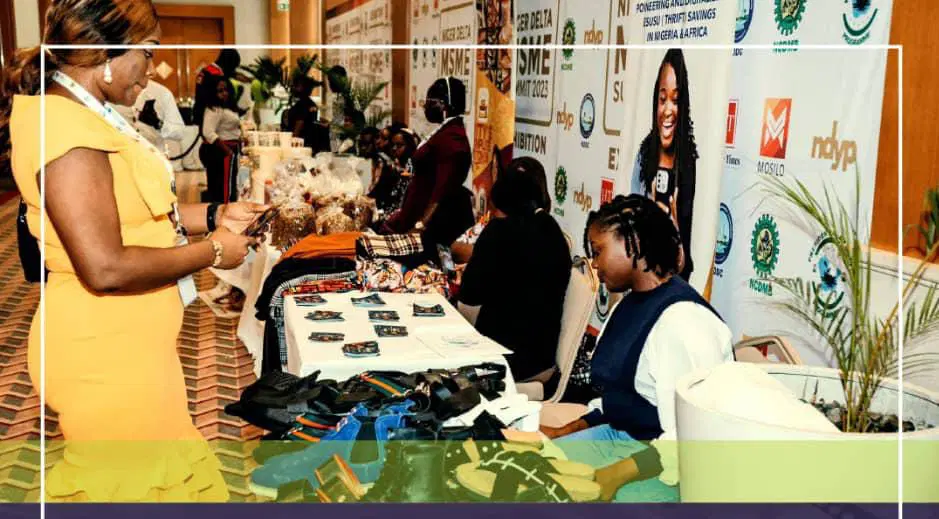
Minister of State for Industry, John Owan-Enoh, says Micro, Small and Medium Enterprises account for 96 per cent of businesses in Nigeria.
Mr Owan-Enoh also said that MSMEs contributed 48 per cent to the nation’s gross domestic product and provided 87 per cent of employment. He said this on Sunday night in Calabar during a town hall meeting with business operators organised by the Directorate of Manufacturing and MSME of the All Progressives Congress Presidential Campaign Council.
He described MSMEs as the backbone of the Nigerian economy, saying their contribution to national productivity, employment, and economic growth could not be over-emphasised.
“If you look at the MSME ecosystem and appreciate the fact that about 96 per cent of businesses in our country are MSMEs, contributing about 48 per cent to our GDP and 87 per cent to employment, then you begin to wonder what else is left. MSMEs are actually our economy. You all who are seated here are actually the economy of Cross River and Nigeria,” he said.
The minister urged business operators and manufacturers to take pride in their contributions, stressing that strengthening the sector was critical to Nigeria’s economic development. Mr Owan-Enoh said the town hall meeting marked the first public outing of the directorate of manufacturing and MSME ahead of the APC presidential campaign rally in the state.
He commended the Cross River Government under Governor Bassey Otu for reviving the Micro-Enterprise Development Agency (MEDA), describing it as an important step towards supporting small businesses.
He said the state government was also collaborating with federal agencies, including the Small and Medium Enterprises Development Agency of Nigeria (SMEDAN), Bank of Industry and Nigerian Export-Import Bank (NEXIM), to strengthen business support systems.
Regarding the federal government’s interventions in the state, Owan-Enoh listed an automotive training centre at the University of Cross River, a compressed natural gas conversion workshop and a 65-kilowatt solar-powered electric vehicle charging station at the University of Calabar.
He also disclosed that a memorandum of understanding had been reached with a South Korean team towards electric vehicle manufacturing in the state. According to him, the initiatives are expected to strengthen technical capacity, promote local manufacturing, and create opportunities for businesses in the state.
Mr Owan-Enoh added that the state, as Nigeria’s leading cocoa-producing state, would benefit from the new Nigerian Industrial Policy, particularly its emphasis on value addition. He said the policy would give the state opportunities to maximise its cocoa resources through local processing and manufacturing rather than relying solely on exporting raw materials.
“The opportunity before us is to ensure that our raw materials are processed locally, creating more value, businesses and employment for our people,” he added. NAN
-

 Finance25 minutes ago
Zenith Bank reinforces commitment to Africa’s creative economy through continued sponsorship of art X Lagos 2026
-

 Oil and Gas1 day ago
Afreximbank, APPO formally establish Africa Energy Bank
-

 Maritime1 day ago
NIMASA denies conversion of CVFF to Naira
-
 News1 day ago
Ecobank rewards young innovators with N22m at innovateX Hackathon grand finale
-
Finance23 minutes ago
Afreximbank invests $145m in Veenocks’ project for industrial expansion, regional growth
-

 News21 minutes ago
Binance clients pull $4.7bn after hack as crypto world studies fallout
-

 News17 minutes ago
80 students benefit as Dangote Cement, Okpella invests ₦32m in education, power infrastructure in Okpella
-

 Oil and Gas1 day ago
OPEC+ keeps December oil output targets steady ahead of tougher call for 2027