
News
AfDB piloting financial instruments to support African countries in tackling climate change

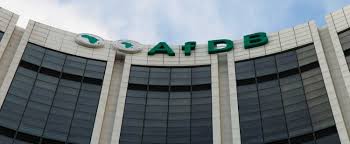
African Development Bank Group, Africa’s leading development finance institution has said it is strongly committed to supporting African countries in strengthening their resilience to climate change and supporting their transition to low-carbon development pathways. Through several climate finance initiatives and instruments, it is helping African countries access direct and flexible resources to implement their climate commitments under the Paris Agreement, including the Nationally Determined Contributions (NDCs) and National Adaptation Plans (NAPs).
Eight of the 10 countries most affected by climate change are in Africa; droughts, cyclones and floods are compromising agricultural production, exposing populations to food insecurity and climate-induced migration and putting pressure on key sectors critical to the continent’s development, resulting in a significant displacement of public expenditure. Despite a lack of resources, Africa is trying to adapt to these effects of climate change. The continent receives less than three percent of global climate finance, even though it loses between seven percent and 15 percent of its gross domestic product (GDP) due to climate change.
Given the urgency of the climate crisis, especially for the most vulnerable countries, the Bank is piloting financial instruments to support African countries in tackling climate change. As Belém, the Brazilian metropolis in the heart of the Amazon rainforest, prepares to host the 30th United Nations Climate Change Conference (COP30) from 10 to 21 November 2025, the meeting is set to be decisive for the future of the Paris Agreement — 10 years after the world’s pledge to keep global warming below the critical threshold of 1.5°C.
Between 50,000 and 60,000 delegates – from heads of state to ministers, experts, financial actors, the private sector, civil society and Indigenous communities – are expected in the capital of the state of Pará to try to revive global climate momentum. The main priorities for this COP are to accelerate the energy transition, ensure a just transition for the most vulnerable nations, and, above all, mobilise large-scale climate finance for developing economies. One of the oldest climate finance mechanisms still in operation within the Bank Group is the Climate Investment Fund (CIF). With a budget of $12.5 billion, the fund, created in 2008, has supported 47 investment plans and approved 45 projects since its inception, providing more than $1 billion in financing to the Bank. Leveraging CIF resources, the Bank has also mobilized an additional $2.42 billion in co-financing.
This funding has enabled low- and middle-income African countries to accelerate their climate adaptation efforts through programmes in clean technology, access to clean energy, climate resilience and sustainable forests.
In the Democratic Republic of Congo, the CIF has enabled Dorcas Tshabu to fulfil a childhood dream: to restore the forest in her homeland. After a long wait, she now manages a farm about 20 km from Mbuji-Mayi, in the centre of the country. “This used to be savanna, everywhere. But I turned it into a forest. It’s the work of my own hands! Everyone who passes by here appreciates it. That makes me happy,” says Dorcas. Since 2021, Dorcas has grown a lush 50-hectare forest with the support of the Integrated REDD+ Project in the Mbuji-Mayi, Kananga and Kissangai basins (PIREDD-MBKIS).
This project, financed to the tune of €21.5 million by the African Development Bank as part of the Forest Investment Program (FIP), has addressed the main drivers of deforestation and forest degradation in the country’s three provinces. Established in 2011, the Sustainable Energy Fund for Africa (SEFA) is also an essential facility in the development of clean-energy blended finance initiatives under the auspices of the African Development Bank. It provides catalytic finance to unlock private sector investments in renewable energy and energy efficiency. SEFA also offers technical assistance and concessional finance instruments to remove market barriers, build a more robust pipeline of projects and improve the risk-return profile of individual investments. SEFA supports interventions across three strategic priorities: green baseload production, green mini-grids, and energy efficiency.
The 32 MW Ilute solar project in Zambia is one of the more than 100 projects supported by SEFA since its establishment. In June 2025, the Fund committed to contributing $8 million to a total financing package of $26.5 million for this project, demonstrating its commitment to innovative solutions that advance the energy transition in Africa.The project, led by an independent power producer (IPP) in western Zambia, will supply electricity through the Southern African Power Pool (SAPP) under a market-based power purchase agreement with regional electricity trader GreenCo Power Services Ltd. The project will serve as a model for other African countries seeking to attract private capital and promote regional energy integration.
In 2014, the Bank Group launched the Africa Climate Change Fund (ACCF). 11 years later, this multi-donor trust fund is strengthening community-led climate resilience on the continent. Some 33 projects have now received funding of $40.64 million since its launch. In Djibouti, Assia Obakar Hassan, a mother from the village of Kalaf, embodies the profound transformation of part of the rural north of the country, driven by a regional project implemented by the Intergovernmental Authority on Development (IGAD) and financed by the African Development Bank through the Fund). “Before, farming was an impossible dream. Today, I feed my children thanks to the land,” says Ms Hassan.
This impact is also evident in projects supported by the African Circular Economy Fund (ACEF). The only trust fund dedicated exclusively to integrating the circular economy as a strategy for green and inclusive growth in Africa, the ACEF was created by the African Development Bank in 2022, with support from the Government of Finland, the Nordic Development Fund, and since 2024, the Coca-Cola Foundation. Officials from the Bank Group recently visited Rwanda to meet with young innovators funded by the African Circular Economy Fund.
Among them were Tresor Gashonga and Rafiki Gatsinzi, co-founders of Incuti Foods, which produces chili sauces, providing farmers with a stable market and a means of reducing post-harvest losses – a crucial intervention in a country where around three million tonnes of food are wasted each year. Their sauces are even used in trendy cocktails in Kigali’s lounge bars, proving that circularity can fit perfectly into urban culture. In 2022, the African Development Fund, the Bank Group’s concessional window, launched the Climate Action Window to provide concessional financing to the most vulnerable African countries for adaptation, mitigation and technical support. With $429 million in funding, the window aims to mobilise $4 billion by the end of 2025 and $13 billion in the long term, offering rapid and consistent access to climate finance.
In 2024, the African Development Bank Group’s Board of Directors approved more than $31 million in financing through the Climate Action Window to strengthen climate change resilience in Sierra Leone, South Sudan, Djibouti and Madagascar. This project is expected to reduce CO₂ emissions by some 720,000 tonnes and create 180,000 direct jobs, with a particular focus on women and young people. In addition, 90,000 farmers will be trained in climate-smart agricultural practices. “These initiatives not only respond to climate change, they empower communities to take control of their future. They show that adaptation funding can and should be directed to the vulnerable communities that need it most,” said Anthony Nyong, Director of the Climate Change and Green Growth Department at the African Development Bank Group.
The Climate Action Window is more than just a financing mechanism; it is a lifeline for communities that face the harsh realities of climate change every day,” added the senior official. Several other mechanisms and initiatives that are funded or co-funded contribute to addressing climate challenges.
-
 Oil and Gas1 day ago
NUPRC vows not to approve divestments that doesn’t meet considerations
-

 Finance1 day ago
Cardoso seeks collaboration to check cross‑border financial risks
-

 Oil and Gas1 day ago
Iran eases Strait of Hormuz transit rules amid oil shock
-

 Oil and Gas1 day ago
Court orders forfeiture of $13m linked to Aisha Achimugu’s firm
-

 Oil and Gas1 day ago
Oil falls as reports of 15-point proposal spurs ceasefire hopes
-

 Economy1 day ago
Nigeria to launch trade platform at ports as part of reform push
-
 Finance1 day ago
Court nullifies CBN’s regulatory intervention in Union Bank in 2024, rules it acted beyond its powers