
Economy
African, Caribbean nations join forces to call for reparations for slavery

Representatives from various African and Caribbean entities have joined forces at a historic event this week in the capital of Barbados, Bridgetown, to demand reparations for slavery and its legacy in today’s society. The University of the West Indies (UWI), the Economic, Social and Cultural Council of the African Union (AU), Barbados’ government, grant-making network Open Society Foundations and the Caribbean Pan African Network teamed up to “call for reparations for historical crimes”. The meeting in Bridgetown, from Monday to Thursday, included strategy sessions and plenaries and marked the beginning of an “intercontinental campaign”, the UWI said in a statement, describing it as “ground-breaking”. Attendees included ambassadors and representatives from AU member states and the Caribbean Community political and economic union (CARICOM). “This is a historic moment… humanity cannot go forward with all the toxic interferences of colonisation,” Hilary Beckles, head of the CARICOM reparations commission, told a news conference on Thursday. “We have to clean up this mess to allow humanity to function.”
The CARICOM reparations commission, which was set up to seek reparations from former colonial powers such as the United Kingdom, France and Portugal, “sees the persistent racial victimisation of the descendants of slavery and genocide as the root cause of their suffering today”, it said in its 10-point plan. Outcomes of the meeting include a proposal for a roadmap for cooperation between the AU and CARICOM, the UWI statement said. “It is crucial to recognise how slavery, colonialism and racism intersect and impact the lives of Black people around the world,” said AU official Youssouf Mandoha. From the 15th to the 19th century, at least 12.5 million Africans were kidnapped and forcibly transported by European ships and merchants and sold into slavery. Those who survived the brutal voyage ended up toiling on plantations under inhumane conditions in the Americas, mostly in Brazil and the Caribbean, while others profited from their labor.

Barbados, where the meeting took place, received 600,000 enslaved Africans between 1627 and 1833, who were put to work in sugar plantations, earning fortunes for the English owners. The Caribbean island ditched Britain’s late Queen Elizabeth as head of state in 2021 and renewed its campaign for reparations. The idea of paying reparations or making other amends for slavery has a long history but the movement is gaining momentum worldwide. The EU said earlier this month that Europe’s slave-trading past inflicted “untold suffering” on millions of people and hinted at the need for reparation for what it described as a “crime against humanity”. Reuters
-
 Economy2 days ago
Nigeria Sovereign Investment Authority announces winners of $275,000 prize for innovation
-

 Finance2 days ago
Airtel Money reports 25% growth in first-half revenue in maiden results
-

 Oil and Gas2 days ago
Honeywell Technologies launches new AI platform at Dangote’s Nigeria refinery
-
 Economy2 days ago
FG targets single-digit inflation by end-2027 to unlock cheaper borrowing— Oyedele
-
 News2 days ago
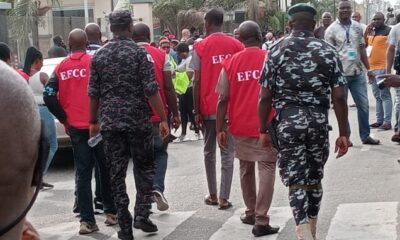
EFCC arrests 14 Chinese nationals in Nigeria for operating illegal lithium processing plants
-
 Maritime2 days ago
NIMASA, ITF signs MOU on Seafarer wellbeing, MoU First in Africa—ITF
-
 News18 hours ago
Nigeria panel says 37 detained miners died from overcrowding and neglect
-
 Finance18 hours ago
UBA seeks jail term for WEMPCO directors, intensifies N61bn loan recovery drive