
News
Amnesty accuses Shell, Eni of negligence on Nigeria oil spills


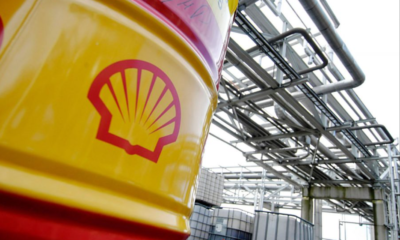
Amnesty International has accused international oil majors Shell and Eni of negligence when addressing spills in Nigeria. Describing their actions as “serious negligence”, Amnesty said the companies were “taking weeks to respond to reports of spills and publishing misleading information about the cause and severity of spills, which may result in communities not receiving compensation”.

A Shell spokesman said Amnesty’s allegations “are false, without merit and fail to recognise the complex environment in which the company operates”. An ENI spokeswoman said the rights group’s statements “are not correct and, in some cases, not acceptable,” adding it had provided a detailed response to Amnesty’s allegations. Shell and Eni have for decades been two of the most active oil majors operating in the Niger Delta region.
Nigeria’s crude-producing heartland is an ecological disaster zone, scarred by decades of spills that have tainted the water and killed swathes of trees and other plants. Yet clean-ups, and the associated compensation, are highly contentious, with some local communities even blocking teams’ access to spill sites, allowing the damage to worsen, in the hope of extracting a bigger pay-out. Under Nigerian law, companies must visit sites within 24 hours of reporting a spill. Amnesty said that in one case Italy’s Eni took more than a year to respond to a spill in Bayelsa state.
While oil companies frequently attribute spills to sabotage and theft, locals say they are often due to other issues such as corrosion. Shell has reported 1,010 spills since 2011, and Eni 820 since 2014, according to Amnesty, which said among those 1,830 reports it found 89 “about which there are reasonable doubts surrounding the cause provided by the oil companies”. In 2015, the Bodo community and a British law firm negotiated a 55 million pound pollution settlement with Shell.
The Natural Resource Governance Institute, a non-profit group that advises countries on how to manage oil, gas and mineral resources, acknowledged there were sometimes difficulties on both sides. “There’s no good guy here, everybody’s kind of bad. I’m sure the companies don’t do all that they can to get to these places. But then they also have genuine grievances and genuine difficulties dealing with these communities,” said Aaron Sayne, from the institute. When spills become an opportunity to make money, your clean-up becomes really tough.”
-

 News1 day ago
PwC, EY jointly command an estimated 35.9% of Nigeria’s corporate audit market in 2025`
-

 Economy12 hours ago
72% of world trade still operates under WTO— Okonjo-Iweala
-

 News1 day ago
Flutterwave makes CNBC, Statista’s World’s top fintech companies list
-
 Oil and Gas1 day ago
Internal documents show Shell’s role in oil theft, environmental damage across Niger Delta
-

 Oil and Gas1 day ago
Oil jumps 7% on escalating Middle East airstrikes
-

 Economy1 day ago
Atiku raises alarm over Nigeria’s N12.62tr debt profile
-

 News12 hours ago
Subsidy savings spent on debt servicing, higher spending—Oyedele
-

 Oil and Gas12 hours ago
Olugboboro community expresses worry over Oando Plc’s decision to halt reclamation project