
Economy
BPE, stakeholders unite to rollout $500m free meters, DisCos pledge to lead drive

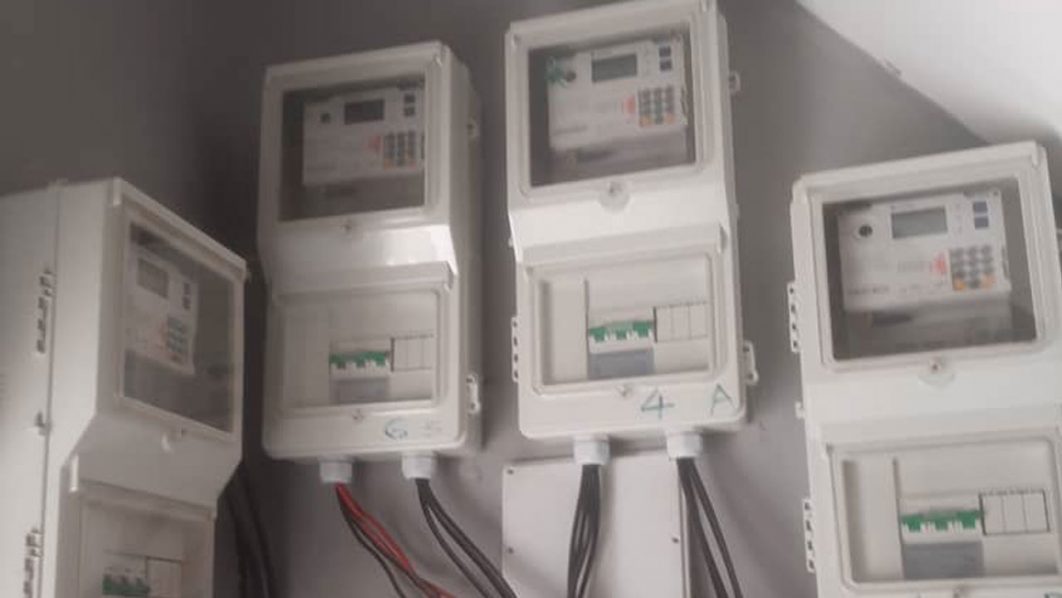
Bureau of Public Enterprises BPE, and other major stakeholders are in the Nigerian electricity value chain are strategizing lot deliver free meters to consumers.
The stakeholders met on Wednesday and brainstormed on how best to roll out free meters to Nigerians in a bid to close the yawning gap in the system.
The strategic engagement engineered by the BPE, brought together key players in the sector such as the Nigerian Electricity Regulatory Commission, Transmission Company of Nigeria, Distribution Companies in Nigeria and others to examine the progress so far made under the World Bank-backed Distribution Sector Recovery Program (DISREP).
It was learnt that no fewer than 200,000 smart meters have so far been installed under the federal government’s $500 million programme, a far cry from the 5 million target.
The program, designed to close Nigeria’s estimated 5.66 million metering gap, has delivered nearly 700,000 meters to the country, but the pace of installation by Distribution Companies (DisCos) remains slow, the Bureau of Public Enterprises (BPE) and other power sector officials acknowledged at stakeholders event in Abuja.
The event which was presided over by Ayodeji Gbeleyi, Director-General of BPE, brought together all key stakeholders, including the Nigerian Electricity Regulatory Commission (NERC), the ministry of power, the National Mass Metering Initiative, and the Managing Directors of the DisCos.
Gbeleyi said at the ceremony: “This is a landmark transaction for the country,” adding, “Under DISREP, we are importing meters to bridge the metering gap and ensure consumers are billed accurately.
“The meters and installation are provided free of charge to customers, and the costs have been paid to the contractor. Revenue will be recovered through the Multi-Year Tariff Order (MYTO), regulated by NERC.
“The programme aims to deliver 3.2 million free smart meters over four years through a combination of international and local competitive bidding.
“Phase one involved the importation of 1,437,500 meters, including single-phase and three-phase units, of which roughly 700,000 are already in-country. Local manufacturers are supplying an additional 217,000 meters under national competitive bidding. Phase two will see another 1,550,000 meters imported.
“The collaborative effort is ongoing, and all stakeholders, including NEMSA, TCN, and NEC, are verifying and testing meters before deployment
“Our goal is clear: reliable electricity supply, improved industry sustainability, and closing the metering gap as a matter of national priority.”
The Minister of Power, Chief Adelabu, who was represented by his Chief Technical Adviser, Adedayo Olowoniyi, however decried the slow pace of meter installation and called for a change of strategy to meet the target.
The CTA pointed out that the scheme is central to the government’s broader efforts to strengthen the downstream segment of the electricity sector, which has long been seen as its weakest link in the electricity value chain.
Olowoniyi noted: “The meter gap must be closed during this administration, and the distribution segment must support the program,.
“These meters are not meant to be paid for by customers. Structures exist for cost recovery, just as there are structures for any grid assets. The focus is on closing the gap efficiently and with the lowest cost of capital available,” he stated.
NERC Chairman, Musiliu Olalekan Oseni, who also spoke at the event, Musiliu Olalekan Oseni, called for concerted effort to ensure the success of the meter programme for Nigerians.
Earlier, Aisha Tukur, the Director of the Energy Sector Department, BPE, had disclosed that the scheme represents a major step in reforming the Nigerian electricity sector.
According to her, “DISREP is about creating operational efficiency, financial viability, and transparency across the electricity value chain.
“It supports DisCos with technical assistance, training, and systems to strengthen operations while ensuring consumers are metered and billed accurately,” Tukur said.
The representatives of the DisCos in Nigeria pledged to work closely with other stakeholders to ensure the success of the programme but spoke of the myriad of challenges being encountered by them across the country.
-

 News2 days ago
Binance seeks out-of-court settlement with Nigeria over alleged tax evasion
-
 Oil and Gas1 day ago
NUPRC vows not to approve divestments that doesn’t meet considerations
-

 Oil and Gas1 day ago
Iran eases Strait of Hormuz transit rules amid oil shock
-

 Finance1 day ago
Cardoso seeks collaboration to check cross‑border financial risks
-
 Stock Market2 days ago
NGX market capitalisation settle at N128.84tn, cuts Zichis Agro-Allied share price by 50%
-
 News2 days ago
Power crisis blamed on gas shortages, sector debts
-
 News2 days ago
FG shortlists 65 student innovators for venture capital grant
-

 Economy2 days ago
FG urges PenCom board on governance, protection of pension assets