
Finance
Cardoso seeks collaboration to check cross‑border financial risks

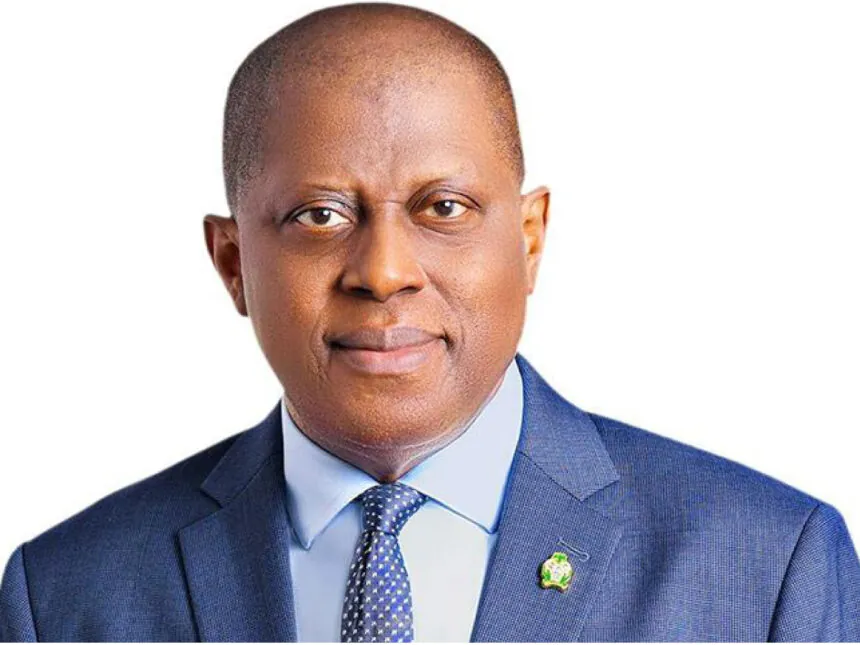
The governor of the Central Bank of Nigeria, Olayemi Cardoso, has urged African financial regulators to strengthen cooperation in managing cross-border risks.
Cardoso also restated the CBN’s commitment to entrenching robust corporate governance in Nigeria’s financial system.
He spoke at the fourth Annual IMF/AFRITAC West 2 High-Level Executive Forum for Financial Sector Regulation and Supervision on Tuesday in Abuja.
According to him, as African banks and financial systems become increasingly interconnected, collaboration among regulators is not optional but essential to safeguard stability and ensure shared prosperity across the continent.
He urged African regulators to deepen cooperation in managing cross-border risks, emphasising that regional financial integration was outpacing political coordination.
He also called for the adoption of shared prudential principles tailored to Africa’s realities, noting that the framework would enable regulators to respond jointly and effectively to emerging vulnerabilities while supporting inclusive growth.
The CBN governor outlined how Nigeria’s regulatory and supervisory reforms exemplified proactive leadership.
He said that in 2024, the CBN anticipated upcoming challenges and inaugurated the Banking Sector Recapitalisation Programme to strengthen the resilience of Nigerian banks.
“This proactive policy inspired similar reforms across Africa. Nigerian banks, in spite of navigating subsidy removals and exchange rate reforms, attracted N4.61 trillion in new capital, nearly 27 per cent from foreign investors, while also expanding their footprint across African markets,” he said.
Cardoso reaffirmed the apex bank’s commitment to robust corporate governance, emphasising decisive measures such as ending years of regulatory leniency and restricting banking services to chronic defaulters. ”Our stance on corporate governance is unequivocal: zero tolerance for violations.
By ending years of regulatory forbearance, we have reinforced accountability, tightened supervision, and elevated compliance standards across the sector.
”In line with this, we have implemented a restriction of banking services to non‑performing large‑ticket obligors. This decisive step underscores our commitment to credit discipline, financial integrity, and accountability,” he also said.
The CBN governor further said that by curbing access to banking services for chronic defaulters, the apex bank was reinforcing the culture of repayment, protecting depositors, and safeguarding the stability of the financial system.
On the policy front, he said that the CBN remained firmly anchored in orthodox monetary policy, focused on restoring price stability, strengthening policy credibility, and anchoring expectations through discipline and consistency.
Speaking further on the transformative role of financial technology, Mr Cardoso outlined CBN’s deliberate strategy to engage and regulate fintechs in a way that balances innovation with stability.
Mr Cardoso said the apex bank’s fintech policy report and structural reforms were part of ongoing efforts to build supervisory capacity for a fast‑evolving digital financial ecosystem.
He urged the forum to continue to serve as a platform for collective learning and action, where regulators could analyse shared challenges, exchange insights, and develop a cohesive African response to global financial trends.
He visualised a future where collaboration among African regulators would become the continent’s strongest defence and greatest asset, transforming its financial systems into catalysts for sustainable growth and development. NAN
-

 News24 hours ago
Power crisis blamed on gas shortages, sector debts
-

 News24 hours ago
Binance seeks out-of-court settlement with Nigeria over alleged tax evasion
-
 Economy2 days ago
CBN reaffirms commitment to inflation-targeting monetary policy
-

 Oil and Gas2 days ago
Oil prices plunge 8% on US-Iran talks to resolve hostilities in the Middle East
-
 Oil and Gas53 minutes ago
NUPRC vows not to approve divestments that doesn’t meet considerations
-

 Stock Market2 days ago
NGX market capitalisation shed N1.38trn to close at N127.75trn
-

 News2 days ago
Abuja court jails former acting AGF, Nwabuoku, to 72yrs in prison over N868m fraud
-
 News2 days ago
Tony Elumelu Foundation unveils 3,200 entrepreneurs for 2026, commitment to “democratising prosperity” across Africa