
Finance
China merges banking, insurance regulators

China unveiled plans for the biggest shakeup of government in at least a decade, including the merger of its banking and insurance regulators to better handle financial risks as leaders look to address concerns over a growing debt pile. The sweeping changes were presented to the National People’s Congress two days after President Xi Jinping tightened his grip on power with the legislature’s approval of constitutional amendments abolishing presidential term limits and expanding the authority of the Communist Party over the country’s affairs. State Councillor Wang Yong told delegates of the parliamentary session underway in Beijing that the bureaucratic shuffle was needed to make government more effective and efficient.
The reforms “eliminate systematic and institutional deficiencies that have prevented the market from carrying out a decisive role in resource allocation,” Wang said. At the top of the reform list is the government’s proposed change combining the insurance and banking regulators into one agency, according to the proposal introduced at the annual session of the rubber-stamp parliament. The new regulator will be capable of “holding the bottom line to prevent systematic financial risk”, the parliament document says. The responsibilities of the two separate regulators currently overlap in some areas, leaving regulatory roles unclear, the document says.

“China’s whole regulatory system will change directions, from sector oversight to oversight of specific financial activities,” said Betty Wang an economist at ANZ Bank. It will promote coordination and information sharing between different regulators,” she said. The two merged regulators will hand off duties such as proposing laws to the People’s Bank of China in a sign that the central bank is beefing up its regulatory role.
China is in the midst of a battle against financial risk, as credit in the world’s second largest economy has exploded since the financial crisis a decade ago. Financial regulators have cracked down on major companies — even taking over Anbang Insurance this year — to get a handle on building risk and unwieldy debt that some analysts worry pose a serious threat to China’s financial stability. Liu He, President Xi Jinping’s top economic advisor, is overseeing that battle on financial risk and praised the reforms as “revolutionary” in an editorial published in the Communist Party mouthpiece People’s Daily on Tuesday. “We should understand the necessity of promoting this deep transformation,” Liu wrote of the reforms. AFP
-

 Economy1 day ago
Nigeria woos U.S. solid minerals investors
-

 Oil and Gas1 day ago
Dangote refinery aims to raise $5bn with October listing, source says
-
 News1 day ago
DisCos metered 227,559 customers in 2 months— NERC
-
 Finance1 day ago
CBN holds fair in Gombe to deepen financial inclusion, promote economic growth
-
 Agriculture1 day ago
African Development Fund grants $4.3m to strengthen integration of natural capital into decision-making in 13 African countries
-
 News1 day ago
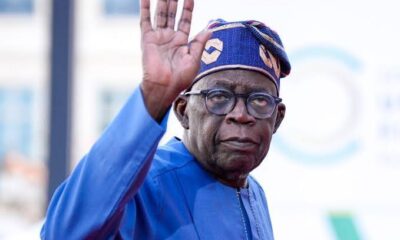
Tinubu approves salary increases for armed forces personnel
-
Oil and Gas7 hours ago
Dangote refinery drops PMS to ₦1,165/Litre, diesel to ₦1,570/litre
-
 Finance7 hours ago
Crown Takaful shares N100m to customers