
Maritime
Cost of ship berthing in Nigeria cut from $150k per vessel to $20k

The Convention on Business integrity has said that the cost of ship berthing in Nigeria has dropped from $150,000 to $20,000 per vessel. It said that “specifically, because of the joint efforts of the Federal Government agencies – including the Nigerian Shippers Council, ICPC, DSS and the Nigeria Ports Authority, NPA, the Technical Unit on Governance & Anti-Corruption Reforms, TUGAR, alongside the CBi, through the Maritime Anti-Corruption Network, (MACN); the cost of a ship berthing in Nigeria – often aggravated by un-receipted extortions – has now drastically reduced from $150,000 per vessel that arrives in the country to about $20,000. This was disclosed when a delegation of the CBi paid a courtesy call on Vice President Yemi Osinbajo, SAN, at the Presidential Villa, Abuja, yesterday. According to the CBi co-founder, Mr. Olusoji Apampa, who made the disclosure, the success recorded is now attracting international reviews as countries such as Egypt, Ukraine and India are planning to adopt the “Nigerian miracle” model to produce similar gains in their own ports’ operations.
According to the report “the collaborative efforts of the Federal Government with the private sector and a Civil Society group – Convention on Business Integrity (CBi) to curb corruption at the Sea-Ports has earned international praise and won the first ever “Outstanding Achievement in Collective Action Award” of the Switzerland-based Basel Institute on Governance. Specifically, because of the joint efforts of the Federal Government agencies – including the Nigerian Shippers Council, ICPC, DSS and the Nigeria Ports Authority, NPA, the Technical Unit on Governance & Anti-Corruption Reforms, TUGAR, alongside the CBi, through the Maritime Anti-Corruption Network, (MACN); the cost of a ship berthing in Nigeria – often aggravated by unreceipted extortions – has now drastically reduced from $150,000 per vessel that arrives in the country to about $20,000. This was disclosed when a delegation of the CBi paid a courtesy call on Vice President Yemi Osinbajo, SAN, at the Presidential Villa, Abuja.
According to the CBi co-founder, Mr. Olusoji Apampa, who made the disclosure, the success recorded is now attracting international reviews as countries such as Egypt, Ukraine and India are planning to adopt the “Nigerian miracle” model to produce similar gains in their own ports’ operations. The international award recognised the work of the Nigerian MACN, which created a real time-based Help Desk to resolve complaints and concerns of shipping companies as soon as they berth at the ports.
The Swiss-based international body recognised the initiative for the collective action where government, business and civil society have worked together for change. This was made possible by the establishment and success recorded by the first ever, real-time Anti-Corruption Help Desk in Nigerian Ports, which instantly reports and resolves corruption-related issues. The CBi presented the international award to the Vice President during the courtesy call on Monday and said to him, “this would not have been possible without your interventions.” Receiving the delegation and the award at the Presidential Villa, the Vice President praised the CBi and the MACN, commending them for their efforts alongside FG agencies, noting that the Buhari Administration will continue to support initiatives that improves the business environment and economy in general. “This is cheery news on our anti-corruption efforts,” a delighted VP said adding that what is required is to stay focused in the fight against corruption. Prof. Osinbajo stated that the narrative on the imperative of integrity and fight against corruption has to be deepened, explaining that “we need to get the attention of the young people also. This is something we have to do.”
Based on the Executive Order 001, ICPC conducted a successful sting operation in 2019 to support FG’s port reforms. Then in December 2020, the Port Standing Task Team (PSTT) comprising the Shippers Council, Nigerian Ports Authority (NPA), Independent Corrupt Practices Commission, (ICPC) and the Department of State Services (DSS), was established. In addition, the Nigeria Ports Process Manual (NPPM) was launched and the PSTT, led by the Shippers Council, was given the responsibility to implement and enforce compliance.
According to the MACN, before the PSTT was formed, there were 266 cases of demands for large, un-receipted cash payments by officials at the ports in the process of vessel clearance. Such practice has now dropped to 128 cases following the establishment of PSTT in 2020. By 2021, the cases fell further to 84 cases, and so far in 2022, it has remained below 50 cases. In the same vein, prior to the intervention of the PSTT, Port Calls were costing on average $150,000 per vessel per visit (including illicit demands and the cost of delays occasioned by trying to avoid the illicit demands). This has now dropped to an average cost of $20,000 per port call. The group further noted that since the FG instituted the Help Desk in 2020, it has monitored just under 700 ships arrival to Nigerian ports. Also, it would be recalled that the VP Osinbajo-led Presidential Task Force was established in 2019 to address the issue of port congestion in Apapa and resolve traffic gridlock in the axis. Following the completion of its assignment, it handed over duties to the Lagos State Government in 2021. The Presidential Task Force had representatives of the Inspector-General of Police; Lagos State Government; NPA, Nigerian Shippers Council, Presidential Enabling Business Environment Council (PEBEC) and Federal Road Safety Corps (FRSC), among others.
-
 Oil and Gas16 hours ago
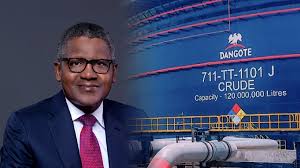
Dangote Refinery reduces petrol price to N1,200 per litre
-

 Finance16 hours ago
FirstBank empowers SMEs with AI-driven growth strategies, hosts SMEConnect webinar
-

 News16 hours ago
Afreximbank launches inaugural accelerator programme cohort to scale Africa’s Digital trade ecosystem
-
 Economy16 hours ago
WBG working with governments, private sector, regional partners, stakeholders to help solve Middle East war challenges challenges
-
 News16 hours ago
Power sector reforms attract $2bn investments – Adelabu
-
News15 hours ago
Dangote Refinery cautions stakeholders on IPO speculation
-

 News15 hours ago
Account for N129.5bn disbursed for botched 2023 Census, BudgiT tackles NPC
-

 Finance16 hours ago
Total capital importation rose in Q4 2025, says statistics bureau