
News
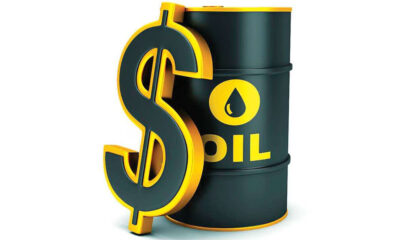
Crude oil price sinks to $5 as coronavirus hits global economy

Oil prices have plunged further below $5 a barrel with the threat to erase decade of demand growth with thousands of jobs under threat as coronavirus continues to spread further. A Bloomberg report revealed that industrial and economic activity is grinding to a halt as governments around the globe extend shutdowns due to the swift spread of the coronavirus. Oil has faced its own knock-on effects with a market massively oversupplied and nowhere to put physical barrels of crude. An unprecedented output deal by OPEC and allied members a week ago to curb supply is proving too little too late in the face a one-third collapse in global demand. On Monday, a technical oddity exacerbated the price plunge as traders fled the May futures contract ahead of its expiration tomorrow, driving it down as much as 78 per cent to the lowest level since futures began trading in New York in 1983. The following month’s contract fell 11 per cent to $22.22 a barrel. CME Group said it’s possible that May WTI contract could trade negative.
“There is little to prevent the physical market from the further acute downside path over the near term,” said Michael Tran, managing director of global energy strategy at RBC Capital Markets. “Refiners are rejecting barrels at a historic pace and with U.S. storage levels sprinting to the brim, market forces will inflict further pain until either we hit rock bottom, or COVID clears, whichever comes first, but it looks like the former.” Since the start of the year, oil prices have fallen by more than 90 per cent after the compounding impacts of the coronavirus and a breakdown in the original OPEC+ agreement. With no end in sight, and producers around the world continuing to pump, that’s causing a fire-sale among traders who don’t have access to storage. There are signs of weakness everywhere. Buyers in Texas are offering as little as $2 a barrel for some oil streams, raising the possibility that producers may soon have to pay to have crude taken off their hands. The spread between the nearest two contracts for the U.S. benchmark has fallen to its weakest level on record. In Asia, bankers are increasingly reluctant to give commodity traders the credit to survive as lenders grow ever more fearful about the risk of a catastrophic default.
-

 Oil and Gas1 day ago
NUPRC vows not to approve divestments that doesn’t meet considerations
-

 Oil and Gas1 day ago
Iran eases Strait of Hormuz transit rules amid oil shock
-

 Finance1 day ago
Cardoso seeks collaboration to check cross‑border financial risks
-

 Oil and Gas1 day ago
Court orders forfeiture of $13m linked to Aisha Achimugu’s firm
-
 Oil and Gas1 day ago
Oil falls as reports of 15-point proposal spurs ceasefire hopes
-

 Economy1 day ago
Nigeria to launch trade platform at ports as part of reform push
-

 Finance1 day ago
Court nullifies CBN’s regulatory intervention in Union Bank in 2024, rules it acted beyond its powers