Connect with us

Industry

FG to break Ajaokuta jinx, as transaction adviser has been named towards concession of steel company—Osinbajo

Published

on

Vice President Yemi Osinbajo, SAN has said that a fully developed mines and steel sector will not only surpass other sectors of the economy in terms of export earnings, it will also create more lucrative jobs and opportunities for many Nigerians.  Prof. Osinbajo said this at the opening of the 6th Edition of the Nigerian Mining Week in Abuja, where he represented President Muhammadu Buhari as the Special Guest of Honour. He said the steel sector “will stimulate industrial growth as a local source of raw materials and improve the quality of lives in rural communities. Assuring of government’s commitment to support mining activities towards shared prosperity for the Nigerian people, the VP observed that the event was “a very significant complement to our vision and sustained effort to accelerate the growth of the mining sector as a major contributor to Nigeria’s economic diversification programme.”

“This is why the Federal Government will continue to intensify its regulatory and supervisory role in ensuring that mining is held to the highest standards of sustainable development and intergenerational equity,” the VP added. Prof. Osinbajo said that “the mining sector has always needed a transformational leap to contribute meaningfully to the envisioned economic growth of the country, because, despite the glorious contribution of the mining sector to our national economy in the past and the abundance of mineral resources found in almost every state of the Federation, the growth of the sector stagnated for many years especially since the early 1970s. And there have been many notable efforts by previous administrations to wake up the sleeping giant that is the mining industry.” Speaking further, he added that the Buhari administration’s commitment towards developing the country’s steel sector has continued to record significant gains over the years.

“We are proud that the indices of development in the sector are rapidly changing. Part of these is the increased revenue generation and, of course, the unprecedented investment interest that the industry has attracted in the past few years. For instance, the VP noted that “Nigeria, for the first time, has a world-class gold mine in Segilola, Osun State, operated by Thor Exploration, while Eta Zuma Mining and Industries Limited and Mosra Enerji Limited are mining and supplying the coal needs of Dangote and Bua Cement factories.” Continuing, Prof. Osinbajo said, “in the steel industry, African Natural Resources and Mines limited, owners of the Kagarko Integrated Steel plant, is about to produce liquid steel from its iron ore mine in Kaduna State. Several other investors are at different stages of mine development in various parts of the country, and these strategic milestones will hopefully catalyse more mining investment in the country.” The Vice President emphasised that the development of the steel sector remains a huge priority for the administration.

According to him “our vision for an industrialised nation cannot be achieved without a vibrant steel sector. We understand the huge demand for steel and iron in our domestic markets and across the sub-region. This is why we prioritized the resolution of all the issues constraining the full operation of the Ajaokuta Steel company. To this end, a transaction adviser has been appointed to concession the Ajaokuta Steel Company and the Nigerian Iron Ore Mining Company, Itakpe. The selection process is ongoing. Our commitment is to break the jinx and actualise the dream of a vibrant steel sector.” He disclosed that since the Administration came into office in 2015, it has “intentionally prioritised the development of the country’s mineral resources as one of the frontiers for economic growth. This led to the comprehensive Roadmap for the Growth and Development of the Nigerian Mining Sector and we have steadily followed the steps set out in the roadmap. So far, we can say without fear of contradiction that this administration has committed more resources to the development of the mining sector than any other government in the history of this country,” the Vice President said.

While he noted that “government will continue to intensify its regulatory and supervisory role in ensuring that mining is held to the highest standards of sustainable development and intergenerational equity,” the Vice President urged for more responsibility and accountability from public and private sector entities to ensure sustainable development and mitigate the effects of climate change. “The extraction of mineral commodities entails considerable impact on land, water, air and other environmental assets that are central to human living, both now and in the future. The painful experience of the negative impact of oil and gas exploitation in the Niger Delta cannot be ignored. Therefore, all operators in the mining sector are obliged by law ethics, and our responsibility for the future, to ensure that proper environmental, social and governance principles are practiced in the sector,” he said. Noting some of the milestones recorded by the Ministry of Mines and Steel Development, Prof. Osinbajo also commended the efforts of the Minister, Arc. Olamilekan Adegbite, and other stakeholders in providing a conducive environment for investment.

The VP also noted that the organisation of informal miners into productive work groups is another landmark activity for the Ministry. “The Ministry has increased the formalisation of mining activities and stimulated downstream development by the establishment of a gemstones and Jewellery Marketing Centre in Oyo State, Gold Ore processing plant in Kogi State, a Gold Souk in Kano State, and the construction of a Barite plant in Cross River State, as well as Kaoline plant in Bauchi State and a Lead/Zinc processing plant in Ebonyi State.” He added that the “aim of these clusters is to provide direct and indirect economic opportunities for many Nigerians,” the VP added.

In his remarks, the Minister of Mines and Steel Development, Olamilekan Adegbite, noted that environmental impact was critical in sustainable mineral development. He said, “Government has maintained a consistent environmental surveillance and green mining practices to ensure minimum damage to the environment. The Mineral Resources and Environmental Management Committee (MIREMCO) has been strengthened and the Ministry is keeping constant dialogue with committees in almost all the states of the country. The Committees have the responsibility of monitoring mining activities in the states including addressing issues of compensation and community relations.” At the event, the Vice President also commissioned the on-line innovation, the Electronic Mining Cadastre Plus of the Nigeria Mining Cadastre Office. The VP was then accompanied by the Minister of Mines and Steel Development, as well as the Minister of State, Sen. Gbemisola Saraki, round the exhibition stands, where he interacted and engaged with the participants and exhibitors. Dignitaries at the event included Senator Tanko Al-Makura who represented the Senate President, among others.

Continue Reading

Industry

Dangote contracts Honeywell International for major refinery capacity upgrade to 1.4m barrels per day  

Published

on

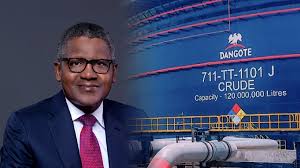
Dangote Group is pleased to announce that it has entered a strategic partnership with Honeywell International Inc to support the next phase of expansion of the Dangote Petroleum Refinery. This collaboration will provide advanced technology and services that will enable the refinery to increase its processing capacity to 1.4 million barrels per day by 2028, marking a major milestone in our long-term vision to build the world’s largest petroleum refining complex. Through this agreement, Honeywell will supply specialised catalysts, equipment, and process technologies that will allow the refinery to process a broader slate of crude grades efficiently and to further enhance product quality and operational reliability.

Honeywell, a global Fortune 100 industrial and technology company, offers a wide portfolio of solutions across aviation, automotive, industrial automation, and advanced materials. Honeywell’s division UOP has been a technology partner to Dangote since 2017, providing proprietary refining systems, catalyst regeneration equipment, high performance column trays, and heat exchanger technologies that support our best-in-class operations.
Dangote Group is also advancing its petrochemical footprint. As part of the wider collaboration, we are scaling our polypropylene capacity to 2.4 million metric tons annually using Honeywell’s Oleflex technology. Polypropylene is a key industrial material widely used across packaging, manufacturing, and automotive applications. In addition to refining expansion, Dangote Group is progressing with the next phase of its fertiliser growth plan in Nigeria. We will increase our urea production capacity from 3 million metric tons to 9 million metric tons annually.

The existing plant consists of two trains of 1.5 million metric tons each. The expansion will add four additional trains to meet growing demand for high-quality fertiliser across Africa and global markets. Dangote Group remains fully committed to delivering world-class industrial capacity, strengthening Nigeria’s energy security, and driving sustainable economic growth through long-term investment, innovation, and strategic global partnerships.

Continue Reading

Industry

Toyota, Honda turn India into car production hub away from China

Published

on

Toyota, Honda, and Suzuki are spending billions of dollars to build new cars and factories in India, a sign of the country’s growing importance as a manufacturing hub as Japanese automakers redraw global supply chains to reduce dependence on China. Leo, the world’s largest carmaker, and Suzuki, the leader in the Indian market with almost a 40 per cent share, have separately announced investments totalling $11 billion to beef up manufacturing and export capabilities in the world’s third-largest auto market. Honda announced last week that it will establish India as a production and export base for one of its planned electric vehicles.


India’s low costs and vast labour pool have long been an attraction for manufacturers. Now, Japanese automakers are stepping up their operations as they pivot away from China, both as a market and a manufacturing base, according to multiple industry executives. India remains all but closed to Chinese EVs, so Japan’s carmakers – at least for now – will not face bruising competition from BYD and others there.

A brutal price war among Chinese EV makers has made it difficult for them to turn a profit. Adding to the pain, Chinese carmakers are now expanding overseas and snatching market share from Japanese rivals in Southeast Asia. “India is a good choice as a replacement market for China,” said Julie Boote, autos analyst at Pelham Smithers Associates in London, citing low profit margins in China. For the time being, the Japanese think it’s a much better market because they don’t have to deal with the Chinese competitors.” Other draws include the improved quality of India’s manufactured goods and incentives from Prime Minister Narendra Modi’s government, according to the executives.

Toyota and Suzuki each have majority ownership of their Indian units. Honda owns 100% of its business there. Japan’s annual direct investment in the Indian transport sector, which includes automakers, jumped more than sevenfold between 2021 and 2024, reaching 294 billion yen (about $2 billion) last year.

As Japanese automakers revved up investment in India, they cooled on China: direct investment in China’s transport sector saw an 83 per cent decrease over the same period, to 46 billion yen last year. Toyota is collaborating with Japanese and Indian vendors to reduce costs and increase production of hybrid components. India is one market where a tight supply of hybrid parts has been observed amid a surge in demand this year. It has localised its offerings, said an executive at a major Toyota supplier.

The Japanese automaker plans to launch 15 new and refreshed models in India by the end of the decade and deepen its rural network, Reuters reported last week. It aims to capture 10 per cent of the passenger car market by the end of the decade, up from its current eight percent share. “The Indian market is extremely important and is set to grow in the future,” Toyota president Koji Sato told reporters at last week’s Japan Mobility Show, noting many other automakers were also paying attention to the market.

Last year, Toyota announced more than $3 billion in investment to expand production at its existing factory in southern India by about 100,000 vehicles per year and build a new plant in western Maharashtra state, which is expected to begin production before 2030. That is expected to take Toyota’s Indian production capacity to more than one million vehicles. At its quarterly earnings on Wednesday, the automaker highlighted the growing importance of India to its profits, particularly as the North American business has been impacted by tariffs. India’s economic growth has averaged eight per cent over the past three fiscal years, a surge that Mr Modi’s government wants to sustain by luring more foreign manufacturers.

It is rolling out incentives to get them to produce goods for both domestic and global markets. India manufactured about five million passenger cars during the last financial year, of which almost 800,000 were exported, and the remainder were sold in the domestic market. Domestic sales grew about 2 per cent from a year ago, while exports rose 15 per cent. Government limits on Chinese investment are effectively another form of assistance, making it difficult for new Chinese carmakers to enter and for existing ones, such as SAIC’s MG Motor and BYD. “India’s protectionist stance toward neighbouring countries is a blessing in disguise for Japanese carmakers,” said S&P Global Mobility’s Gaurav Vangaal. “Because of this, they see an opportunity to expand investment in India, enhancing their cost competitiveness against domestic players.”

Local companies Tata Motors and Mahindra & Mahindra have been expanding their offerings with SUVs, taking market share from Suzuki. Before the pandemic, Suzuki held about 50 per cent of the passenger car market. India is never an easy market. Foreign automakers such as Ford and General Motors previously struggled there and eventually exited.
For Honda, India is the largest market for its highly profitable two-wheeler business, and it now intends to expand its four-wheeler business, chief executive Toshihiro Mibe told the mobility show.

Honda said its top three focus markets for the car business are the United States, followed by India and Japan. It plans to make India the production and export base for one of its ‘Zero series’ electric cars, with one model to be exported to Japan and other Asian markets from 2027. Suzuki’s $8 billion investment in India is primarily aimed at expanding its local production capacity to four million cars per year, from the current 2.5 million. Its Indian business, Maruti Suzuki, is the country’s top-selling carmaker and largest car exporter.

“We would like to grow India as Suzuki’s global production hub,” president Toshihiro Suzuki told reporters on the sidelines of the mobility show. “We would like to enhance exports from India.” (Reuters/NAN)

Continue Reading

Industry

FG, states wasting Nigeria’s money on imported vehicles, neglecting local manufacturers—Senator Fadahunsi

Published

on

Francis Fadahunsi, chairman of the Senate Committee on Industry, has expressed dismay over the low patronage of made-in-Nigeria automobiles by the federal and state governments.

Mr Fadahunsi made the observation during the committee members’ visit to Anambra Motor Manufacturing Company (ANAMMCO) in Enugu on Friday. The chairman said they discovered that a lot of potential was being wasted at Innoson Motors and ANAMMCO due to a lack of patronage from the federal and state governments.

“If the federal and state governments are patronising our indigenous vehicle assemblers, manufacturers, and CNG buses, Nigeria will be a better place instead of wasting our money and foreign resources to import vehicles. What we have seen in Enugu and Anambra is in line with the president’s New Hope Agenda. There are no types of buses that the government is looking for that these local assemblers and manufacturers cannot produce,” Mr Fadahunsi said. The senator said indigenous vehicle assemblers and manufacturers need legal backing and funds from the federal government.

He called on ministries, departments, and agencies to patronise made-in-Nigeria vehicles, adding that by doing so, they would be reinvesting in the economy and creating jobs for unemployed youths. Mr Fadahunsi also said the Senate committee would convince their colleagues to start patronising vehicles produced in Nigeria and assist in enacting bills to make them thrive.

Oluwemimo Osanipin, the director-general of the National Automotive Design and Development Council (NADDC), commended the committee for its oversight function, adding that the automobile sector had the capacity to generate a lot of multiplier effects in the economy.

He tasked governments with policies that would encourage the purchase of locally manufactured goods and stimulate demand, which also allowed individuals to buy. Mr Osanipin added that the committee’s visit would offer them the opportunity to identify the challenges of auto operators and areas needing support. The chief operating officer of ANAMMCO, Bennett Ejindu, described the visit as a “positive development,” saying it underscored the importance the President Bola Tinubu administration and Senate attached to industrial development.

Mr. Ejindu recalled that ANAMMCO was established in the 1970s, and that the industry’s abandonment between 1970 and 1986 led the world to believe that Nigeria was not serious about developing the automotive industry. The operating officer added that governments could also assist in revitalise the industry through direct involvement and the creation of an enabling environment for the industry to thrive. NAN

Continue Reading

Trending