Connect with us

Finance

Forensic Audit President Enape, solicits cooperation from ICAN

Published

on

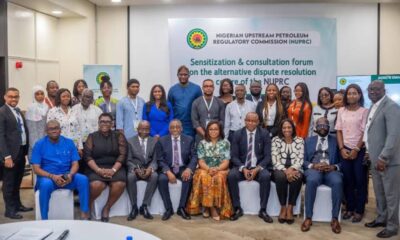
Dr Victoria Enape, Pro tem President, Chartered Institute of Forensic and Investigative Auditors of Nigeria (CIFIAN), has appealed for cooperation from the Institute of Chartered Accountants of Nigeria (ICAN) and other professional bodies. Enape urged other professional bodies, especially ICAN, to join hands with CIFIAN, in order to ensure that forensic auditing, which is a new trend in global auditing, becomes a reality.

Enape spoke in Abuja, during CIFIAN’s training and mandatory continuing professional education programme, with the theme, “Transition to Forensic and Investigative Audit. The pro tem President said that “ there is no duplication of duties between CIFIAN, ICAN or any other professional body in Nigeria. The reason is because our forensic and investigative audit is a current trend in the whole world,’’ she said.

She maintained that as at 1965 when some of these bills were enacted, there was nothing like forensic audit, “even in the whole world.’’ Enape said that it was therefore wrong for anyone to say that this current trend is already embedded in the bill of 1965. “We are pleading with ICAN that they should calm down, let’s work together. We are no threat to any professional body in Nigeria but only trying to fill a vacuum,’’ she said. She  also said that  forensic and investigative auditors represent a global shift from traditional auditing practice to skillful deployment of science and technology to prevent and track fraud.

She said that forensic auditing was a child of necessity, as fraudsters had become sophisticated. Enape said that CIFIA’s emphasis is on forensic and investigative auditing and not just accounting. “The whole world has gone digital and Nigeria need to embrace this current trend.’’ She pointed out that “ICAN should know that accountant is an auditor, but an auditor must or may not be an accountant. Forensic and investigative auditors only need knowledge of accounting to unravel manipulations of accounting facts and figures in the financial statement prepared by an accountant.

“Therefore, forensic auditors must not necessarily be only accountants, considering the nature of the work involved,’’ Enape said. She said that CIFIAN was “here to salvage the country from total collapse, hence, any well-meaning Nigerian will join hands to ensure that the CIFIAN bill is signed into law.’’ She said that by the time the bill is signed, fraud will be prevented from taking place and the country will save money and channel it into infrastructure development.

Continue Reading

Finance

Afreximbank successfully closed its second Samurai Bond transactions, raising JPY 81.8bn or $527m

Published

on

African Export-Import Bank said it has successfully closed its second Samurai bond transaction, securing a total of JPY 81.8 billion (approx. USD 527 million) through Regular and Retail Samurai Bonds offerings.

The execution surpasses the Bank’s 2024 debut issuance size, attracting orders from more than 100 institutional and retail investors, marking a renewed demonstration of strong Japanese investor confidence in the Bank’s credit and its growing presence in the yen capital markets.

On 18 November, Afreximbank priced a JPY 45.8 billion 3-year tranche in the Regular Samurai market following a comprehensive sequence of investor engagement activities leveraging Tokyo International Conference on African Development (TICAD9), including Non-Deal Roadshows (NDRs) in Tokyo, Kanazawa, Kyoto, Shiga and Osaka, a Global Investor Call, and a two-day soft-sounding process which tested investor appetite across 2.5-, 3-, 5-, 7-, and 10-year maturities.

With market expectations of a Bank of Japan interest rate increase, investor demand concentrated in shorter tenors, resulting in a focused 3-year tranche during official marketing.

The tranche attracted strong participation from asset managers (22.3%), life insurers (15.3%), regional corporates, and high-net-worth investors (39.7%).

Concurrently, Afreximbank priced its second Retail Samurai bond on 18 November, a JPY 36.0 billion 3-year tranche, more than double the inaugural JPY 14.1 billion Retail Samurai issuance completed in November 2024.

The 2025 Retail Samurai bond also marks the first Retail Samurai bond issued in Japan in 2025.

Following the amendment to Afreximbank’s shelf registration on 7 November 2025, SMBC Nikko conducted an extensive seven-business-day demand survey through its nationwide branch network, followed by a six-business-day bond offering period.

The offering benefited from strong visibility supported by Afreximbank’s investor engagement across the country, including the Bank’s participation at TICAD9, where Afreximbank hosted the Africa Finance Seminar to introduce Multinational Development Bank’s mandate in Africa and its credit profile to key Japanese institutional investors.

MBC Nikko Securities Inc. acted as Sole Lead Manager and Bookrunner for both the Regular and Retail Samurai transactions. Chandi Mwenebungu, Afreximbank’s Managing Director, Treasury & Markets and Group Treasurer, commented:

“We are pleased with the successful completion of our second Samurai bond transactions, which marked a significant increase from our inaugural Retail Samurai bond in 2024, and which reflect the growing depth of our relationship with Japanese investors.

The strong demand, both in the Regular and Retail offerings, demonstrates sustained confidence in Afreximbank’s credit and mandate.

We remain committed to deepening our engagement in the Samurai market through regular investor activities and continued collaboration with our Japanese partners.”

Continue Reading

Finance

Ecobank unveils SME bazaar: a festive marketplace for local entrepreneurs

Published

on

Ecobank Nigeria, a member of Africa’s leading pan-African banking group, has announced the launch of the Ecobank SME Bazaar—a two-weekend festive marketplace designed to celebrate local creativity, empower entrepreneurs, and give Lagos residents a premium shopping experience this Detty December. The Bazaar will hold on 29–30 November and 6–7 December at the Ecobank Pan African Centre (EPAC), Ozumba Mbadiwe Road, Victoria Island, Lagos. Speaking ahead of the event, Omoboye Odu, Head of SMEs, Ecobank Nigeria, reaffirmed the bank’s commitment to supporting small and medium-sized businesses, describing them as the heartbeat of Nigeria’s economy. She explained that the Ecobank SME Bazaar was created to enhance visibility for entrepreneurs, expand market access, and support sustainable business growth.
According to her, “This isn’t just a market—it’s a vibrant hub of culture, commerce, and connection. From fresh farm produce to trendy fashion, handcrafted pieces, lifestyle products, and delicious food and drinks, the Ecobank SME Bazaar promises an unforgettable experience for both shoppers and participating SMEs. Whether you’re shopping for festive gifts, hunting for unique finds, or soaking in the Detty December energy, this is the place to be.” Ms. Odu added that participating businesses will enjoy increased brand exposure, deeper customer engagement, and meaningful networking opportunities—making the Bazaar a strong platform for both festive-season sales and long-term business growth. The event is powered by Ecobank in partnership with TKD Farms, Eko Marche, Leyyow, and other SME-focused organisations committed to building sustainable enterprises.

Continue Reading

Finance

16 banks have recapitalised before deadline—CBN

Published

on

The Central Bank of Nigeria (CBN) has said that16 banks have so far met the new capital requirements for their various licences, some four months before the March 31, 2026 deadline. The apex bank also indicated that 27 other banks have raised capital through various methods in one of the most extensive financial sector reforms since 2004. Addressing journalists at the end of the Monetary Policy Committee (MPC) meeting in Abuja, CBN Governor Mr Olayemi Cardoso said the banking recapitalisation was going on orderly, consistent with the regulator’s expectations. He said, “We are monitoring developments, and indications show the process is moving in the right direction.” Nigeria has 44 deposit-taking banks, including seven commercial banks with international authorisation, 15 with national authorisation, four with regional authorisation, four non-interest banks, six merchant banks, seven financial holding companies and one representative office.
Cardoso explained that eight commercial banks had met the N500 billion capital requirement as of July 22, 2024, rising to 14 by September of the same year. The number has now increased to 16 as the industry continues to race toward full compliance. He said that the reforms would reinforce the resilience of Nigerian banks both within the country and across the continent. “We are building a financial system that will be fit for purpose for the years ahead. Many Nigerian banks now operate across Africa and have been innovative across different markets. These new buffers will better equip them to manage risks in the multiple jurisdictions where they operate,” Cardoso said. According to him, the reforms would strengthen the financial sector’s capability to support households and businesses. He said, “Ultimately, this benefits Nigerians—our traders, our businesses and our citizens—who operate across those regions. “It should give everyone comfort to know that Nigerian banks with deep local understanding are present to support them. Commercial banks are also creating their own buffers through the ongoing recapitalisation.”
He added that the apex bank considered several factors in determining the new capital thresholds, including prevailing macroeconomic conditions, stress test results and the need for stronger risk buffers. He reassured on the regulator’s commitment to strict oversight as the consolidation progresses. “We will rigorously enforce our ‘fit and proper’ criteria for prospective new shareholders, senior management, and board members of banks, and proactively monitor the integrity of financial statements, adequacy of financial resources, and fair valuation of banks’ post-merger balance sheets,” Cardoso said. He said the CBN remained confident that the banking system would emerge stronger at the conclusion of the recapitalization exercise, with institutions better prepared to support Nigeria’s economic transformation Banks have up till March 31, 2026 to beef up their minimum capital base to the new standard set by the apex bank. Under the new minimum capital base, CBN uses a distinctive definition of the new minimum capital base for each category of banks as the addition of share capital and share premium, as against the previous use of shareholders’ funds.
While most banks have shareholders’ funds in excess of the new minimum capital base, their share premium and share capital significantly fall short of the new minimum definition. The CBN had in March 2024 released its circular on review of minimum capital requirement for commercial, merchant and non-interest banks. The apex bank increased the new minimum capital for commercial banks with international affiliations, otherwise known as mega banks, to N500 billion; commercial banks with national authorisation, N200 billion and commercial banks with regional license, N50 billion. Others included merchant banks, N50 billion; non-interest banks with national license, N20 billion and non-interest banks with regional license will now have N10 billion minimum capital. The 24-month timeline for compliance ends on March 31, 2026. Under the guidelines for the recapitalisation exercise, banks are expected to subject their new equity funds to capital verification before the clearance of the allotment proposal and release of the funds to the bank for onwards completion of the offer process and addition of the new capital to its capital base. The CBN is the final signatory in a tripartite capital verification committee that included the Securities and Exchange Commission (SEC) and the Nigeria Deposit Insurance Corporation (NDIC). The committee is saddled with scrutinising new funds being raised by banks under the ongoing banking sector recapitalisation exercise.

Continue Reading

Trending