
News
How Saraki, Sanusi plotted a take over of Intercontinental for refusing merger bid with SGBN

By Omoh Gabriel, Business Editor
The estranged Managing Director of Intercontinental Bank has disclosed that Saraki is behind the travails of Intercontinental Bank because of the bank refusal to accept Societe General bid to merge with Intercontinental Bank. Akingbola said petitioned the federal government alleging forceful take over of the bank by the CBN governor Sanusi Lamido Sanusi having been instigated by Dr. Bukola Saraki.
In a 30 paragraph petition titled fraudulent take over of Intercontinental Bank PlC by Dr. Bukola Saraki and Mallam Sanusi Lamido Sanusi and Mohamoud Lai Alabi Dr. Akingbola to the attorney general in which he called for an independent investigation of the allegation against him said “ About two and a half years ago, Dr. Bukola Saraki requested that we merge Societe Generale with Intercontinental Bank (IB) Plc. We conducted a due diligence exercise and noticed N 30 billion negative capital – so the board of Intercontinental Bank Plc turned it down. Dr. Saraki was very unhappy.
“When time came for the renewal of Gov. Soludo’s appointment as CBN Governor, Dr. Saraki blocked it with late President Yar’Adua and brought him Lamido Sanusi. Being my customer, Dr. Saraki confirmed this personally to me.
“Lamido Sanusi was appointed CBN Gov. on 4th June, 2009, and on the 18th June, Рafter just two weeks in office – he sent CBN examiners to five banks including IB Plc. This was quite unusual, as the CBN had just completed a comprehensive examination of IB Plc as part of normal protocol. The result of this was good. The new examination finished in mid-July, and we were expecting their report. Suddenly, they returned claiming that several accounts, which they had verified and agree with us as “performing”, were now reclassified “non-performing”.
“Despite these manipulations, IB Plc’s ratios were alright. Unusually, the CBN examiners returned on four separate visits to re-classify even more accounts as “non-performing”. These even included what we regarded as our best accounts. This prompted me to ask some of the examiners what was really going on. They confided that the new Governor was bent on removing certain bank CEOs, and wanted to show that IB Plc was too exposed to bad loans. They said he formed a team in CBN reporting to him directly. Each completed examination report was turned down if it was not damning enough and they were ordered to go back until they achieved certain ratios.
According to him “One of the examiners showed me a report on IB Plc, which was favourable. This has been rejected by the CBN Governor, as it did not justify or warrant my removal. Quite disturbed by this development, I decided to speak to Dr. Bukola Saraki, since he championed Malam Lamido Sanusi’s appointment. He told me that the CBN Governor was unhappy with myself and Mrs. Ibru (of Oceanic Bank) because according to him, we had contributed N 6 billion to the Senate to block Lamido Sanusi’s confirmation as CBN Governor. I refuted this allegation telling Dr. Saraki that my religion would never allow me to do such a thing, as no human can undo what God has ordered in Heaven.
In the petition he stated “I immediately booked an appointment to see Lamido Sanusi in the CBN and questioned him regarding the N 6 billion Senate bribery allegation. He said he had put that behind him, as “not all king makers in council will support the choice of a new Emir”. I once again reiterated my innocence, based on my religion, that the God I serve will never permit me to try to block someone else’s good fortune.
“Later, I mentioned to Alhaji Aliko Dangote the strange repeated CBN examinations and the allegation by Lamido Sanusi. He promised to speak to him and ask him about the matter. Surprisingly, Alhaji Dangote returned to say Lamido Sanusi revealed that he was told of the alleged bribe by Dr. Saraki, and that I even lobbied him to be the CBN Governor. Apparently, it was Dr. Bukola Saraki inciting Sanusi against me, as a way of removing me and taking over IB Plc. It has now become evident that both Dr. Saraki & Malam Sanusi used the opportunity of the worldwide financial crisis of 2008-2009 to jump into certain banking institutions and take them over. The crisis had been acknowledged and was being well-managed by Professor Chukwuma Soludo, the former CBN Governor. The ENTIRE industry was affected, as others worldwide. The Nigerian economy was hit by four economic catastrophe namely:
“Rather than the new CBN Governor to perform the role of ‘lender of last resort’, he used the crisis to take over banks for his mentor. All these banks had prominent Nigerians waiting to buy them at “knock-down” or give-away” prices. However, the media altered the equation. On the 14th of August 2009, without any discussion, Malam Sanusi issued me a letter of removal as CEO of IB Plc. He also removed all executive directors of the bank with armed police men.
Continuing he said “The letter (copy attached), said that based on the examination he ordered on the 18th June, 2009, it is in the public interest for the CBN to intervene by taking over the bank. Till today, no report of the examination has been made available to me, the management, or the Board of the bank. We had no opportunity to learn how the CBN came to its decision, nor were given an opportunity to respond to the examination report, as is the usual process. My removal by Malam Sanusi was done in flagrant disregard of the legal provisions regarding the removal of bank directors (i.e. Section 35 of the Banks and Other Financial Institutions Act, Cap. B4 Laws of the Federation, 2004) asthere was no lawful special examination ordered into the affairs of Intercontinental Bank Plc, as required by law. Since no order for special examination of the bank’s affairs was signed by Malam Sanusi, as required of him by the law of this country, his order for my removal is, improper and unlawful.
According to Dr. Akingbola “The current CBN examination of May 2010, now says there is a N 95 billion loan over-provision, which means IB Plc was deliberately marked down previously. Two lorry loads of police were sent to IB Plc to remove me. It was like a bad movie, a big surprise that a person can be driven away from a business he had started and nurtured for over 21 years in one hour. And without any opportunity to contest it.
Akingbola said in his petition “I was surprised that the next morning (Saturday), all the papers carried personal interviews with Malam Sanusi, in which he accused all the CEOs of various misdeeds. This showed that it was pre-planned and well-rehearsed. On the evening of 19th August, I received a call that Malam Sanusi under the powers that the late President had delegated to him, had ordered the EFCC, the Police and the SSS to arrest me. I also learned that two lorry loads of personnel were en route. I hurriedly left the house, though I could not believe that all this had transpired in the last 72 hours. I then recalled a professional disagreement with Malam Sanusi while he was CEO of First Bank. Back then, I had discovered that his staff members were de-marketing IB Plc and I wrote to him concerning this. (Copy attached).
“My immediate conclusion was that Dr. Saraki and Malam Sanusi wanted to take over IB Plc by fraudulent means, and that if I went into their custody, it could result in my death, in order to silence any opposition to their plans. Mr. Mahmoud Lai Alabi was appointed by the CBN as the new CEO of IB Plc. Mr. Alabi is an employee of Dr. Saraki as chairman of Songa Farms and several development funds in the state. On resuming, his first task was to write off Dr. Saraki’s loans to the tune of N8.115bn (Papers & letters attached). He also wrote off loans totaling N32bn to friends of Dr. Saraki and Malam Sanusi. All this, in a bank that they were meant to be rescuing. All these written-off loans had been classified as “good” and “performing” by the CBN examiners, and had been secured with properties in Ikoyi (Lagos), Victoria Island (Lagos), and Abuja. The CBN examination report of May 2010 complained about this massive loan or “cash gift” to Dr. Saraki. Next, he recruited former Societe Generale staff as Executive Directors and loan managers (for example, Mr. Gbenga Alade). “Mr. Alabi proceeded to sack the entire senior management of IB Plc and replaced them with former Societe Generale staff. It is clear, rom these actions, that I was removed to smoothen the take-over of IB Plc for Dr. Saraki. As at the time the shareholders’ appointed management was ousted by Malam
Lamido Sanusi, IB Plc was not owing the CBN one kobo on the discount window. Also, IB Plc had Inter-Bank takings of N73 Billion. However, as at today under the CBN’s appointed management, IB Plc is now owing the CBN N100 Billion and owing other Banks N300 Billion, making a total deficit of N400 Billion after the purported intervention by the CBN.
“It is rather curious that: all the banks are yet to receive any examination report from the CBN to show areas of deficiencies; the CEO and entire senior management were removed without the Board or shareholders being informed; without any criminal charges or reports, the CEOs were arrested and locked up – to prevent them from speaking to the media.;
“It was after locking them up that the EFCC started searching for possible offences (in my case, it took 4 months of searching for any offence to pin on me). Mr. Alabi, the new CEO of Intercontinental Bank Plc, is an employee of Dr. Saraki (chairman of Songa Farms in Kwara). In fact, Dr. Saraki is running IB Plc by proxy; Within two months of his appointment, Mr. Alabi wrote off N 7 billionn of Dr. Saraki’s loans – the companies are Linkers, Dicetrade, Skyview Properties, and Joy Petroleum. g. As the appointment of each senior management of IB Plc was being terminated, Mr. Alabi was recruiting and replacing them with former Societe Generale staff, in order to complete the take-over. He said “For instance, the Executive Director of risk management brought into IB Plc (Mr. Gbenga Alade) is a former Societe Generale staff member. Dr. Saraki has now used his political power to take over IB Plc after his failed peaceful merger attempts. Malam Sanusi claims to have injected N100bn, (which is less that 10% of the IB Plc’s value), and as such now owns it 100%.
“This is a bank with a balance sheet of N 1.6 trillion; 330 branches; two foreign subsidiaries; 10 well-established subsidiaries; 12,000 members of staff; and paid-up capital of N 230 billion. Where is the justice? When Malam Sanusi initially injected N 100 billion into IB Plc, he wrote to
the Board that it was a seven-year loan (copy attached). Why is he now trying desperately to sell the bank within a year of the loan?
“I am appealing to the Attorney General and Minister of Justice to institute an independent investigation into the “so-called” banking reform of Malam Sanusi
and the fraudulent N32 billion loan write-off. I am also appealing to this government which believes in the rule of law to reverse the fraudulent take-over of Intercontinental Bank Plc and return it to
its Board, management and shareholders. All the allegations against the banks’ CEOs should be independently investigated by the Attorney General’s office for fairness. Even with the deliberate damage being done to the banks and their stock prices on a daily basis, if we are given six to nine months, the banks will be restructured to the normal, favourable and fair positions” he said in the petition.
-

 News1 day ago
Binance seeks out-of-court settlement with Nigeria over alleged tax evasion
-

 Oil and Gas11 hours ago
NUPRC vows not to approve divestments that doesn’t meet considerations
-
 Stock Market1 day ago
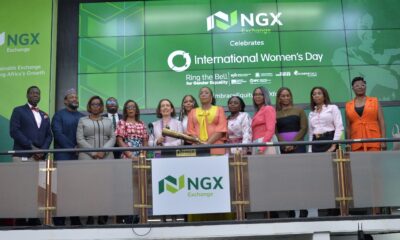
NGX market capitalisation settle at N128.84tn, cuts Zichis Agro-Allied share price by 50%
-
 News1 day ago
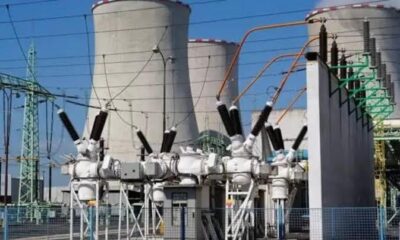
Power crisis blamed on gas shortages, sector debts
-
 News1 day ago
FG shortlists 65 student innovators for venture capital grant
-
 Economy1 day ago
FG urges PenCom board on governance, protection of pension assets
-

 Oil and Gas1 day ago
Dangote warns of prolong global oil shocks
-

 Oil and Gas11 hours ago
Iran eases Strait of Hormuz transit rules amid oil shock