
News
LASG, LASU, Immigration Service collaborate on secure, connected borders in Africa, to aid economic growth

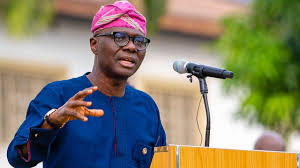
Lagos State Government, the Lagos State University, LASU, and the Nigeria Immigration Service, NIS, have emphasised the importance of secure and connected borderlands across the African continent, saying it would help Africa’s economic growth.
They gave the charge in Ikeja, Lagos on Monday at the opening of the 2026 Annual Meeting of the African Borderlands Research Network (ABORNE).
The conference, themed “The Connected Borderlands: Socio-Cultural Integration and the Centrality of Policy, Research, and Security,” brought together scholars, practitioners and other stakeholders to examine the changing realities of African borders and border communities.
The Vice-Chancellor of LASU, Distinguished Prof. Ibiyemi Olatunji-Bello, in her welcome address, said African borders should no longer be viewed merely as lines separating sovereign territories, but as spaces of interaction, exchange, identity, commerce and shared livelihoods.
Olatunji-Bello noted that the conference was particularly significant as LASU and the NIS were co-hosting the ABORNE meeting for the first time in Nigeria since the network was founded in Edinburgh, United Kingdom, in 2007.
According to her, “while security remains essential, it should not result in isolation or undermine legitimate movement and trade.” She stressed the need for policy, research and security to operate together, describing the relationship as critical to effective border governance.
“Research needs practice. Practice needs research. And both need policy. That is the triangle within which meaningful border governance must operate,” she said.
Describing Lagos as an ideal venue for such a a gathering because of its strategic position as a centre of commerce, culture, migration and regional connectivity, particularly along the Lagos-Abidjan Corridor.
She also highlighted LASU’s Bachelor of Arts programme in Border and
Migration Studies, saying the programme reflected the university’s recognition that border issues extend beyond territorial sovereignty to encompass livelihoods, identity, security, development and human mobility.
The Comptroller-General of the NIS, Kemi Nanna Nandap, said technological advancement, changing migration patterns, regional integration, cross-border economic activities and emerging security threats were reshaping African borderlands.
Nandap said the changing nature of border threats required a shift from conventional approaches to more technology-driven and intelligence-led border management.
She identified human trafficking, migrant smuggling, identity fraud, organised crime, terrorism and cyber-enabled threats as increasingly transnational challenges requiring greater cooperation among countries and institutions.
According to her, physical patrols and document inspection remain important but are no longer sufficient to manage modern borders effectively.
Nandap recalled that Nigeria became the first African country to introduce the electronic passport in 2007, adding that subsequent innovations had improved the security and efficiency of the country’s travel-document and border-management systems.

She, however, cautioned that technology must complement rather than replace the human element in border management. “Technology cannot replace professionalism, experience, judgement and integrity of the officers entrusted with the securing of our borders,” she said.
The NIS boss also identified border communities as strategic partners in securing the nation’s frontiers, stressing that residents possessed valuable knowledge of their environments that could not be replicated by technology alone.
She called for greater cooperation, mutual trust and timely information sharing among neighbouring countries and institutions, particularly in West Africa, where communities, families and markets have maintained cross-border relationships for generations.
Nandap said Nigeria remained committed to partnerships in border technology, biometric identity management, cybersecurity, surveillance, intelligence sharing, capacity building and research. She added that meaningful partnerships should go beyond equipment provision to include knowledge development, institutional strengthening and solutions adapted to African realities.
“Our vision is therefore broader than securing Nigeria’s borders. We seek secure, connected and resilient borderlands where communities can prosper, legitimate trade and mobility can flourish and countries can cooperate in confronting shared threats,” she said.
Also speaking, the Lagos State Commissioner for Tertiary Education, Hon. Tolani Sule, urged universities to prepare students with the knowledge and skills required to navigate an increasingly interconnected Africa.
Sule said African integration could not be achieved through government declarations alone, stressing that young people must understand the value of cooperation across national borders while appreciating the responsibilities that come with those boundaries.
“African integration cannot be achieved by government declarations alone. It requires citizens who understand the value of cooperation across borders,” he said.
The commissioner said universities had a crucial role in producing graduates who were not only prepared for employment but also capable of responsible citizenship in an increasingly interconnected continent.
He described the Border and Migration Studies programme at LASU as significant to developing a generation capable of understanding borders as potential spaces for cooperation and development rather than merely points of separation.
Sule also called for closer collaboration between academic institutions and practitioners, saying security professionals must understand both the operational and human dimensions of border management.
He commended the partnership between LASU and the NIS, noting that the university contributed research and critical inquiry, while practitioners provided operational experience and government created the policy environment for both to contribute to the public good.
He said Lagos State welcomed initiatives that enabled universities to engage with real-world challenges and build partnerships with government agencies, industry, international organisations and communities.
-

 News1 day ago
Tinubu’s fuel subsidy removal enriched governors, made life unbearable for Nigerians: Donald Duke
-

 Finance14 minutes ago
Afreximbank delivers strong half-year 2026 performance, driven by robust growth and profitability
-

 Finance1 day ago
Shareholders seek deadline extension for insurers recapitalisation
-

 Oil and Gas1 day ago
KAGOTE isn’t against oil resumption in Ogoni, but conducts of few in ODC
-

 Oil and Gas20 minutes ago
Oil falls ahead of US announcement of new sanctions on Iran
-
 News12 minutes ago
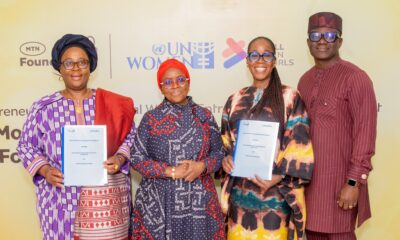
MTN foundation, UN women partner to empower 200 rural women entrepreneurs
-

 Oil and Gas2 minutes ago
N’Delta coalition backs Senate, demands EFCC, CCB probe of Kyari on PH Refinery
-
 Business22 minutes ago
NAFDAC orders nationwide recall of banned alcoholic beverages