
News
Nembe well leak was contained by local capacity

An indigenous firm an oil service company Kenyon International West Africa Limited says it deployed 100 per cent local manpower and expertise to contain the oil and gas leak from a wellhead blowout at Oil Mining Lease (OML) 29 operated by Aiteo Eastern Exploration in Nembe, Bayelsa State. The Santa Babra South Well 1, blew out on Nov.5, 2021 and discharged crude into the Santa Barbara River for 32 days, out of which some 18,600 barrels of emulsified crude and water sediments were recovered. Aiteo, the operator of the facility had approached Boots and Coots, a subsidiary of United States Halliburton to plug the well but the firm was unable to mobilise its expatriate workforce due to the COVID-19 restrictions which compelled the operator to look inwards.
Mr Victor Ekpenyong, Chief Executive of the indigenous oil services firm said the feat was attributable to the enactment and implementation of the Nigerian Content Act 2010. Ekpenyong, a member of International Well Control Forum, appealed to oil firms operating in the country to give opportunities to Nigerian companies as they have developed competencies to match their foreign counterparts. According to him, the Nigerian Content Development and Monitoring Board (NCDMB) has helped in building the capacity of Nigerian companies by facilitating collaboration between local players and Original Equipment Manufacturers (OEMs). He explained that prior to the Nigerian Content Act 2021, the OEMs dominated the scene and enjoyed monopoly on oil and gas projects that Nigerians had the potential to execute but were marred by challenges.
The NCDMB, he added has been assisting Nigerian firms overcome the challenges they faced in the industry and listed the $500 million Nigerian Content Intervention Fund as a boost to local capacity in oil and gas sector. Many companies are having difficulties and challenging experiences in the industry. Some may stay for a long time without any job. Also, the issue of marketing support in the sector is equally a cause for concern because it is very expensive amidst limited capital environment to engage in marketing communications. “Equally, COVID 19 affected a lot of businesses and some businesses are not able to meet up with orders. On the other hand, some companies have been showcasing their services at Nigerian oil and gas conferences without getting the desired patronage,” he said. On the over 10 years of operating under the Nigerian Content Act 2010, he noted that the law enabled Nigerians in the oil and gas space to be in business as it reserves categories of jobs for them. “Prior to the implementation, the operations we do now would not have been possible for an indigenous company. It would simply be the exclusive reserve of the OEMs. These days, OEMs partner with indigenous companies which enables these companies to develop their capacity. It also has made some Nigerians in the diaspora move to Nigeria knowing full well that their expertise would be well utilised. Without a doubt, the implementation of this act has been a vehicle for talent development in the country. We are very excited we have been given the privilege to establish businesses. I would say it is a win-win situation. There are some jobs we still partner with OEMs to deliver. It has been an inclusive venture where we work together,” he said.
-

 News2 days ago
Binance seeks out-of-court settlement with Nigeria over alleged tax evasion
-
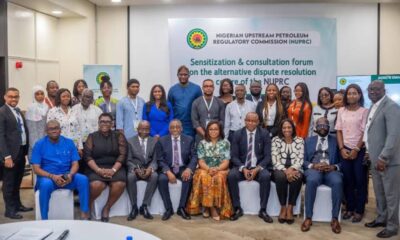
 Oil and Gas22 hours ago
NUPRC vows not to approve divestments that doesn’t meet considerations
-
 News2 days ago
FG shortlists 65 student innovators for venture capital grant
-

 Economy2 days ago
FG urges PenCom board on governance, protection of pension assets
-

 Oil and Gas2 days ago
Dangote warns of prolong global oil shocks
-

 Oil and Gas22 hours ago
Iran eases Strait of Hormuz transit rules amid oil shock
-
 Finance22 hours ago
Cardoso seeks collaboration to check cross‑border financial risks
-
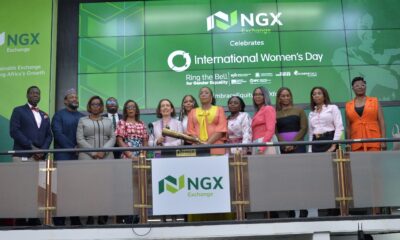
 Stock Market2 days ago
NGX market capitalisation settle at N128.84tn, cuts Zichis Agro-Allied share price by 50%