
News
Nigeria drops two places lower in Transparency International’s corruption perceptions index, ranking 142

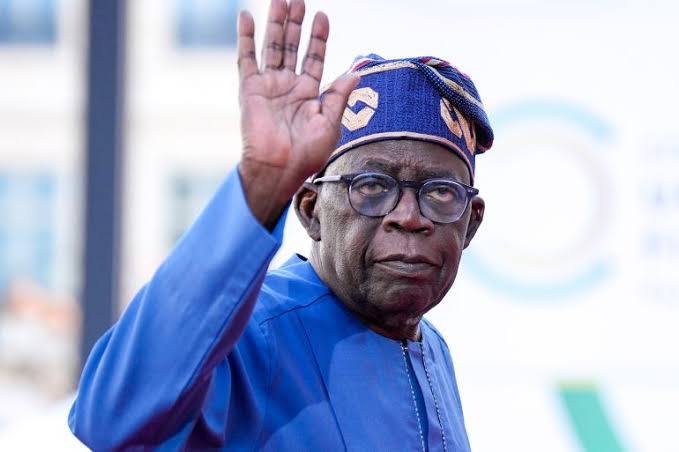
Corruption Perception Index 2025, CPI, Tuesday, said that Nigeria ranked 142nd most corrupt nation in the world.
The report released by Civil Society Legislative Advocacy Centre, CISLAC, and Transparency International, TI, at a press conference showed that the fight against corruption declined as Nigeria failed to make progress as seen in 2024 ranking of 140th most corrupt nation in the world by dropping two steps further down.
The report was read by the Executive Director, CISLAC, and Chairman, TI Nigeria, Musa Rafsanjani, where some sectors were pointed out to be heavily corrupt.
Rafsanjani said “the index reveals that in 2025, Nigeria scored 26 out of 100, retaining its score of 26 from last year. On the global country ranking, Nigeria declined from 140 in 2024 to 142 in 2025.
“This reflects a stagnation in Nigeria’s anti-corruption efforts despite efforts by anti-graft agencies and other well-meaning citizens. This result shows that there is a lot to be done to strengthen anti-corruption in Nigeria.”
He also explained that the index does not document specific instances of corruption within the country, it reflects the prevailing perception of corruption in Nigeria.
According to him, “The index is impartial, objective, and globally recognised as the most widely utilised cross-country measure of corruption.
“With respect to this year’s CPI release, it is important to clarify that the index does not constitute an evaluation of Nigeria’s anti-corruption agencies, which continue to demonstrate commendable commitment and effort in addressing corruption.”
According to the 2025 CPI, weaknesses that made Nigeria to drop two places compared to 2024 index include Judicial Corruption: Corruption and nepotism remain persistent challenges in Nigeria’s judiciary.
Even the Chief Justice of Nigeria (CJN) has acknowledged allegations of bias and undue influence, noting their impact on public confidence
The Nigerian Bar Association (NBA) has also condemned judicial corruption, warning that it threatens democracy and social justice.
Legislature: Over the years, there have been consistent allegations of bribery involving lawmakers.
Oil Theft and Subsidy Fraud: Oil theft and subsidy fraud continue to exact a heavy toll on Nigeria’s revenue, with persistent losses and limited accountability in the sector.
Weakening of Opposition Parties: Political corruption and the weakening of democratic plurality have become increasingly salient in Nigeria as the country approaches the 2027 general election.
Corruption in the Power Sector: Despite substantial investments and an increase in the cost of electricity tariffs, Nigeria’s electricity production has not improved, with the national grid experiencing continuous collapse due to corruption-driven inefficiencies in procurement and oversight. The Auditor-General’s report, published in 2025, revealed the alleged misappropriation of ₦128 billion by the Ministry of Power and the Nigerian Bulk Electricity Trading Plc
Shrinking Civic Space and Democratic Decline: Government suppression of civic engagement continues to intensify, marked by escalating crackdowns on journalists, activists, and whistleblowers exposing corruption. Security agencies and political actors increasingly exploit repressive laws, including the Cybercrime Act, as well as strategic lawsuits against public participation, to silence critical voices in the media and civil society. Press freedom remains under severe threat.
Corruption in the Security Sector: Persistent corruption and wasteful expenditure in Nigeria’s security sector continue to undermine the effectiveness of government responses to the escalating security crisis, including insurgency, banditry, and communal violence across the country.
However, the CPI indicated some positive trends and developments including; Improvement in Asset Recovery Efforts: Nigeria was able to recover and repatriate stolen assets, which the Economic and Financial Crimes Commission, EFCC, announced recovery of over ₦566 billion and $411 million, along with 1,502 properties between October 2023 and September 2025.
The Independent Corrupt Practices and Other Related Offences Commission, ICPC, reported the recovery of ₦37.44 billion and $2.353 million in 2025 through seizures and forfeitures as part of its enforcement activities.
in January 2026, the UK Crown Dependency of Jersey agreed to repatriate more than $9.5 million in assets linked to corruption to the Federal Republic of Nigeria, with the funds to be applied to critical infrastructure projects such as the Abuja – Kano Road.
Nigeria’s Exit from the Financial Action Task Force (FATF) Grey List:After being placed on the FATF “grey list” due to deficiencies in its financial monitoring systems, Nigeria was officially removed in October 2025, following two years of enhanced monitoring.
Strong Civil Society and Media Advocacy: Investigative journalism and civil society organisations, such as CISLAC, continue to play a pivotal role in uncovering corruption and holding the government accountable.
Among its recommendations, CISLAC and TI counseled that there is the need to ensure the EFCC, ICPC, and NFIU operate independently and adequately funded. Also, implement swift and fair trials for corruption cases and enact laws that enhance transparency and accountability.
Establish a robust integrity monitoring mechanism within the judiciary, including whistleblowing channels, mandatory asset disclosure, and conflict-of-interest protocols. The processes for judicial appointments and promotions should be fully transparent.
Prioritise impartial and unhindered investigations into corruption within the security sector to address Nigeria’s deteriorating security situation. Security agencies and operatives must not be used as instruments of politically motivated vendettas.
Introduce robust tracking systems for oil production and sales, ensuring that the NNPCL accounts for the alleged missing funds as highlighted in the Auditor General’s Report of 2022, published in 2025.
Additionally, the government should ensure the effective implementation of the Public Procurement Act, 2017, mandating full digitisation and public access to all government contracts, budget allocations, and procurement processes.
Anti-corruption agencies mandated under the Proceeds of Crime (Recovery and Management) Act 2022 should establish publicly accessible databases detailing assets in their custody, in line with the Act and the proactive provisions of the Freedom of Information Act 2011.
Ensure that high-profile corruption cases are pursued to their logical conclusion, safeguarding national interests. Explore international avenues for addressing transnational grand corruption cases where applicable.
Provide an enabling environment that protects citizens’ rights to protest and express satisfaction or dissatisfaction with governance processes, thereby reinforcing government accountability.
The National Assembly should prioritise the passage of the Whistleblower Protection Bill to safeguard individuals exposing corruption and uphold fundamental freedoms of expression.
Investigative journalism, civil society organisations such as CISLAC, and active citizens play a critical role in exposing corruption and holding the government accountable.
-

 Oil and Gas1 day ago
Dangote Refinery reduces petrol price to N1,200 per litre
-

 Finance1 day ago
FirstBank empowers SMEs with AI-driven growth strategies, hosts SMEConnect webinar
-

 News1 day ago
Afreximbank launches inaugural accelerator programme cohort to scale Africa’s Digital trade ecosystem
-
 Economy1 day ago
WBG working with governments, private sector, regional partners, stakeholders to help solve Middle East war challenges challenges
-
 News1 day ago
Power sector reforms attract $2bn investments – Adelabu
-
News1 day ago
Dangote Refinery cautions stakeholders on IPO speculation
-
 News1 day ago
Account for N129.5bn disbursed for botched 2023 Census, BudgiT tackles NPC
-

 Finance1 day ago
Total capital importation rose in Q4 2025, says statistics bureau