
News
Nigeria eye $3bn from carbon market by 2030 as Tinubu approves framework

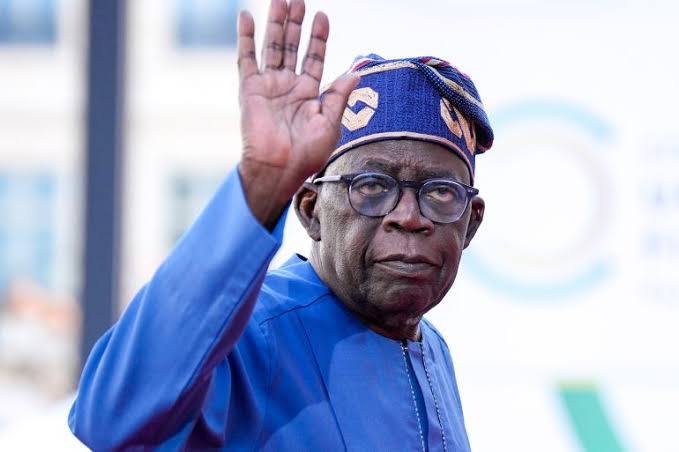
President Bola Tinubu has approved the implementation and operationalisation of Nigeria’s carbon market framework, a landmark policy expected to generate at least $3 billion annually by 2030.
Director-General, National Council on Climate Change (NCCC) Tenioye Majekodunmi said this. The framework positions Nigeria at the forefront of carbon trading, opening the door to large-scale emission allowance transactions across multiple sectors.
According to the government, the initiative will tap into emissions-reduction opportunities across energy, agriculture, forestry, waste, and industrial sectors.
Majekodunmi said that Nigeria will prioritize participation in the voluntary carbon market and international trading, while gradually introducing a domestic emissions trading system and carbon tax.
“Operationalizing the framework is an indication that carbon markets are a key part of the country’s economic strategy, as well as a tool for attracting foreign capital, supporting the energy transition and anchoring Africa’s role in global climate finance,” Majekodunmi said.
The new framework includes: launch of a national carbon registry; mandatory emissions reporting for companies; phased compliance mechanisms aligned with Nigeria’s climate plan, which commits to emissions cuts by 2035 and net zero by 2060.
It also include tax exemptions on carbon credit revenue for up to a decade; accelerated capital allowances for low-carbon assets. R&D deductions tied to emissions-reduction projects.
These measures aim to eliminate structural risks that have previously constrained investment in carbon markets. Nigeria already has 57 registered voluntary carbon projects, concentrated in household energy, renewable power, and forestry.
Government data shows 5.8 million tons of credits issued so far, with the new framework designed to rapidly expand this pipeline while enforcing international quality standards.
Oversight will rest with the NCCC, chaired by the President, and supported by a dedicated carbon-market office responsible for project approvals, registries, authorizations, and market supervision.
Carbon credits represent one metric ton of CO₂ avoided, reduced, or removed from the atmosphere through projects such as reforestation. BloombergNEF projects that global carbon credit supply could grow 20-to-35 fold by 2050, driven by a market reset focused on integrity and impact.
Other African nations, including Zimbabwe, Kenya, and Malawi, have also taken steps to regulate carbon offset industries. However, confidence in global carbon markets has waned, with the market shrinking by two-thirds since 2021 amid concerns over project quality and reduced corporate climate commitments.
The framework enables public-private partnerships and bilateral cooperation, potentially opening Nigeria’s credits to sovereign and corporate buyers seeking compliance-grade offsets.
Majekodunmi emphasized that the policy is designed to “rapidly expand Nigeria’s carbon project pipeline while ensuring international quality standards are met.”
-

 Oil and Gas1 day ago
NUPRC vows not to approve divestments that doesn’t meet considerations
-

 Oil and Gas1 day ago
Iran eases Strait of Hormuz transit rules amid oil shock
-

 Finance1 day ago
Cardoso seeks collaboration to check cross‑border financial risks
-

 Oil and Gas1 day ago
Court orders forfeiture of $13m linked to Aisha Achimugu’s firm
-

 Oil and Gas1 day ago
Oil falls as reports of 15-point proposal spurs ceasefire hopes
-
 Economy1 day ago
Nigeria to launch trade platform at ports as part of reform push
-
 Finance1 day ago
Court nullifies CBN’s regulatory intervention in Union Bank in 2024, rules it acted beyond its powers