
News
Nigeria inaugurates economic strategy to harness $8 trn global halal market

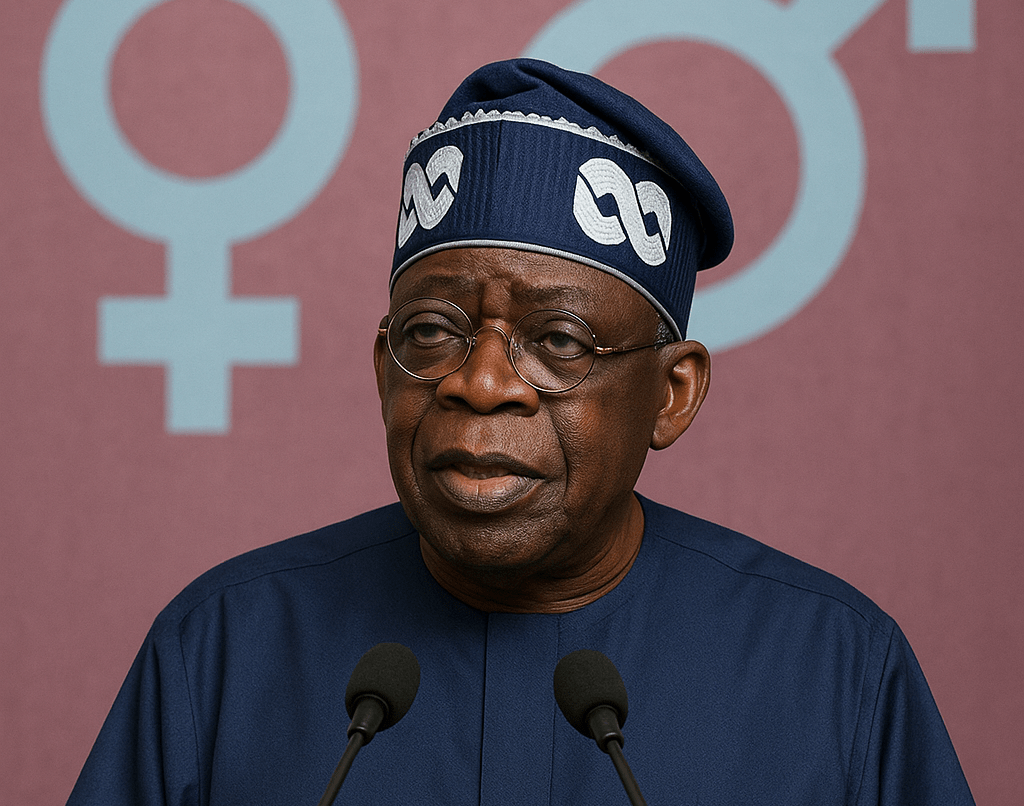
President Bola Tinubu has inaugurated Nigeria’s National Halal Economy Strategy to tap into the $7.7 trillion global halal market and diversify its economy.
Tinubu, while inaugurating the strategy, called for disciplined, inclusive, and measurable action to deliver jobs and shared prosperity across the country.
The president was represented by Vice-President Kashim Shettima. He described the unveiling of the strategy as a signal of Nigeria’s readiness to join the world in capturing a large share of the global halal economy, already embraced by leading nations.
Tinubu said, “As well as to clearly define the nation’s direction within the market expected to add an estimated $1.5 billion to the nation’s Gross Domestic Product (GDP) by 2027. It is with this sense of responsibility that I formally unveil the Nigeria National Halal Economy Strategy.
This document is a declaration of our promise to meet global standards with Nigerian capacity and to convert opportunity into lasting economic value.
“What follows must be action that is disciplined, inclusive, and measurable, so that this Strategy delivers jobs, exports, and shared prosperity across our nation. It is going to be chaired by the supremely competent Minister of Industry, Trade and Investment.”
The president explained that, by 2030, halal-compliant food exports, the development of pharmaceutical and cosmetic value chains, and the mobilisation of ethical finance at scale would position Nigeria as a halal-friendly tourism destination.
Allaying concerns among those linking halal to religious affiliation, Mr Tinubu pointed out that the global halal economy had since outgrown parochial interpretations.
He said, “It is no longer defined solely by faith, but by trust, through systems that emphasise quality, traceability, safety, and ethical production. These principles resonate far beyond any single community.
They speak to consumers, investors, and trading partners who increasingly demand certainty in how goods are produced, financed, and delivered. It is within this broader understanding that Nigeria now positions itself.”
Mr Tinubu said many advanced Western economies had since “recognised the commercial and ethical appeal of the halal economy and have integrated it into their export and quality-assurance systems”.
Tinubu listed developed countries, including the UK, France, Germany, the Netherlands, the U.S., Canada, Australia, and New Zealand. He said that what these developed nations had experienced is a confirmation of a simple truth that the halal economy “is a global market framework rooted in standards, safety, and consumer trust, not geography or belief”.
According to the president, it is also the product of deliberate partnership, developed with the Halal Products Development Company, a subsidiary of the Saudi Public Investment Fund and Dar Al Halal Group Nigeria, with technical backing from institutions such as the Islamic Development Bank and the Arab Bank for Economic Development in Africa. NAN
-

 Oil and Gas1 day ago
NUPRC vows not to approve divestments that doesn’t meet considerations
-

 Oil and Gas1 day ago
Iran eases Strait of Hormuz transit rules amid oil shock
-

 Finance1 day ago
Cardoso seeks collaboration to check cross‑border financial risks
-
 Economy1 day ago
Nigeria to launch trade platform at ports as part of reform push
-

 Finance1 day ago
Court nullifies CBN’s regulatory intervention in Union Bank in 2024, rules it acted beyond its powers
-

 Oil and Gas1 day ago
Court orders forfeiture of $13m linked to Aisha Achimugu’s firm
-

 Oil and Gas1 day ago
Oil falls as reports of 15-point proposal spurs ceasefire hopes