
Economy
Nigeria needs $14bn annually to bridge infrastructure gap, as IsDB invests over $2.4bn

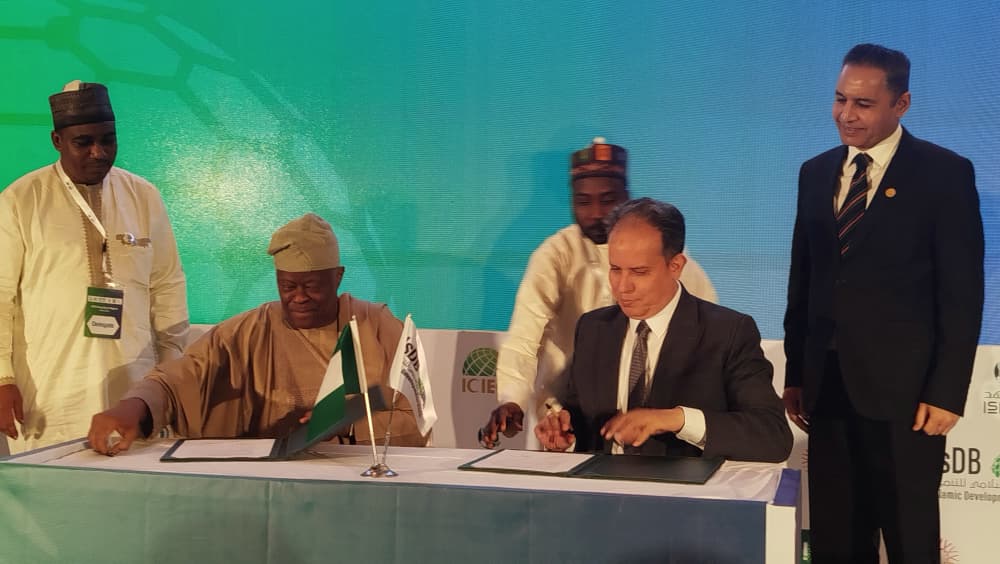
Minister of Finance, and Coordinating Minister of the Economy, Mr Olawale Edun, has said that the nation is targeting an annual 7 per cent growth in its Gross Domestic Product, GDP, so as to take as many Nigerians as possible out of poverty.
Also, he noted that since the economy of the country has stabilised after a few years of hiccups, there is an urgent need for the government to start delivering measurable economic impact.
He stated this in Lagos on Monday while speaking at the celebration of the Islamic Development Bank, IsDB, Group Day in Nigeria.
Edun, who appreciated the support of organisations like the IsDB, agreed that the nation and her people went through a lot of economic strain when the current administration came in on May 29,2023 and introduced some policies meant to reset the economy.
“As Nigeria transitions from economic stabilization to a period of robust expansion in 2026, our focus is firmly set on Growth Acceleration and Investment Mobilization.
This journey toward a $1 trillion economy by 2030 requires ‘capital with purpose —investments that bridge the gap between financial stability and tangible social outcomes.
Through our strategic partnership with the Islamic Development Bank (IsDB) and the implementation of the Country Engagement Framework 2026-2028, we are modernizing our infrastructure, industrializing our agribusiness, and bringing 10 million Nigerians into productive economic activity.
“By leveraging innovative instruments like Sukuk, we are not just financing projects; we are building a Nigeria that is resilient by design, inclusive by nature, and a premier destination for global investment.
“Since May 2023, we have been on an ambitious economic voyage and we can confidently say that the economy has stabilised. Growth is happening and we have earned the confidence of investors both locally and internationally.
We are targeting 7 percent annual GDP growth as we need that to bring as many Nigerians as possible out of poverty.
“In doing that too, we need more private financing, as public financing is just about 10 percent of total financing.
That is also where we need and appreciate the support of organisations such the Islamic Development Bank. Our relationship with IsDB rests on two main pillars.
“The first pillar is sustainable infrastructure for economic transformation. As a country, we need about $14 billion annually to bridge infrastructure gap in the country.
We need support in the areas of access to energy, transport, digital infrastructure and innovation among others.
“The second pillar is on human capital and inclusive development. We are introducing Ward Based Development Programme where small businesses in the nation’s 8,809 wards across the 36 states and Federal Capital Territory are supported with finance and skills to run and scale up such businesses,” he said.
Edun commended IsDB for its support in the execution of Lagos-Calabar Highway and the Lagos-Sokoto Highway, saying the projects would help unlock the blue economy, agriculture and tourism potential of the country among others.
On the effort by the federal government to make trade easy for all, Edun disclosed that the National Single Window Project went live last Thursday to erase bottlenecks hindering trade in the country.
In his speech, the Director General of Country Programmes of IsDB, Mr. Anasse Aissami, said since its establishment in 1974, the bank has given out over $182 billion as loans, and that Nigeria has benefitted about $2.4 billion.
He said the bank has presence in 21 out of the 36 states in Nigeria. “The CEF marks a new era of strategic synergy, moving beyond isolated interventions to deliver integrated, federal-scale solutions.
We are aligning our institutional resources to support Nigeria’s transition toward a diversified, high-growth economy—one where the private sector serves as the fundamental engine of development.”
He further emphasized that through the partnership, the Group remains dedicated to accelerating the delivery of integrated transformative solutions that foster national resilience and competitive industrialization.
He described Nigeria as a vital partner with the bank to not only create jobs, but ensure improved quality of live for the citizens.
“We believe and place strong emphasis on human capital too because roads and physical structures don’t ensure the growth of a nation but the people do.
That is why we are supporting human capital development. We have built over 30 model boarding schools in Nigeria.
We have built six science secondary schools, a 300-bed special hospital,.done hundreds of kilometres of road among others,” he stated.
One of the main features of the programme was a panel discussion on Nigeria’s development priorities and the role of IsDB Group in formulating practical avenues of cooperation and forging strategic partnerships to support Nigeria’s path towards sustainable and inclusive development.
The discussions during the IsDB Group Day were closely aligned with Nigeria’s future development vision, which focuses on building a diversified, inclusive, and resilient economy driven by private sector–led growth.
Emphasis was placed on expanding access to finance for SMEs, strengthening public–private partnerships, advancing renewable energy and green infrastructure, and investing in human capital to unlock opportunities for youth and women.
These priorities reflect Nigeria’s commitment to sustainable development, economic diversification, and deeper regional integration through trade and investment.
A series of bilateral (B2B and B2G) meetings were held amongst representatives of the IsDB Group, business leaders, investors, and financial institutions to explore opportunities for cooperation and partnerships with the Islamic Development Bank Group.
Inspiring success stories implemented in Nigeria in partnership with local entrepreneurs as well as local and international institutions were also presented.
The event also highlighted the activities, services, and initiatives of IsDB Group institutions, including the Islamic Corporation for the Insurance of Investment and Export Credit (ICIEC), the Islamic Corporation for the Development of the Private Sector (ICD), the International Islamic Trade Finance Corporation (ITFC), the Islamic Development Bank Institute (IsDBI), and the Islamic Development Bank Group Business Forum (THIQAH).
The day concluded with a reaffirmation of the Islamic Development Bank Group’s commitment to continued cooperation with the Nigerian government and the country’s private sector to further build strategic partnerships, expand investment opportunities, and enhance the business environment, thereby contributing to the achievement of sustainable development in Nigeria.
-
 Economy1 day ago
ECA boss urges Africa to embrace innovation shift
-
 Agriculture1 day ago
High fuel price, food costs change spending habits of Lagos residents
-
 News1 day ago
SEC’s recapitalisation plan deadline, responsible regulatory approach—Uwaleke
-
 News1 day ago
Global leaders adopt “New Delhi Declaration” at World Public Summit
-
 News25 minutes ago
CBN’s naira-only remittance policy may widen forex gap, economist warns
-
 Oil and Gas21 minutes ago
Dangote refinery fails to prevent record gasoline prices hike
-
 News17 minutes ago
DMO opens N750bn FGN Bonds for subscription
-
 News1 day ago
FG launches “Student Venture Capital Grant”, gives N2.5bn to 45 beneficiaries