Connect with us

Maritime

NIMASA to sponsor delegates to WISTA Africa conference in Accra

Published

on

In line with the global focus on enhancing the role of women in the maritime and shipping sector, the Director General of the Nigerian Maritime Administration and Safety Agency (NIMASA), Dr. Dakuku Peterside, has announced the Agency’s readiness to support initiatives aimed at getting more African women involved in the industry. Dakuku said this last week when the president of Women’s International Shipping and Trading Association (WISTA), Ghana, Jemilat Mahamah, paid him a courtesy visit at the NIMASA headquarters in Lagos.

He pledged that NIMASA will sponsor a high-powered delegation to the 6th WISTA Africa Region Conference holding in Accra from April 2 to 4. According to him, the theme of the conference, “The role of women in harnessing the potential of Africa’s blue economy,” coincides with the focus of the International Maritime Organisation (IMO) this year, which is, “Empowering Women in the Maritime Community.”  The Director General stated, “Globally, the focus in the maritime industry today is how to get more women involved in the sector, whether as seafarers, ship owners, etc. So every effort to encourage the participation of women in the sector is supported by NIMASA. You can count on our support.”

He added, “It is interesting that this year is dedicated by the IMO to empowering women in the maritime sector, specifically, shipping. Your conference coincides with the thematic thrust of the IMO this year. Therefore, it is very easy for us to align with the global agenda of the international maritime community and support your initiative of hosting the continent in Accra.

“You can count on the support of NIMASA and, by extension, Nigeria. We believe and support everything that would give women a role in the maritime sector. There is no sector that would exclude 50 per cent of the population and expect that sector to thrive. If we exclude women, we are excluding 50 per cent of our population from benefitting in the economic activities in the maritime sector.”

Dakuku said the focus of the WISTA conference also accorded with current efforts by African leaders to create economic activities in the continent by maximising the benefits of the blue economy. “The blue economy is one critical sector that will create employment for our people, contribute to economic growth, and give opportunities to all our people, whether they be men or women. So it is timely and most appropriate that you are focusing on how to get 50 per cent of the continent’s population involved in the blue economy, be it fisheries, fishing, or underwater mining, aquaculture or any of the activities that go on in the blue economy. That totally aligns with our vision of making the blue economy play greater role in the economic growth of our country and our continent,” Dakuku stated.

Earlier, the president of WISTA Ghana emphasised the place of the 45-year-old organisation in the maritime world. “We basically promote women in the shipping industry, and we mentor the young and coming ones,” Mahamah said of WISTA, which got Observer Status at IMO last year and has a membership of about 3, 500 women in the maritime industry from across over 40 countries.

She used the opportunity to invite the NIMASA Director General to the 6th WISTA Africa Region Conference and also sought the support of African countries, especially Nigeria, towards the conference. Mahamah thanked Nigeria for leading the way in the enactment of relevant cabotage laws to enhance shipping activities in the continent.   President, WISTA Nigeria, Mary Hamman, was among prominent Nigerian women maritime professionals that took part in the visit.  

The 6th WISTA Africa Region Conference in the Ghanaian capital will be opened by the country’s President Nana Akufo-Addo. It will be attended by IMO Secretary-General Kitack Lim and Vice President of Liberia Joseph Boakai, among other prominent leaders and maritime industry experts from across Africa and beyond.

Continue Reading

Maritime

Maritime labour e-platform to boost competitiveness—NIMASA  

Published

on


The Nigerian Maritime Administration and Safety Agency (NIMASA) has expressed confidence that the Maritime Labour E-Platform would boost the sector’s competitiveness as it hosted a workshop to sensitize users of the portal through practical demonstrations and interactive sessions. Held in Lagos, the workshop practicalized the process of registering, verifying and issuing identity cards to seafarers and dockworkers via the NIMASA portal (@nimasa.gov.ng). Practical support measures, including training, cybersecurity and planning a phased rollout to ensure smooth adoption, were also discussed.

Speaking at the event, the NIMASA Executive Director, Maritime Labour and Cabotage Services, Mr. Jibril Abba stressed the importance of the digital platform to achieving global competitiveness, stating that “our digital transformation is underway. This year we launched the Maritime Labour E-Platform, building on our 2022 dockworkers registration success.

It is a modern, integrated system for registering and verifying seafarers, dockworkers, employers, and other stakeholders.” Represented by the Director, Maritime Labour Services Department, Mr. Ibrahim Umar Sidi, the Executive Director further noted that “by centralizing registration and issuing secure biometric ID cards, it cuts paperwork, speeds up processing, and gives us reliable real-time data. This helps us meet our obligations under the Maritime Labour Convention and boosts Nigeria’s competitiveness in the global Blue Economy.”

He also emphasized that the actualization of the digital platform was in line with the Agency’s statutory obligations, stating that, “This initiative directly fulfils our mandate under Section 27(1)(a) of the NIMASA Act 2007, which charges us with the duty to document and maintain a register of every maritime worker and operator. It also aligns with our obligations under the Maritime Labour Convention (MLC) 2006, often called the “Seafarers’ Bill of Rights for promoting fair working conditions, health protections, and social security.

In its efforts to build a smarter, more transparent, and efficient maritime sector, the Federal Government launched the Maritime Labour E-Platform, during an event in June marking the 2025 Day of the Seafarer in Port Harcourt, Rivers State.  The platform, which is a digital solution designed to revolutionize the governance of maritime labour in Nigeria, was described by the Honourable Minister of Marine and Blue Economy, Adegboyega Oyetola at the time as “a transformative tool for labour administration”.

Continue Reading

Maritime

NIMASA advocates effective port state control for safer shipping

Published

on

Director General of the Nigerian Maritime Administration and Safety Agency (NIMASA), Dr. Dayo Mobereola has noted that effective Port State Control (PSC) is one of the most potent tools of ensuring global safety and maintenance of environmental standards in shipping.

Dr. Mobereola who said this at a 5-day Regional Train the Trainer Workshop on Port State Control (PSC) for Member States of the Abuja Memorandum of Understanding (MoU), with the support of the International Maritime Organization (IMO), further emphasized that the quality of the professionals who implement PSC determines its overall success. Represented by the Executive Director, Operations, Engr. Fatai Taiye Adeyemi, the DG described the workshop as a reflection of Africa’s shared commitment to safer, cleaner, and more efficient shipping.

“Your presence here demonstrates our collective resolve to strengthen efficient maritime governance, improve safety standards, and enhance environmental protection across West and Central Africa,” he said. The DG commended the IMO, the Abuja MoU Secretariat, and all technical partners for their continued support towards capacity-building, regional cooperation, and the promotion of maritime safety in Africa.

Delivering a goodwill message, the representative of the IMO, Captain Ahmed Sewelam, reaffirmed the Organization’s unwavering commitment to supporting Member States through its technical cooperation programme to strengthen effective and harmonized Port State Control regimes globally. “Effective regional cooperation and harmonized PSC practices are essential to eliminate substandard shipping and promote consistency across the region,” Captain Sewelam said. He said that the workshop provides a unique platform for delegates to strengthen their collective capacity as Port States, while discussing key elements such as inspection procedures, reporting, and strategies for improved performance noting that “together, we can strengthen Port State Control implementation and advance maritime safety and sustainability in the region”.

On his part, the Secretary General of the Abuja MoU, Captain Sunday Umoren, reiterated that capacity building remains a top priority of the Abuja MoU. He noted that effective Flag State control directly influences the quality of Port State Control operations, emphasizing the importance of strong national systems. “We must continue to build capacity, strengthen cooperation, and share experiences to ensure that our region maintains high standards of maritime safety and compliance,” he said.

The Train-the-Trainer Workshop on Port State Control under the Abuja MoU represents another milestone in NIMASA’s ongoing efforts to strengthen maritime safety, promote environmental protection, and consolidate Nigeria’s leadership role in advancing regional maritime development. The workshop, which is being held in Lagos, has brought together delegates from 22 countries across West and Central Africa to deepen capacity, harmonize standards, and strengthen maritime safety oversight across the region.

Continue Reading

Maritime

20 ships with food items, petroleum products expected in Lagos—NPA

Published

on

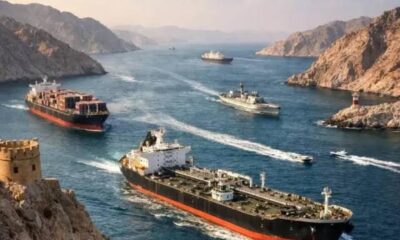
The Nigerian Ports Authority (NPA) announced on Monday that about 20 ships laden with food items, petroleum products, and other goods are expected to arrive at Apapa and Tin-Can Island ports in Lagos. In its shipping position for Monday, the authority disclosed that the ships will arrive in Lagos from November 10 to 12.

According to the NPA, out of the 20 expected ships, four contain crude oil, four contain petrol, three others are to arrive with aviation fuel, while the remaining nine ships are to arrive with diesel, gas oil, and different products.

The NPA also hinted that three ships had arrived at the ports and were waiting to berth with general cargo and bulk urea. Meanwhile, it says that 11 ships are currently at the ports discharging general cargoes, bulk wheat, bulk sugar, containers, and bulk gas. NAN

Continue Reading

Trending