
Oil and Gas
NUPRC vows not to approve divestments that doesn’t meet considerations

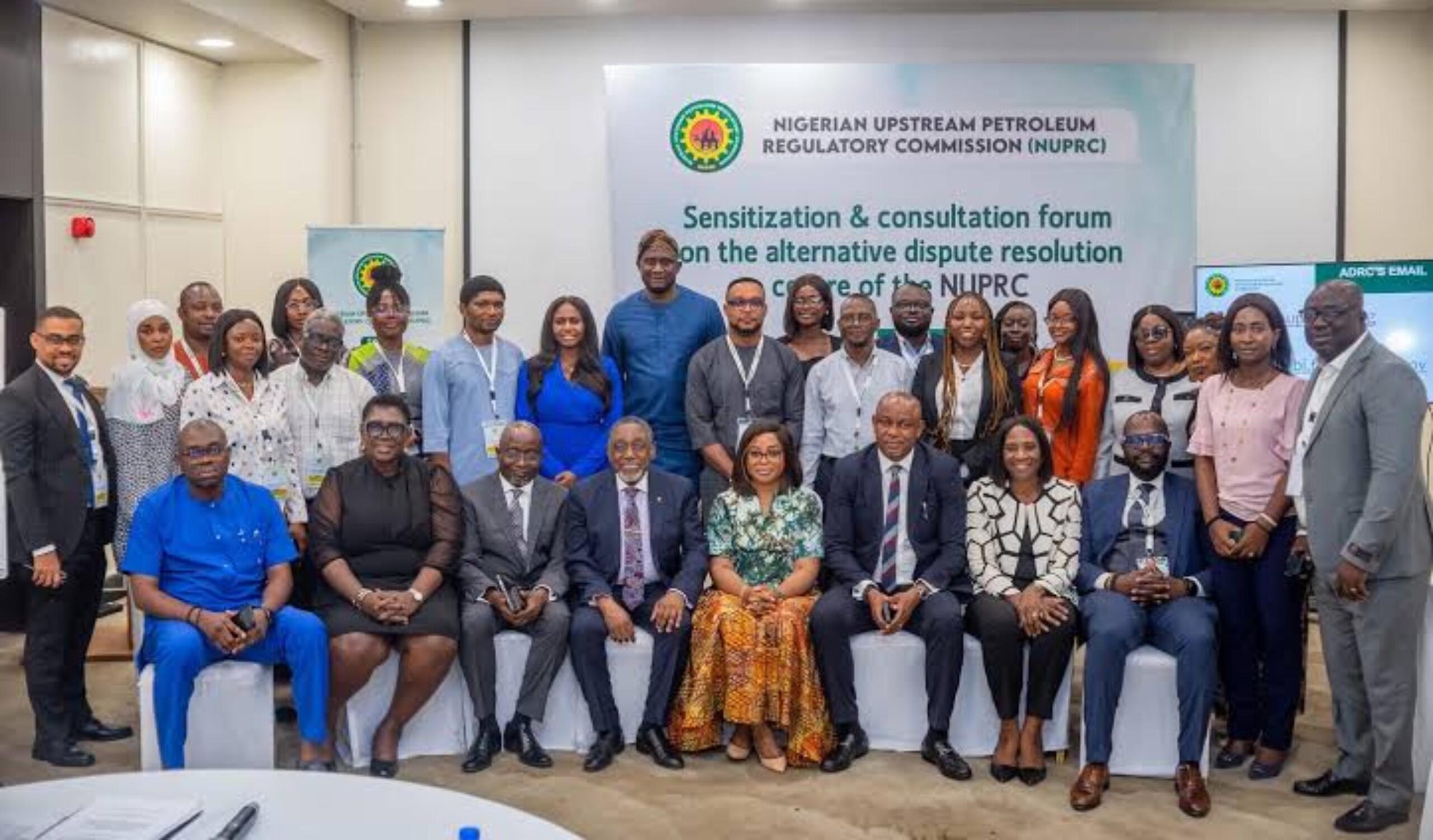
Nigeria Upstream Petroleum Regulatory Commission, NUPRC, has vowed that it would not give divestment approval to any company that its process does not meet the considerations set by the commission.
This was a Human and Environmental Development Agenda (HEDA Resource Centre ) with Support of TI (Australia) and Natural Resource Governance Institute (NRGI) organised a Community Town Hall on Oil Divestment and Transition Accountability in the Niger Delta with theme: “Strengthening Transparency, Environmental Responsibility, and Community Participation in Oil Asset Divestment” in Port Harcourt, Wednesday.
Addressing the participants, the Executive Director of NUPRC, Mrs Oritsemeyiwa Eyesan, said the commission would not approve any divestment that does not meet up with its set considerations
Eyesan, who was represented by Mr Success Ikpe, Assistant Director, NUPRC, Port Harcourt, said the commission has set considerations that are standards that divestment process must meet up with before it would be approved, adding that firms that fail the standards would not be allowed to divest.
She said the commission appreciates the opportunity to engage stakeholders on the critical issue of divestment and transition accountability in the Niger Delta, noting that one of considerations emsure that the technical capacity and the financial viability of the successor firm is better than that of the divesting entity.
Eyesan said the acquiring entity must be fit and that issues decommissioning and abandonment of entities must be assessed by the commission.
Eyesan said: “As you know, the divestment of oil and gas assets is a legitimate commercial decision of operators. Operators are at liberty to, of course, want to relinquish or divestment assets.
“However, the petroleum industry act 2021, such transactions are usually subject to a strict regulatory oversight. So, to show that they are conducted transparently, responsibly, and in a manner that protects national interest and, of course, those communities.
In this regard, the commission has established a robust regulatory divestment framework that will actually guide the process by which we divest our assets. The framework is designed to ensure accountability, continuity, and sustainability.
“I think the major reason why we’re here is just to alleviate the fears of our host community. We recognise the concerns of host communities regarding labour issues, environmental degradation and continuity of social investments.
So we wish to assure the public that NUPRC is committed to ensuring that existing operators are usually held accountable for their obligations while the incoming operators are properly related for technical, financial and social capacity to sustainably manage assets they wish to take over.
“Furthermore, the commission continues to strengthen its monitoring and enforcement mechanisms to ensure compliance with statutory provisions and to promote transparency throughout the divestment process.
“The commission wishes to emphasis that no divestment will be approved without meeting up up the divestment Consideration.”
However, the Executive Director of HEDA, Arigbabu Suleimon, said stakeholders are aware that the oil multinationals have found ways to cover their errors in the communities they operated.
He said that at the point the divestment process has not favoured the communities, adding the dialogue was convened to give hope to the communities.
He said “We are gathered here at a critical moment in the history of Nigeria’s oil and gas sector. Across the Niger Delta, we are witnessing a significant shift as multinational oil companies divest from onshore and shallow-water assets.
“While these transitions are often presented as part of broader corporate restructuring and global energy transition strategies, their implications for host communities are profound and far-reaching.
“For many communities, oil exploration has come with heavy costs; environmental degradation, oil spills, abandoned infrastructure, and disrupted livelihoods. Today, as these assets change hands, there is a legitimate concern that these longstanding issues may be left unresolved, and that communities may once again bear the burden without justice or remediation.”
-
 News24 hours ago
Power crisis blamed on gas shortages, sector debts
-

 News24 hours ago
Binance seeks out-of-court settlement with Nigeria over alleged tax evasion
-

 Economy2 days ago
CBN reaffirms commitment to inflation-targeting monetary policy
-

 Oil and Gas2 days ago
Oil prices plunge 8% on US-Iran talks to resolve hostilities in the Middle East
-

 Finance44 minutes ago
Cardoso seeks collaboration to check cross‑border financial risks
-

 Stock Market2 days ago
NGX market capitalisation shed N1.38trn to close at N127.75trn
-

 News2 days ago
Abuja court jails former acting AGF, Nwabuoku, to 72yrs in prison over N868m fraud
-
 News2 days ago
Tony Elumelu Foundation unveils 3,200 entrepreneurs for 2026, commitment to “democratising prosperity” across Africa