
Oil and Gas
Oil prices rise amidst geopolitical, geoeconomic concerns

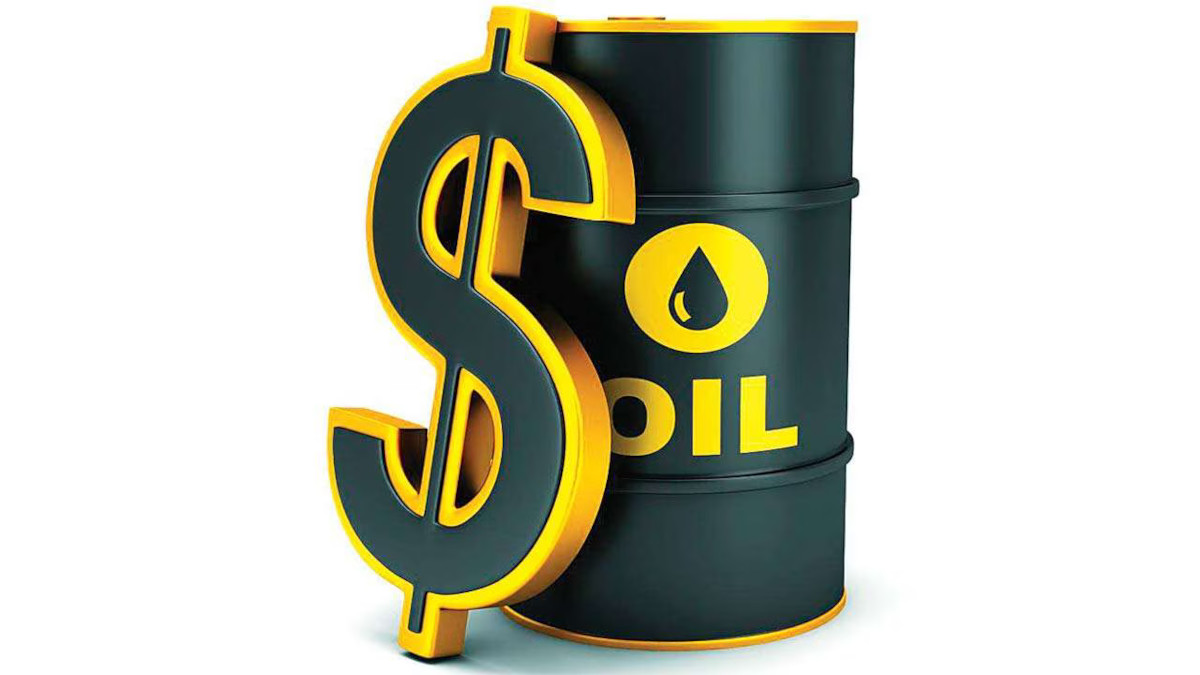
Oil prices climbed on Wednesday as markets struggled with geopolitical balance, reflecting sustained fluctuation between supply and demand outlook. U.S policy instability has stoked pressures on geoeconnomic stressing global economic projections.
Brent crude traded at $67.09 per barrel, up 0.2% from the previous close of $66.93. US benchmark West Texas Intermediate (WTI) increased 0.2% to $62.32 per barrel, compared with $62.18 in the previous session.
Markets focused on comments from US Vice President JD Vance, who said a second round of negotiations with Iran had been productive “in some ways,” but that Tehran was “not yet willing” to engage on certain “red lines” set by President Donald Trump.
“Our primary interest here is we don’t want Iran to get a nuclear weapon,” the vice president said during an interview with Fox News.
“In some ways, it went well. They agreed to meet afterwards. But in other ways, it was very clear that the president has set some red lines that the Iranians are not yet willing to actually acknowledge and work through,” Vance added.
The Iranian delegation was led by Foreign Minister Abbas Araghchi, while the US team was headed by special envoy Steve Witkoff and Trump’s son-in-law Jared Kushner.
Araghchi said there had been progress in Geneva, describing the atmosphere as “more constructive.”
“It was decided that both sides will work on the drafts of a potential agreement, and after exchanging the texts,” he said. “The timing of the next round of talks will be determined.”
Iran’s top diplomat added that a clear path lies ahead for nuclear negotiations with the American side, which is “assessed positively” from Iran’s perspective.
On Feb. 6, Oman hosted a first round of indirect talks in Muscat, the first since Trump ordered strikes on Iran’s nuclear facilities in June. Trump has since directed a US military buildup in the region as he threatens Iran to make a deal with Washington.
While the comments suggested some progress, investors appeared reluctant to price in a full easing of geopolitical risk without clearer signs of a concrete agreement. Any durable deal could eventually open the door to changes in Iran’s oil supply outlook, but for now uncertainty remains.
Meanwhile, US special envoy Steve Witkoff said Tuesday that Ukraine and Russia have agreed to continue negotiations following a third set of trilateral discussions in Geneva.
“Today, at President (Donald) Trump’s direction, the United States moderated a third set of trilateral discussions with Ukraine and Russia,” he said on the US social media platform X.
Witkoff thanked Switzerland for hosting the meetings. “Both parties agreed to update their respective leaders and continue working towards a deal,” he added.
His remarks came after the first day of US-brokered peace talks between Russian and Ukrainian delegations ended without any significant developments.
The US was represented by Witkoff and Kushner, who entered the negotiations after assisting with indirect discussions with Iranian officials at another location in the Swiss city earlier Tuesday.
Analysts say any shift in the geopolitical balance could inject a risk premium into oil prices. Markets are also watching US inventory data, with figures from the American Petroleum Institute due later Wednesday and the Energy Information Administration’s official report expected Thursday.
-

 News2 days ago
Active voice subscription hit 173.5m in Q2—NBS
-

 News2 days ago
Why we seized El –Rifai’s passport-DSS opens up
-
 Economy2 days ago
CBN to open N1.15trn treasury bill for subscription
-

 Analysis2 days ago
Africa’s energy future cannot be built on exclusion
-

 News2 days ago
Court stops NNPC, Renaissance others from demolishing estate in Rivers
-

 News24 hours ago
FG unveils rapid-response mobile teams against transnational crimes
-

 Economy25 minutes ago
Inclusive forex access will unlock regional trade growth—CBN
-
 Oil and Gas24 hours ago
NNPC to boost gas master plan supply by 1.8bcf/d in 2026