Connect with us

Economy

Ongoing rail projects to gulp multi-billion dollar foreign loans— Mu’azu Sambo

Published

on

Minister of Transportation Mu’azu Jaji Sambo has said that to complete the ongoing rail projects across the country will require multi-billion dollar loans from financial institutions based in China, Portugal and Turkey. He said he hoped that the government will complete the projects before May 29, 2023. According to him the Federal Government is committed to the implementation of the Nigeria Railway Modernisation project. Speaking in Abuja when he appeared before the Joint National Assembly Committee on Land and Marine Transport, chaired by Senator Danjuma Goje, Minister of Transportation, Mu’azu Jaji Sambo said that the Railway network was being progressively expanded through yearly budgetary appropriations since the Federal Government was facing challenges in securing counterpart funding through loans.

Sambo said, “Currently, the implementation of the Kaduna-Kano, Port Harcourt to Maiduguri and Kano – Maradi Segments of the Railway Modernisation is ongoing with the Federal Government counterpart funding in the 2022 appropriation. The Ministry hopes that the Federal Ministry of Finance concludes negotiation of the loans with infrastructure development finance institutions of the Chinese, Portuguese and Turkish origin to implement the projects. To ensure finalising and signing of the loan agreements, evidence of source of funding of the balance of the advance payment and other aspects of work to be financed directly by the Federal Government has to be made available to these financial institutions through adequate budgetary provisions in the year 2023 budget and subsequent budgets. “ The Minister said that the Lagos – Ibadan segment of the Lagos – Kano and Itakpe to Warri railway projects were fully operational and receiving patronage from the general public, adding that to reach practical completion on the projects, some aspects of works, including construction of overpass bridges, connection to the national grid and other ancillary provisions had to be completed.

He said, “Adequate funds need to be provided in the 2023 budget to facilitate the practical completion of the projects. The Minister who  lamented the sad occurrence on the Abuja – Kaduna Rail incident earlier in the year, said that plans were ongoing to resume service there, adding, “With the release of those abducted, the Ministry plans to commence operation on the line, but not without taking proper precaution. Sambo who  explained that necessary security gadgets would be installed to monitor the line and forestall a reoccurrence, expressed the hope that members of the National Assembly would assist the Ministry in achieving the plan. He told the lawmakers that his ministry had proposed a total capital budget of N92, 251,422,746 and overhead of N382, 185, 472, adding  that the total capital appropriation of the Ministry for 2022 was N147, 549,080,677 out of which N52,134,727,253.22 representing 35.33% had been released to date.

He said that  N38,904,208,345 had been utilised as of 25 October, 2022 In addition, the sum of N358, 799,998 was appropriated for Overhead expenditure out of which N209, 299,998.81 was released.  He said the sum of N180, 623,089.34 of the released amount was expended as at 25th October, 2022. The Chairman of the Joint National Assembly Committee on Land and Marine Transport, expressed concern over the extension of the implementation of the capital component of the yearly budget beyond each fiscal year. Goje said, “The extension of the implementation of the Capital component of the annual budget by three months, had defeated the success recorded by the 9th National Assembly to reverse the country’s budget cycle to January to December.”

Continue Reading

Economy

Nigeria champions African-Arab trade to boost agribusiness, industrial growth

Published

on

The Arab Africa Trade Bridges (AATB) Program and the Federal Republic of Nigeria formalized a partnership with the signing of the AATB Membership Agreement, officially welcoming Nigeria as the Program’s newest member country. The signing ceremony took place in Abuja on the sidelines of the 5th AATB Board of Governors Meeting, hosted by the Federal Government of Nigeria.

The Membership Agreement was signed by Eng. Adeeb Y. Al Aama, the CEO of the International Islamic Trade Finance Corporation (ITFC) and AATB Program Secretary General, and H.E. Mr. Wale Edun, Minister of Finance and Coordinating Minister of the Economy, Federal Republic of Nigeria. The Agreement will provide a strategic and operational framework to support Nigeria’s efforts in trade competitiveness, promote export diversification, strengthen priority value chains, and advance capacity-building efforts in line with national development priorities. Areas of collaboration will include trade promotion, agribusiness modernization, SME development, businessmen missions, trade facilitation, logistics efficiency, and digital trade readiness.

The Honourable Minister of Finance and Coordinating Minister of the Economy, Mr. Wale Edun, called for deeper trade collaboration between African and Arab nations, stressing the importance of value-added Agribusiness and industrial partnerships for regional growth. Speaking in Abuja at the Agribusiness Matchmaking Forum ahead of the AATB Board of Governors Meeting, the Minister said the shifting global economy makes it essential for African and Arab nations to rely more on regional cooperation, investment and shared markets.

He highlighted projections showing Arab-Africa trade could grow by more than US$37 billion in the next three years and urged partners to prioritize value addition rather than raw commodity exports. He noted that Nigeria’s growing industrial base and upcoming National Single Window reforms will support efficiency, investment and private-sector expansion.

“This is a moment to turn opportunity into action”, he said. “By working together, we can build stronger value chains, create jobs and support prosperity across our regions”, Edun emphasized. “As African and Arab nations embark on this journey of deeper trade collaboration, the potential for growth and development is vast. With a shared vision and commitment to value-added partnerships, we can unlock new opportunities, drive economic growth, and create a brighter future for our people.”

Speaking during the event, Eng. Adeeb Y. Al Aama, Chief Executive Officer of ITFC and Secretary General of the AATB Program, stated: “We are pleased to welcome Nigeria to be part of the AATB Program. Nigeria stands as one of Africa’s most dynamic and resilient economies in Africa, with a rapidly expanding private sector and strong potential across agribusiness, energy, manufacturing, and digital industries. Through this Membership Agreement, we look forward to collaborating closely with Nigerian institutions to strengthen value chains, expand regional market access, enhance trade finance and investment opportunities, and support the country’s development priorities.”

The signing of this Agreement underscores AATB’s continued engagement with African countries and its evolving portfolio of programs supporting trade and investment. In recent years, AATB has worked on initiatives across agribusiness, textiles, logistics, digital trade, export readiness under the AfCFTA framework, and other regional initiatives such as the Common African Agro-Parks (CAAPs) Programme.

With Nigeria’s accession, the AATB Program extends it’s presence in the region and adds a key partner working toward advancing trade-led development and fostering inclusive economic growth.

Continue Reading

Economy

FEC approves 2026–2028 MTEF, projects N34.33trn revenue 

Published

on

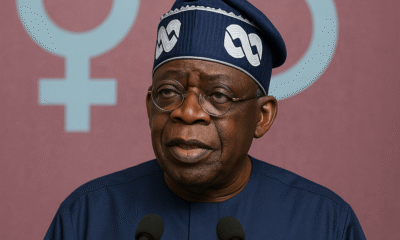
Federal Executive Council (FEC) has approved the 2026–2028 Medium-Term Expenditure Framework (MTEF), a key fiscal document that outlines Nigeria’s revenue expectations, macroeconomic assumptions, and spending priorities for the next three years. The approval followed Wednesday’s FEC meeting presided over by President Bola Tinubu at the State House, Abuja. The Minister of Budget and Economic Planning, Senator Atiku Bagudu made this known after the meeting.

The Minister said the Federal Government is projecting a total revenue inflow of N34.33 trillion in 2026, including N4.98 trillion expected from government-owned enterprises. Bagudu said that the projected revenue is N6.55 trillion lower than earlier estimates, adding that federal allocations are expected to drop by about N9.4 trillion, representing a 16% decline compared to the 2025 budget.

He said that statutory transfers are expected to amount to about N3 trillion within the same fiscal year. On macroeconomic assumptions, FEC adopted an oil production benchmark of 2.6 million barrels per day (mbpd) for 2026, although a more conservative 1.8 mbpd will be used for budgeting purposes. An oil price benchmark of $64 per barrel and an exchange rate of N1,512 per dollar were also approved.

Bagudu said the exchange rate assumption reflects projections tied to economic and political developments ahead of the 2027 general elections. He said the exchange rate assumption took into account the fiscal outlook ahead of the 2027 general elections.

The minister said that all the parameters were based on macroeconomic analysis by the Budget Office and other relevant agencies. Bagudu said FEC also reviewed comments from cabinet members before approving the Medium-Term Fiscal Expenditure Ceiling (MFTEC), which sets expenditure limits. Earlier, the Senate approved the external borrowing plan of $21.5 billion presented by President Tinubu for consideration The loans, according to the Senate, were part of the MTEF and Fiscal Strategy Paper (FSP) for the 2025 budget.

Continue Reading

Economy

CBN hikes interest on treasury Bills above inflation rate

Published

on

The spot rate on Nigerian Treasury bills has been increased by 146 basis points by the Central Bank of Nigeria (CBN) following tight subscription levels at the main auction on Wednesday. The spot rate on Treasury bills with one-year maturity has now surpassed Nigeria’s 16.05% inflation by 145 basis points following a recent decision to keep the policy rate at 27%. 

The Apex Bank came to the primary market with N700 billion Treasury bills offer size across standard tenors, including 91-day, 182-day and 364 day maturities. Details from the auction results showed that demand settled slightly above the total offers as investors began to seek higher returns on naira assets despite disinflation.

Total subscription came in at about N775 billion versus N700 billion offers floated at the main auction. The results showed rising appetite for duration as investors parked about 90% of their bids on Nigerian Treasury bills with 364 days maturity. The CBN opened N100 billion worth of 91 days bills for subscription, but the offer received underwhelming bids totalling N44.17 billion.

The CBN allotted N42.80 billion for the short-term instrument at the spot rate of 15.30%, the same as the previous auction. Total demand for 182 days Nigerian Treasury bills settled at N33.38 billion as against N150 billion that the authority pushed out for subscription. The CBN raised N30.36 billion from 182 days bills allotted to investors at the spot rate of 15.50%, the same as the previous auction.

Investors staked N697.29 billion on N450 billion in 364-day Treasury bills that was offered for subscription. The CBN raised N636.46 billion from the longest tenor at the spot rate of 17.50%, up from 16.04% at the previous auction.

Continue Reading

Trending